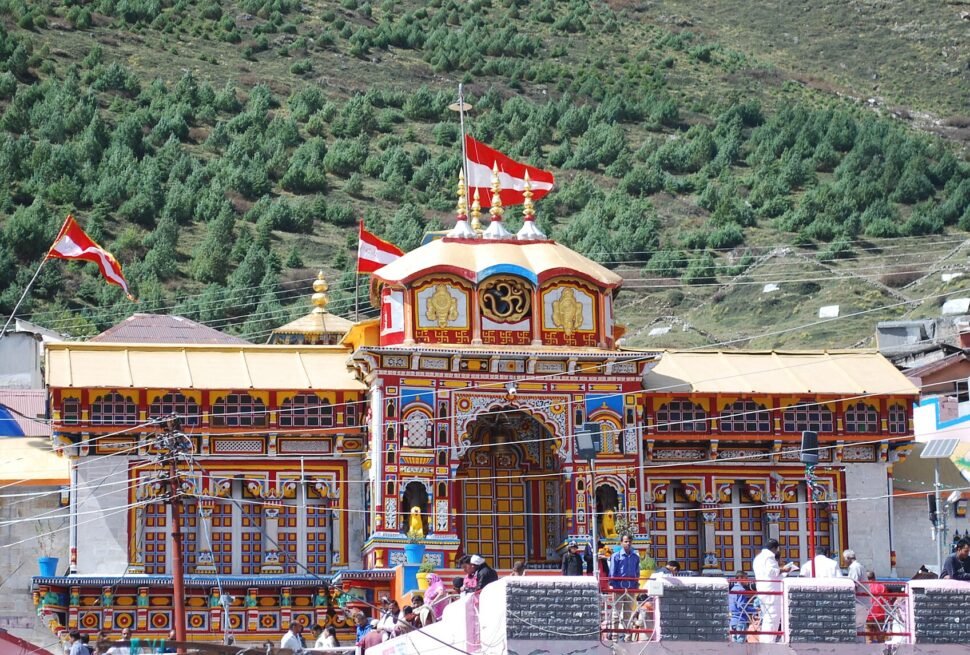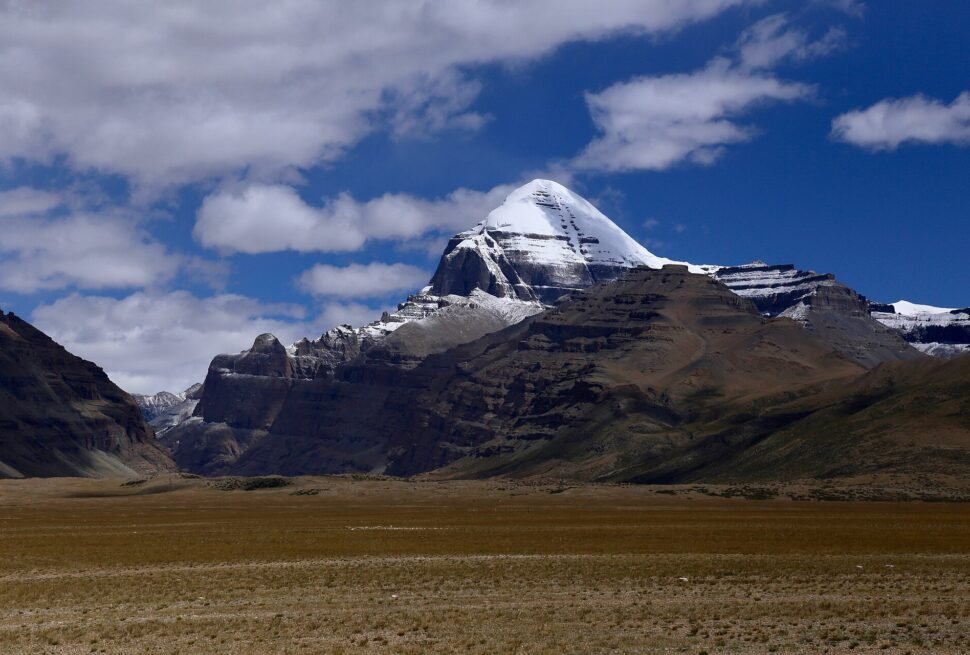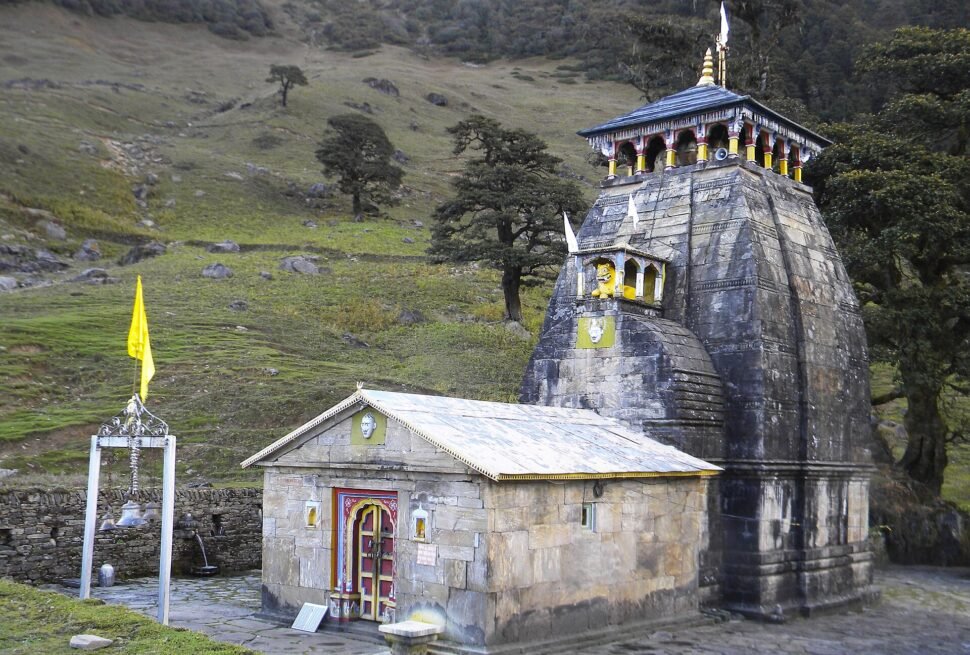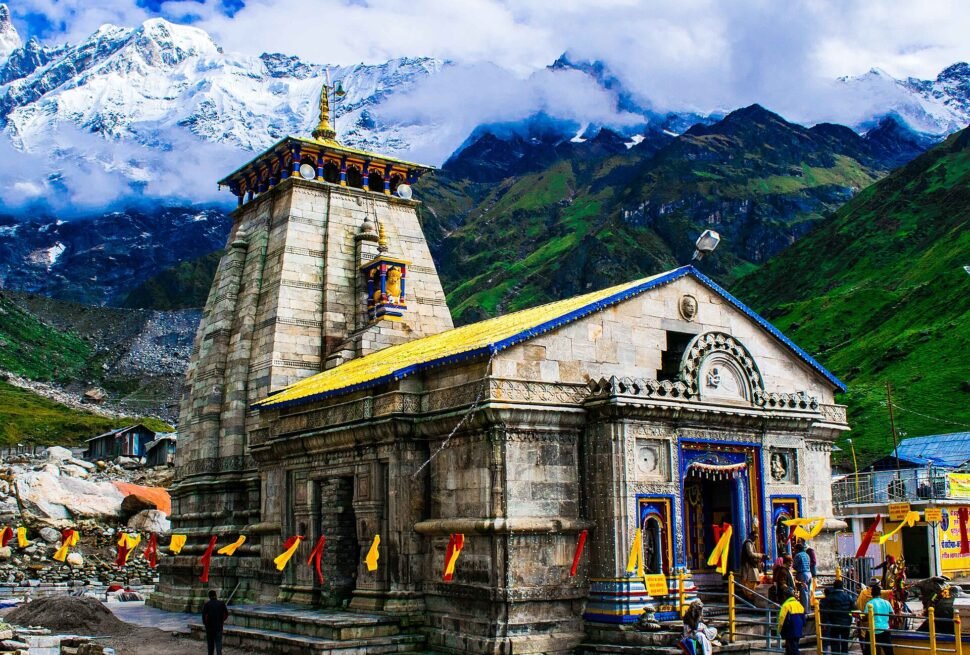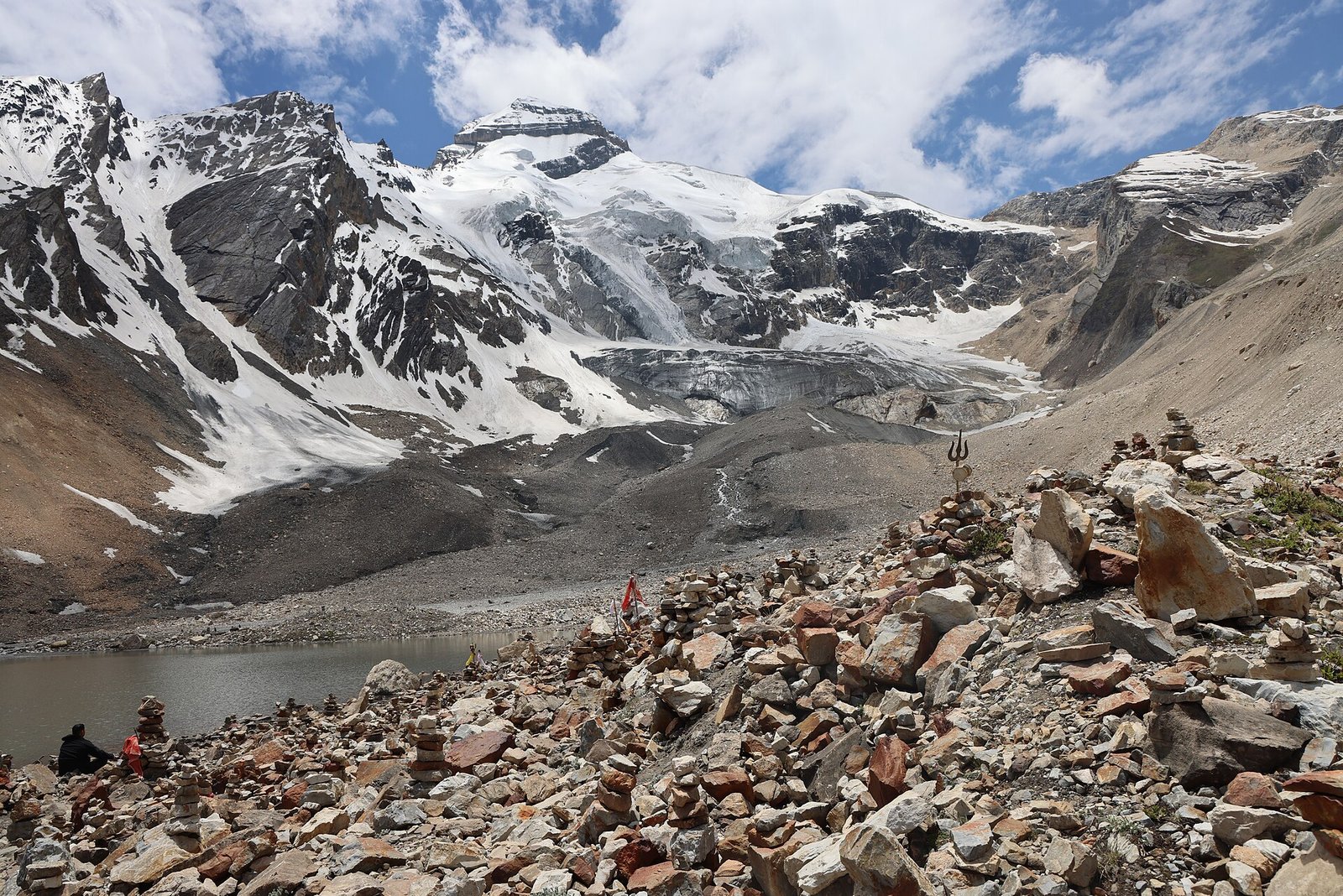
Quick answer: Adi Kailash (about 5,945 m) and Om Parvat stand in the Vyas valley of Pithoragarh, Uttarakhand, near the Tibet and Nepal borders. Indian citizens need an Inner Line Permit from Dharchula, no passport. Vehicles reach both darshan points from Gunji (about 3,200 m), so walking is light. Allow 5 days from Dharchula, about 8 from Delhi or Kathgodam, or 2–4 by helicopter. Best months: May–June and late September–October.
Updated for the 2027 yatra season (facts checked October 2026)
This page gathers the questions families ask us most often about the Adi Kailash and Om Parvat yatra, answered plainly and kept up to date. It covers permits, the route, weather, health, stays, helicopters and cost. Where a rule changes every season, we say what applied in 2025 or 2026 and what is not yet announced for 2027.
If you only have a minute, the table below gives the key facts. For deeper reading, see our guides on how to reach Adi Kailash, the Inner Line Permit and weather and best time.
Adi Kailash yatra: key facts
| Point | Detail |
|---|---|
| Location | Vyas valley, Dharchula tehsil, Pithoragarh district, Uttarakhand |
| Main darshan | Adi Kailash with Parvati Kund and Shiv temple at Jolingkong; Om Parvat from Nabhidhang; Kali temple at Kalapani; Vyas Gufa |
| Altitudes (approx.) | Dharchula 900 m; Gunji 3,200 m; Nabhidhang 4,300 m; Jolingkong about 4,400 m |
| Permit | Inner Line Permit, SDM office Dharchula; Indian citizens only |
| Season | From about 1 May; monsoon break July–August; reopens late September; closes with winter snow |
| Duration | 5 days from Dharchula; 8 from Kathgodam or Delhi; 4 by helicopter; 2 for aerial darshan |
| Walking | Short walks at darshan points; optional steeper walk to Gauri Kund |
| Footfall | 36,526 permits in 2025; over 37,800 in the first 40 days of 2026 |
A typical 8-day road plan from Kathgodam
- Day 1: Kathgodam to Pithoragarh, with darshan at Kainchi Dham, Chitai Golu Devta and Jageshwar Dham on the way.
- Day 2: Pithoragarh to Dharchula (about 90 km); Inner Line Permit formalities at the SDM office.
- Day 3: Dharchula to Gunji by 4×4 along the Kali gorge; rest and acclimatise.
- Day 4: Gunji to Jolingkong for Adi Kailash, Parvati Kund and the Shiv temple; optional walk to Gauri Kund; back to Gunji.
- Day 5: Gunji to Nabhidhang for Om Parvat early in the morning; Kali temple at Kalapani and Vyas Gufa; back to Gunji.
- Day 6: Down to Dharchula and on to Didihat or Chaukori.
- Day 7: Patal Bhuvaneshwar cave temple, then on towards Bhimtal.
- Day 8: Drive to Kathgodam for the train home.
Shorter plans start at Dharchula and cover Days 2 to 6 in five days. Helicopter plans replace Days 1–3 and 6–8 with flights from Pithoragarh.
Before you book: a short checklist
- Every yatri is an Indian citizen with a valid government photo ID.
- Your doctor has examined you and is willing to sign a high-altitude fitness certificate.
- Police verification can be obtained from your local station in time, ideally within about 15 days of submission.
- Your dates fall in an open window (roughly May–June or late September–October) and you have one spare day.
- Your train or flight to Kathgodam, Tanakpur or Pithoragarh is refundable or flexible until the permit is confirmed.
- You have packed for freezing nights, even in June.
Respecting the Vyas valley
The villages of the Vyas valley, such as Gunji, Nabhi, Kuti and Garbyang, belong to the Rung community, many of whom move down to the Dharchula area for the winter and return each spring. When you stay in their homes you are a guest in a border community with its own traditions and deities. A few simple courtesies go a long way:
- Ask before photographing people, homes or local shrines.
- Carry back plastic bottles, wrappers and batteries; there is no proper waste system above Dharchula.
- Follow instructions at army and ITBP posts, and do not photograph security installations.
- Keep puja offerings simple at Parvati Kund, and do not throw plastic or coins into the water.
Basic questions about Adi Kailash and Om Parvat
Where is Adi Kailash?
Adi Kailash is in the Kuti valley, part of the larger Vyas valley, in Dharchula tehsil of Pithoragarh district, Uttarakhand. It rises above Jolingkong, close to where India, Nepal and Tibet meet. The nearest town with full facilities is Dharchula on the Kali river, and the base village for the yatra is Gunji, about 36 km below Jolingkong.
Why is Adi Kailash sacred?
Adi Kailash is revered as an abode of Bhagwan Shiva and is counted among the Panch Kailash, often as the most sacred after Mount Kailash in Tibet. Local tradition in the Vyas valley links it with Shiva and Parvati, and Parvati Kund at its foot, with its small Shiv temple, is a place of puja and abhishek. Its shape is often compared with Mount Kailash, which is why it is also called Chhota Kailash.
What is Om Parvat?
Om Parvat is a peak in the neighbouring Kalapani valley where snow settles in rock grooves to form the shape of ॐ. Yatris take darshan from the Nabhidhang viewpoint, about 20 km from Gunji, at roughly 4,300 m. It is not climbed or circled. Almost every Adi Kailash yatra includes Om Parvat, because both are reached from the same base at Gunji with the same permit.
Is Adi Kailash the same as Kailash Mansarovar?
No. Adi Kailash is a separate peak inside India. Mount Kailash and Lake Mansarovar are in Tibet, China, and need a passport, Chinese permission and nights above 4,500 m. Adi Kailash needs only an Inner Line Permit, and nights are at about 3,200 m. Many families do Adi Kailash first and Kailash Mansarovar later. Our comparison guide explains the differences in detail.
How high is Adi Kailash?
The peak is usually given as about 5,945 m. Yatris do not climb it; darshan is from Jolingkong and Parvati Kund at roughly 4,400 m, reached by road. Figures vary slightly between sources. Om Parvat is commonly listed at around 5,590 m, with darshan from Nabhidhang at about 4,300 m. Gunji, where yatris sleep, is about 3,200 m.
What are Parvati Kund and Gauri Kund?
Parvati Kund, also called Parvati Sarovar, is the sacred lake at Jolingkong with a Shiv temple on its shore and Adi Kailash reflected in its water on a still morning. Yatris perform puja and take jal here. Gauri Kund is a second, smaller lake closer to the foot of the mountain, reached by a short but steep walk at high altitude. It is optional, and seniors often have darshan from the temple area instead.
What else can I see on the Adi Kailash yatra?
In the valley: the Kali temple at Kalapani near the source of the Kali river, and the Vyas Gufa linked with Maharishi Ved Vyas. On the way from Kathgodam many plans include Kainchi Dham, the Golu Devta temple at Chitai and Jageshwar Dham. On the return, the cave temple of Patal Bhuvaneshwar near Gangolihat is a popular stop, often with a night at Chaukori.
Can I see Mount Kailash from India on this yatra?
Since October 2024 Uttarakhand Tourism has offered a viewpoint near the old Lipulekh pass, above the Om Parvat area, from where Mount Kailash in Tibet can be seen on a clear day. It involves a short walk at very high altitude and has run as part of specific arrangements. Whether it operates in 2027 and on what terms will be known only when the season opens.
Permit and document questions
Do I need a permit for Adi Kailash?
Yes. The Vyas valley beyond Dharchula is a protected border area, so every yatri needs an Inner Line Permit. It covers Gunji, Jolingkong, Kalapani and Nabhidhang, so one permit is enough for both Adi Kailash and Om Parvat. Security forces check it at several posts, with a main check at Gunji, and anyone without a valid permit is turned back.
Where is the Adi Kailash Inner Line Permit issued?
Under the SDM (Sub-Divisional Magistrate) office in Dharchula, Pithoragarh district. In 2025 the district started taking applications online before the season, with passes issued from the end of April. Even so, documents are checked and permits finalised locally, so plan at least one night in Dharchula. The office follows government working days and is generally closed on Sundays and public holidays.
What documents are needed for the Inner Line Permit?
The usual set is a government photo ID such as Aadhaar, voter ID, passport or driving licence with photocopies; passport-size photographs, usually four; a medical fitness certificate from an MBBS doctor stating fitness for high altitude; a recent police verification certificate; and, in recent seasons, a notarised affidavit in the prescribed format. Your organiser will send formats and collect papers about a month before travel.
Is a passport needed for Adi Kailash?
No. Adi Kailash and Om Parvat are inside India, so Indian citizens can use Aadhaar, voter ID or a driving licence as photo ID for the permit. A passport is accepted as ID but is not required. This is one of the main reasons many families choose Adi Kailash when they cannot arrange a passport or Chinese visa for Kailash Mansarovar.
Can foreigners, OCI cardholders or NRIs visit Adi Kailash?
The ordinary Inner Line Permit is for Indian citizens. Foreign nationals and OCI cardholders are not covered and would need separate protected-area permission from the Government of India, which is not routinely given for this border zone. NRIs holding an Indian passport are Indian citizens and can apply in the usual way with their passport as ID.
Is there an age limit for Adi Kailash?
In recent seasons the permit has generally been issued for yatris aged roughly 10 to 70 years, with closer medical checks for seniors. There is no single published rule that applies every year, and helicopter packages have sometimes set their own limits. Confirm the current rule with your organiser or the Dharchula office before booking, especially for children and yatris above 65.
How long does it take to get the permit?
With complete documents and the office open, it can often be done the same day at Dharchula. In the May–June rush it can take longer, so keep a buffer day. Having papers checked in advance by your organiser, and registering online where the system allows, saves a great deal of waiting. Never plan to collect the permit on a Sunday.
How much is the Adi Kailash permit fee?
The fee is small and is revised from time to time by the district administration. We do not quote a figure because we could not verify an official current amount. Your organiser will confirm the fee for your season, and it is usually included in organised packages. Carry some cash at Dharchula in case of small charges for photocopies or forms.
Route and travel questions
How do I reach Adi Kailash from Delhi?
Take a train to Kathgodam (or Tanakpur), drive to Pithoragarh in a day, then about 90 km to Dharchula for the permit. From Dharchula a local 4×4 climbs about 70–80 km to Gunji. From Gunji, Adi Kailash is about 36 km and Om Parvat about 20 km. With darshan days and the return, a road yatra from Delhi takes about eight days.
Which is the nearest railway station?
Tanakpur is the nearest railhead to Pithoragarh, about 138 km away according to the district administration, and is connected to Delhi by the Purnagiri Jan Shatabdi. Kathgodam is used more often because it has more trains, including overnight services from Delhi, and a scenic route via Jageshwar. Both lead to Pithoragarh, Dharchula and Gunji.
Which is the nearest airport?
Naini Saini airport at Pithoragarh is closest, with small regional flights: Alliance Air began Delhi services in 2024 and a Dehradun link was flagged off in March 2026. Seats are few and schedules change. Pantnagar, about 241 km from Pithoragarh, has more regular flights from Delhi. From either airport the rest of the journey is by road or helicopter.
How is the road from Dharchula to Gunji?
Motorable throughout but narrow, cut into the cliffs of the Kali gorge, with landslide-prone stretches around Tawaghat, Malpa and Budhi. It takes four to five hours by local 4×4. Rain can block it for hours or days. In November 2025 the Centre approved a tunnel of about 5.4 km to bypass a difficult stretch, but until it is built the gorge road is the only way.
Is the road to Jolingkong paved now?
Yes. The road from Gunji to Jolingkong, about 36 km, was reported fully paved in October 2025, cutting the drive to under an hour from about two and a half hours earlier. The road to Nabhidhang for Om Parvat is shorter, about 20 km. Both are still high-altitude mountain roads, travelled in 4×4 vehicles.
Can I take my own car to Adi Kailash?
You can drive to Dharchula. Above Dharchula, yatris normally travel in local 4×4 vehicles with experienced drivers, because of the narrow ledges, rough patches and landslide debris on the gorge road. Rules for private vehicles in the protected area can change, so ask your organiser or the Dharchula administration before planning a self-drive beyond Dharchula.
How many days does the Adi Kailash yatra take?
About five days from Dharchula, covering permit, Gunji, Jolingkong, Nabhidhang and the return. From Kathgodam or Delhi by road it takes about eight days, with temple stops on the way. A helicopter yatra from Pithoragarh takes about four days with two nights at Gunji, and an aerial darshan takes two. Add a buffer day in busy or wet periods.
Should I visit Adi Kailash or Om Parvat first?
Either order works, and plans differ. We usually go to Jolingkong for Adi Kailash on the first full day from Gunji and keep Om Parvat for the next morning, because a second night at Gunji helps the body adjust before the second high visit. Some itineraries reverse this to match weather or permit timing. Both visits return to Gunji at night.
Season and weather questions
What is the best time for Adi Kailash yatra?
Late May to June, when snow on the peaks makes the ॐ on Om Parvat clearest, and late September to mid-October, when skies are clearest after the monsoon. June is the busiest month. Early May and late October are very cold at night. July and August are usually closed, and the valley is shut from about December to April.
When will the 2027 Adi Kailash yatra open?
Not announced as of October 2026. The district administration opens the season once the Border Roads Organisation has cleared the road and announces it in spring; in 2026 the yatra began on 1 May. Based on recent years, an opening around early May is likely, but wait for the official notice before booking non-refundable travel.
Is Adi Kailash open during the monsoon?
Usually not. Permits are normally stopped in July and August because landslides make the Dharchula–Gunji road unsafe. In 2025 permits were halted from 8 July, and in 2026 from 2 July. In 2026 the second phase was put off to about 20 September after a Bailey bridge near Kulagad was washed away, showing how road repairs decide reopening.
How cold is it at Gunji and Jolingkong?
At Gunji, days are roughly 10–15°C in May–June and nights close to freezing. Jolingkong and Nabhidhang, above 4,000 m, are colder, with sub-zero nights even in June and biting wind. October is colder still. These are approximate field estimates, as there is no official weather station at the darshan points. Pack thermals, a down jacket, cap and gloves in every month.
Will I definitely see the ॐ on Om Parvat?
Not definitely. The ॐ depends on snow lying in the grooves of the rock face and on clear weather. In late August 2024 national media reported that the snow had almost vanished and the ॐ was not visible until fresh snowfall. Early mornings in late May and June give the best chance. Clouds often cover the peak by late morning.
When does the Adi Kailash season close?
The season ends with heavy winter snow, usually in November. In 2025 the route and permit issuing were closed from 1 December. Late October and early November are very cold, and a single snowfall can close the higher roads, so autumn yatris should keep their plans flexible and carry serious winter clothing.
Health and fitness questions
How much walking is there on the Adi Kailash yatra?
Very little. Vehicles reach Jolingkong and Nabhidhang. You walk a short distance from the vehicle point to Parvati Kund and around the viewpoints. The optional walk to Gauri Kund is short but steep at high altitude. The real effort is the altitude and the long, bumpy drives, not the walking. Our altitude sickness guide explains how to prepare.
Can senior citizens do the Adi Kailash yatra?
Many do, with a doctor’s clearance, a slow plan and a rest day at Gunji before going higher. Walking is minimal, but nights at 3,200 m are cold and the drives long. Seniors with heart, lung or uncontrolled blood pressure problems should consult their doctor carefully. Helicopter programmes or an aerial darshan from Pithoragarh can make the yatra easier.
Can children go on the Adi Kailash yatra?
Older children often do, within the permit age range that has applied in recent seasons, roughly from 10 years. Young children are more vulnerable to cold and may not express altitude symptoms clearly, so parents must watch them closely. Consult a paediatrician before travel, pack plenty of warm layers, and confirm the current age rule with your organiser.
Is there a risk of altitude sickness at Adi Kailash?
Yes. You go from about 900 m at Dharchula to about 3,200 m at Gunji in one day, then visit about 4,300–4,400 m. Headache, nausea and poor sleep are common early signs. Rest on arrival at Gunji, drink enough water, avoid alcohol and go slowly. Breathlessness at rest or confusion means descend at once and seek medical help.
Is there medical help on the route?
In recent seasons the administration has posted doctors at Gunji and Jolingkong, kept oxygen stocks and arranged an ambulance at Gunji, and yatris may be screened on the way. Dharchula and Pithoragarh have hospitals. Beyond that, help is basic and evacuation depends on road and weather. Carry your own medicines for the whole yatra, plus a few extra days.
Do I need to prepare physically?
Yes, even though walking is light. Start brisk walking of 4–5 km daily, with some stairs, at least a month before travel. Get a full health check, including blood pressure, sugar and ECG, and tell your doctor how high you will go. Good stamina makes the long drives and cold nights much easier, and helps you recover overnight.
Stay, food and facilities questions
Where do yatris stay on the Adi Kailash yatra?
In Pithoragarh and Dharchula there are hotels and KMVN rest houses. In the valley, yatris stay in homestays and simple guest houses at Gunji, Napalchu, Nabhi or Kuti. Rooms are usually shared, with blankets or quilts, basic toilets and bucket hot water. Homestays have improved and multiplied in recent seasons, but they remain simple village houses, not hotels.
What food is available in the Vyas valley?
Homestays serve simple home-style vegetarian meals such as dal, rice, roti, sabzi, khichdi, Maggi and tea. Choices are limited and supplies come up the gorge road, so carry dry fruits, biscuits and some snacks for the long drives. Our groups get pure vegetarian meals arranged with homestay hosts. Eat light at altitude and avoid heavy fried food.
Is there electricity at Gunji?
Limited. Homestays may have electricity for a few hours or rely on solar power, and charging points are shared. Carry a fully charged power bank, a head torch with spare batteries and a universal adapter. Charge your phone and camera whenever you get the chance, especially before the early starts for Jolingkong and Nabhidhang.
Is there mobile network beyond Dharchula?
Weak and unreliable. BSNL works in some pockets, including parts of Gunji, and other networks are patchy. At Jolingkong and Nabhidhang you should expect no signal. Tell your family you may be out of reach for two or three days, share your organiser’s contact number, and download offline maps before leaving Dharchula.
Are there ATMs or card payments on the route?
Dharchula is the last town with dependable ATMs. Beyond it, cash is king: homestays, small shops and drivers rarely accept cards, and UPI depends on a network that often is not there. Draw enough cash in Pithoragarh or Dharchula for tips, extra snacks, offerings and emergencies. Keep it in two separate places.
What should I pack for Adi Kailash?
Thermal innerwear, a fleece, a down or padded jacket, woollen cap, gloves and socks, a rain jacket, comfortable shoes with grip, UV sunglasses, sunscreen and lip balm. Add personal medicines, a small first-aid kit, a torch, power bank, water bottle and snacks. Keep originals and photocopies of all permit documents in a waterproof folder.
Helicopter questions
Is there a helicopter for Adi Kailash?
Yes. Since 2024, state tourism arrangements have offered helicopter options from Pithoragarh: a helicopter yatra that lands at Gunji with two or three nights in the valley, and an aerial darshan that circles Adi Kailash and Om Parvat without landing. Flights are released in blocks within the season and depend on weather. See Adi Kailash helicopter from Pithoragarh.
Do helicopter yatris need a permit and medical check?
A medical check at the Pithoragarh district hospital has been compulsory for every passenger. Any programme that lands at Gunji needs the Inner Line Permit with the usual documents. Aerial darshan flights that return to Pithoragarh without landing have not needed the permit in recent seasons. Confirm both rules for your dates before booking.
What is the Adi Kailash aerial darshan?
A two-day programme: one night in Pithoragarh with the hospital check, and early next morning a helicopter flight up the valley that circles Adi Kailash and Parvati Kund, passes the Om Parvat face and returns without landing. It suits elderly yatris and those whose health rules out nights at altitude. Weather can delay or cancel flights, so keep a spare day.
Cost and booking questions
How much does the Adi Kailash yatra cost?
On our own package pages, the 5-day yatra from Dharchula is listed from ₹30,000, the 8-day yatra from Kathgodam from ₹45,000, the 8-day yatra from Delhi from ₹50,000, and the 2-day aerial darshan from Pithoragarh from ₹40,000, per person. Helicopter yatras with stay are priced on request. Inclusions differ, so compare each page.
What does an Adi Kailash package usually include?
Typically: permit processing, vehicles including 4x4s beyond Dharchula, hotels in Pithoragarh and Dharchula, homestays at Gunji, vegetarian meals, a coordinator and basic medical support. Train or flight tickets to the start point, personal expenses, tips and extra nights caused by roadblocks or weather are usually extra. Always read the inclusions and exclusions on the package page.
Should I go with KMVN or a private organiser?
Both can work well. Kumaon Mandal Vikas Nigam, the state tourism body, has run fixed-date group batches from Kathgodam and Dharchula. A private organiser can offer more flexible dates, family groups and extra rest days; ask us whether a start from your city can be arranged. Whoever you choose should know the road, keep a buffer day and never rush seniors higher too fast.
How far in advance should I book?
For June, book two to three months ahead, because permits, homestays at Gunji and good vehicles fill up quickly. Your permit documents, including police verification and the medical certificate, should be ready about a month before travel. For late September and October, six to eight weeks is usually enough, but wait for the reopening notice before buying non-refundable tickets.
How do I book an Adi Kailash yatra with you?
Choose a package on our Adi Kailash page, then use the enquiry form or call or WhatsApp us using the numbers on our Contact page. We confirm dates, send the document formats and a checklist, and explain the payment steps. Once your papers reach us, we file the permit application and keep you updated on road and weather news until departure.
How we can help
From our base in Dehradun we arrange every part of this yatra: Inner Line Permit processing and assistance at Dharchula, 4x4s with drivers who know the gorge, Gunji homestays with vegetarian meals, basic oxygen support at Gunji and a rest day before going high. Choose the 5-day yatra from Dharchula, the 8-day yatra from Delhi, the aerial darshan, or see every option on our Adi Kailash yatra page and in Hindi at आदि कैलाश यात्रा. Use the enquiry form on this page or call/WhatsApp us (numbers on our Contact page).