Quick answer: On a Shivling you can offer water (jal), Ganga jal, raw milk, curd, honey, ghee, bel patra with three unbroken leaflets, dhatura, aak flowers, bhasma, white sandalwood paste and whole, unbroken rice (akshat). By tradition, tulsi, haldi, kumkum or sindoor, the ketaki flower, coconut water and broken rice are not offered. Pour slowly, chant Om Namah Shivaya and do only a half parikrama, never crossing the jalahari outlet.
Updated for the 2027 yatra season (facts checked November 2026).
Mahadev is called Bholenath because he is pleased by the simplest devotion. A lota of clean water and one bel patra offered with a steady mind is a complete puja. Still, families often ask what is right to offer, what is avoided and why, especially before Sawan, Mahashivratri or a Jyotirlinga yatra. This guide answers the question many people search as “shivling par kya chadhaye”, with simple steps for home and temple.
Please read the “do not offer” list as tradition, not as fear. Customs differ between regions, sampradayas and individual temples, and the priest of a temple is always the final word on what is offered there.
What can you offer on a Shivling?
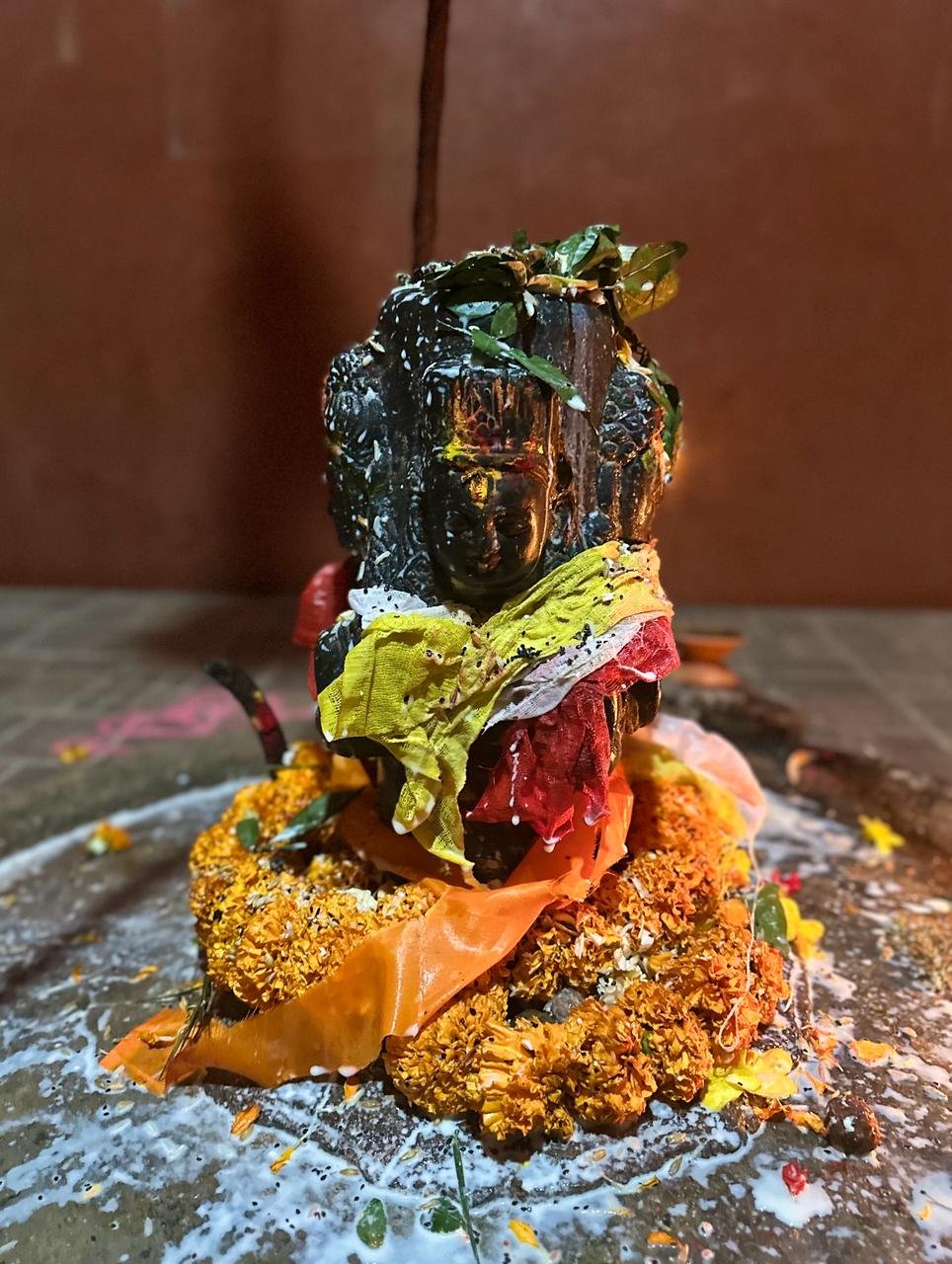
The offerings below are accepted across most North and South Indian traditions. You do not need all of them. Water and bel patra alone are enough.
| Offering | How it is usually offered | Traditional meaning |
|---|---|---|
| Jal (clean water) or Ganga jal | A slow, thin stream from a copper or brass lota | The basic jalabhishek; cooling and calming |
| Raw milk | Unboiled and cool, poured gently; many avoid pouring milk from a copper vessel | Purity; part of panchamrit abhishek |
| Curd, honey, ghee, sugar | With milk, as panchamrit, then washed off with water | Prosperity, sweetness of speech, strength |
| Bel patra (bilva) | Three leaflets on one stalk, smooth side facing the Shivling | Said to be the most beloved offering to Shiva |
| Dhatura and aak (madar) flowers | Fruit or flower placed on top after abhishek | Shiva accepts what others reject |
| Shami leaves | Placed with bel patra | Commonly offered on Mondays and in Sawan |
| Bhasma (vibhuti) | A light tripundra of three lines, or a pinch sprinkled | Reminder that the body is temporary |
| White sandalwood paste | Applied as a tilak or tripundra | Coolness and peace |
| Akshat (whole rice) | A few unbroken grains, often with sandalwood | Completeness; never use broken grains |
| White flowers | Placed after abhishek | Simplicity; white is linked with Shiva |
In some regions bhang leaves, sugarcane juice or perfume (itra) are also offered, and during Rudrabhishek priests may use many more items. Lighting a ghee diya and a dhoop or agarbatti in front of the Shivling is part of every puja.
How do you offer bel patra correctly?
Bel patra is the heart of Shiva puja, and a few simple customs are followed with it:
- Choose leaves with three leaflets joined on one stalk. Leaves with holes, tears, insect marks or missing leaflets are avoided.
- Wash the leaves. Many families write “Om” or “Ram” on them with sandalwood paste.
- Place the leaf with the smooth upper side touching the Shivling and the stalk pointing towards you. Many priests advise removing the thick knot at the base of the stalk.
- Offer one, three, five, eleven or 108 leaves, as your sankalp allows. One leaf with devotion is enough.
- By tradition bel patra does not become stale. A clean leaf can be washed and offered again, so you need not pluck fresh leaves every day.
- Many households avoid plucking bel leaves on Mondays, Chaturthi, Ashtami, Navami, Chaturdashi, Amavasya and Sankranti, and pluck them the day before instead.
What should not be offered on a Shivling?
The items below are traditionally kept away from the Shivling in most North Indian homes and temples. The reasons given are stories from the Puranas and long practice. They are not rules that bring punishment if broken by mistake.
| Traditionally avoided | Reason usually given | What to do instead |
|---|---|---|
| Tulsi leaves | Linked to the story of Vrinda and Jalandhar; tulsi is offered to Vishnu | Offer bel patra; keep tulsi for Vishnu, Krishna and Ram |
| Haldi (turmeric) | Seen as a cosmetic and auspicious item for the feminine; Shiva is the renunciant | Use white sandalwood paste |
| Kumkum or sindoor | Symbols of saubhagya, offered to the Goddess | Offer kumkum to Maa Parvati beside the Shivling |
| Ketaki (kewda) flower | Puranic story: it bore false witness for Brahma about the end of the column of light | Offer white flowers, aak or dhatura flowers |
| Coconut water poured on the Shivling | Many North Indian traditions say it should not be poured after the coconut is offered | Offer a whole coconut at the base |
| Broken rice | Akshat means “unbroken”; broken grain is seen as incomplete | Pick whole grains |
| Water from a shankh (conch) | Linked to the story of the demon Shankhachud | Use a copper, brass or silver lota |
Regional differences matter. In many Tamil Nadu and other South Indian Shiva temples, abhishekam follows the temple’s own Agama and can include tender coconut water (ilaneer) and, at some temples, turmeric. Shaiva families from these regions follow those customs at home too. If you are a guest at a temple, follow what the priests there do.
How do you do jalabhishek on a Shivling at home?
A home Shivling is usually small, often a Narmadeshwar (bana) linga or a metal or sphatik linga placed on a jalahari so that water can drain. A simple daily or Monday jalabhishek takes ten to fifteen minutes:
- Prepare: Bathe, wear clean clothes and keep a lota of clean water (add a few drops of Ganga jal if you have it), a little raw milk, bel patra, akshat, sandalwood paste, flowers, a diya and agarbatti.
- Sit facing the Shivling: Many priests advise sitting so that you face north or east. Light the diya.
- Remember Ganesh ji: Fold your hands and say “Om Gan Ganapataye Namah”.
- Sankalp: Silently say your name, gotra if you know it, and the purpose of your puja, or simply offer it for the wellbeing of the family.
- Jalabhishek: Pour water slowly in a thin stream while chanting “Om Namah Shivaya”. Then pour a little milk, followed by water again to wash it off.
- Shringar: Wipe gently with a clean cloth, apply sandalwood paste, place akshat, bel patra, flowers and dhatura.
- Dhoop, diya and naivedya: Show the agarbatti and diya, and offer fruit, mishri or any sattvik sweet.
- Aarti and prayer: Sing “Om Jai Shiv Omkara” or chant the Mahamrityunjaya mantra 11 or 108 times, then ask forgiveness for any mistakes in the puja.
- Half parikrama: If space allows, do the half parikrama described below; otherwise turn around once where you stand.
Offer only as much milk as is needed. Many devotees pour a small quantity and give the rest of the milk to a child, a gaushala or someone in need, which is also an act of devotion.
How should you offer jal and milk at a temple?
At a temple the same offerings apply, but the temple’s rules come first:
- Follow the queue and the priests. At crowded Jyotirlingas devotees may only get a few seconds, and touching the Shivling may not be allowed at all times.
- Some temples limit what devotees can pour. At Mahakaleshwar in Ujjain, for example, the Supreme Court in September 2020 directed steps to protect the Shivling from erosion: devotees may not rub it, only a limited quantity of pure milk may be poured, and the temple supplies purified water and milk. Rules at each temple can change, so ask at the counter.
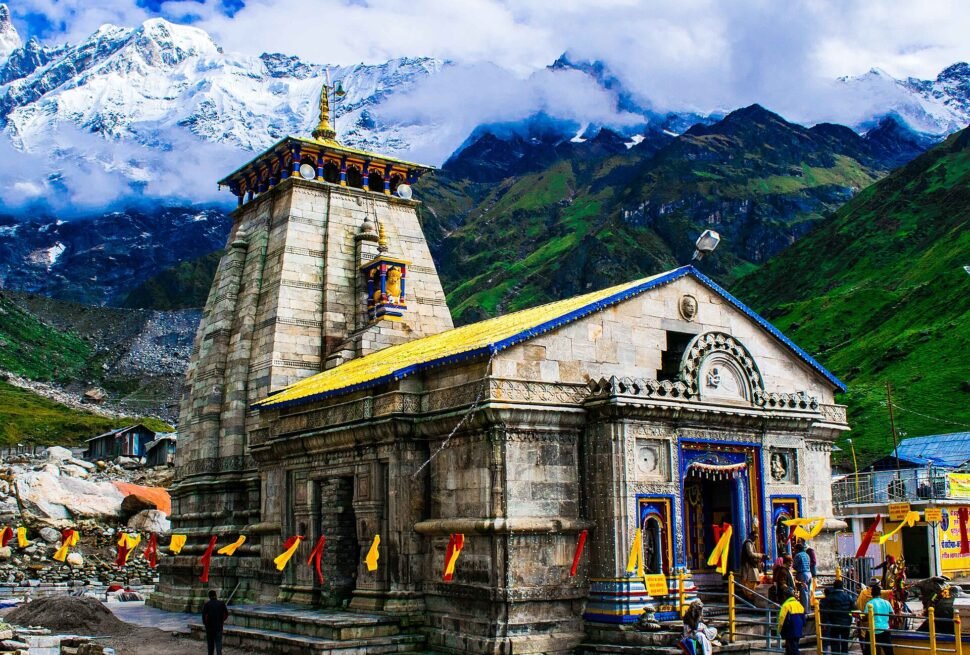
- Customs differ. At Kedarnath, devotees traditionally touch the rock-form Shivling and apply ghee. At Kashi Vishwanath and many other temples, water and milk are offered through a vessel or channel during heavy rush.
- Carry little. A small lota, a few bel patra and flowers are enough. Many temples sell puja items at the gate.
- Do not step over the water channel that carries abhishek water out of the sanctum.
Our guides on the 12 Jyotirlingas and the Mahakal Bhasma Aarti booking explain the darshan rules at the major Shiva temples.
What is Rudrabhishek and how is it done?
Rudrabhishek is the abhishek of the Shivling while the Rudra hymns of the Yajurveda are recited, usually the Shri Rudram (Namakam and Chamakam) in the south or the Rudrashtadhyayi in the north. It is normally done by trained priests, at home or in a temple, and takes from about one to three hours depending on how many recitations are chosen.
The usual sequence is:
- Sankalp with the family’s names and gotra, and Ganesh puja (with Gauri, Navagraha or Kalash puja in fuller forms).
- Abhishek with water, then milk, curd, honey, ghee and sugar (panchamrit), and in some traditions sugarcane juice, coconut water or perfumed water, each followed by water, while the Rudra mantras continue.
- Shringar with sandalwood, bhasma, bel patra and flowers.
- Naivedya, aarti and pushpanjali, and distribution of prasad.
Families perform Rudrabhishek on birthdays, before a new beginning, during Sawan, on Mahashivratri, or as thanksgiving. If you cannot travel, our team arranges a Kedarnath Rudrabhishek (Online Puja) and a Kashi Vishwanath Rudrabhishek (Online Puja) in your name and gotra, with video of the sankalp and puja. Our guide to online puja explains how sankalp and prasad work.
Which days are best for Shivling puja?
Any day is right for Shiva puja, but some days are traditionally special:
| Day or period | Why it is special | 2027 dates |
|---|---|---|
| Monday (Somvar) | Shiva’s weekly day; many keep a Somvar vrat | Every week |
| Pradosh | Evening of Trayodashi, twice a month; Shiva puja at dusk | Twice a month; see your panchang |
| Masik Shivratri | Krishna Chaturdashi of each month | Once a month |
| Sawan (Shravan) month | Kanwar yatra and Sawan Somvar vrat | North India (purnimant): from about 19 July to Shravan Purnima on 17 August. Amanta calendars (Maharashtra, Gujarat, South): roughly August, ending about 31 August |
| Mahashivratri | The great night of Shiva; four-prahar puja | Saturday, 6 March 2027 |
On Mahashivratri, many devotees do an abhishek in each of the four prahars of the night, traditionally with milk in the first, curd in the second, ghee in the third and honey in the fourth. Our Mahashivratri 2027 guide gives the nishita kaal and puja timings. Sawan dates follow your local panchang, so confirm with your family priest.
How should you do parikrama of a Shivling?
Unlike other deities, the Shivling is traditionally given only a half parikrama (ardh parikrama). The reason is the outlet of the jalahari, called the somasutra or nirmali, through which the abhishek water flows out. This water is considered very sacred and charged, and devotees do not step over or cross it.
- Start from the left of the Shivling (keeping it on your right) and walk clockwise.
- Stop when you reach the water outlet. Do not cross it.
- Turn back and walk the same way to your starting point.
Where the outlet is covered or runs underground, as in some large temples, devotees follow the temple’s own parikrama path.
Can you eat prasad offered on the Shivling?
Customs vary. In many North Indian homes, food placed directly on the Shivling is not eaten, and naivedya is instead placed on a plate in front of the Shivling and then shared as prasad. Many traditions make an exception for Jyotirlingas, self-manifested lingas, and metal, sphatik or parad lingas. Prasad given by a temple is always accepted with respect. Bel patra and flowers removed after the puja are placed in a garden, under a tree or in a temple’s nirmalya collection bin rather than with household waste.
What we arrange
Our team organises Shiva yatras across India: the Kedarnath Jyotirlinga in the Himalaya, Kashi Vishwanath in Varanasi, Mahakaleshwar in Ujjain and the great temples of the south. We plan darshan around the temple’s rules and the right days, and arrange priests for Rudrabhishek where the temple permits. For families who cannot travel, we also arrange a Mahakaleshwar puja with Bhasma Aarti sankalp and the Rudrabhishek pujas above. To learn more about Mahadev’s forms, read our guide to the names of Lord Shiva. For a puja or yatra plan, use the enquiry form on this page or call/WhatsApp us (numbers on our Contact page).
Frequently asked questions
What is the best thing to offer on a Shivling?
Clean water and bel patra are considered the most important offerings to Shiva. A slow jalabhishek with “Om Namah Shivaya” and a bel patra with three unbroken leaflets make a complete puja. Milk, curd, honey, ghee, dhatura, bhasma, white sandalwood and whole rice can be added if you wish, but devotion matters more than the number of items.
Why is tulsi not offered on a Shivling?
Tradition links tulsi to the story of Vrinda, wife of the demon Jalandhar, and holds that tulsi is reserved for Vishnu and his avatars. For this reason most North Indian families do not place tulsi leaves on the Shivling. Bel patra is offered instead. Tulsi can still be offered to Shri Krishna or Shri Ram in the same puja.
Can haldi or kumkum be offered on a Shivling?
In most North Indian traditions, haldi, kumkum and sindoor are not applied on the Shivling, because they are seen as items of saubhagya for the Goddess, and Shiva is worshipped as the renunciant. Families offer them to Maa Parvati instead. Some South Indian temples include turmeric in abhishekam as per their Agama, so local custom applies.
Should milk be boiled before offering on a Shivling?
Traditionally raw, unboiled milk that is cool is offered. Many families also avoid pouring milk from a copper vessel and use brass, steel or silver for milk. Pour only a small quantity, follow it with water, and give leftover milk to someone in need. At some temples, such as Mahakaleshwar, the temple supplies the milk and limits the quantity.
Why do we do only half parikrama of a Shivling?
The abhishek water flows out through the outlet of the jalahari, called the somasutra or nirmali. This water is regarded as sacred, so devotees do not step over it. You walk clockwise from the left up to the outlet, turn back and return the same way. This half circle is called ardh parikrama.
Which day is best for Rudrabhishek?
Mondays, Pradosh, Masik Shivratri, the month of Sawan and Mahashivratri are traditionally preferred. Mahashivratri in 2027 falls on 6 March, and north Indian Sawan begins around 19 July 2027. A family priest may also choose a day based on your nakshatra. Rudrabhishek can be done at home, in a temple, or arranged online at a Jyotirlinga.
Can women offer jal on a Shivling?
Yes. Women, men and children all offer water, milk and bel patra on the Shivling, and many women keep the Somvar and Sawan vrats. Some families follow their own customs during certain days, which is a personal or family choice. At temples, everyone follows the same queue and the rules set by the temple.