Quick answer: Pashupatinath Temple stands on the Bagmati river in Kathmandu, a short drive from Tribhuvan International Airport. The complex is open from about 4 am to 9 pm, with darshan of the four-faced linga in a morning and an evening slot, and the Bagmati aarti around dusk. Only Hindus may enter the main courtyard; Indian nationals pay no entry fee. Indians need a valid passport or original Voter ID card, not a visa.
Updated for the 2027 yatra season (facts checked November 2026).
Lord Pashupatinath, the protector of all living beings, is the most sacred Shiva shrine of Nepal and one of the most revered anywhere in the Hindu world. For yatris from North India it is also one of the easiest foreign dhams to reach: no visa, a short flight or a road crossing, and a temple that is just minutes from the airport.
This guide covers darshan timings, entry rules, the evening aarti, the cremation ghats, Mahashivratri, the documents Indians need for Nepal, and how to combine Pashupatinath with Guhyeshwari and Muktinath. Temple timings change with seasons and festivals, so please confirm them locally on the day.
What are the Pashupatinath Temple timings?
The Pashupati Area Development Trust (PADT), which manages the temple, lists the complex as open daily from about 4:00 am to 9:00 pm. Darshan of the main linga does not run all day. The inner gates open in a morning slot and again in the evening, with a gap in the afternoon. Published schedules differ slightly, so treat the table below as a guide, not a guarantee.
| What | Usual time (approximate) | Notes |
|---|---|---|
| Complex opens | About 4:00 am | Earliest and calmest time for darshan |
| Morning darshan and puja | From about 4:00 am until midday or early afternoon | Sources give closing between 12 noon and 2 pm |
| Abhishek | Morning hours | Booked through the temple priests |
| Evening darshan and temple aarti | From about 5:00 pm to 7:00 pm | Later in summer, earlier in winter |
| Bagmati aarti on the ghats | Around dusk, often about 6:00 pm | Larger on Mondays, Saturdays and festivals |
| Complex closes | About 9:00 pm | Ghats remain a public space |
On big days the temple changes its routine. On Mondays of the Shrawan month (July–August) and on Teej, Nepali media have reported all four gates opening from about 3 am. On Mahashivratri the schedule is different again (see below).
Our advice: go for the morning darshan, ideally before 7 am. The queue is shorter, the inner gates are reliably open, and you can return for the aarti in the evening.
Who may enter the main courtyard of Pashupatinath?
Entry to the main temple courtyard and the sanctum is restricted to Hindus. Followers of faiths born in India, such as Sikhs, Jains and Buddhists, are generally treated the same way, but staff at the gate decide. Non-Hindus can see the temple from the eastern bank of the Bagmati, visit the ghats and smaller shrines, and watch the evening aarti.
Indian and Nepali nationals pay no entry fee. Other foreign nationals, including non-Indian SAARC citizens, buy a ticket (listed by the Nepal Tourism Board at NPR 1,000). Fees can change, so check at the counter.
Inside, the main deity is a four-faced (chaturmukha) linga. Each face looks in one direction, and a fifth, formless aspect (Ishana) is understood to face upward. The golden Nandi facing the western door is one of the best-loved sights of the courtyard. The present two-tiered pagoda, with its gilded roof and silver doors, dates mainly from the late 17th century, and the Pashupati area is part of the Kathmandu Valley UNESCO World Heritage Site.
What is the dress code and what is not allowed?
- Leather: leather belts, bags, wallets and shoes are not allowed inside the main temple complex. Leave them in the vehicle or hotel.
- Clothing: modest dress, with shoulders and knees covered. Sarees, salwar suits, kurta-pyjama and dhoti are ideal. Avoid shorts and sleeveless tops.
- Footwear: shoes come off before you enter; shoe stands are near the gates.
- Photography: not allowed inside the courtyard or of the sanctum. Photos of the outer areas and ghats are usually fine, but never of cremations or grieving families.
- Offerings: flowers, bel patra, milk and incense are sold outside. Abhishek and special puja are arranged through the temple priests at the official counter.
- Belongings: carry little. Security checks are common, and on festival days bags may not be allowed at all.
When and where is the Bagmati aarti held?
Every evening around dusk, priests perform the Bagmati aarti on the ghats facing the temple, offering lamps to Lord Shiva, to Mother Parvati and to the river. Large brass lamps are circled in set patterns while bhajans and mantras play, and many devotees join in clapping and singing. The aarti began in the late 2000s and has become one of the most loved experiences in Kathmandu.
The timing moves with sunset: around 6 pm in winter and later in summer. Arrive 30–45 minutes early for a place on the steps, especially on Mondays, Saturdays and festival days. Families with elders should sit near the edge so they can leave easily.
What should I know about the Arya Ghat cremation ghats?
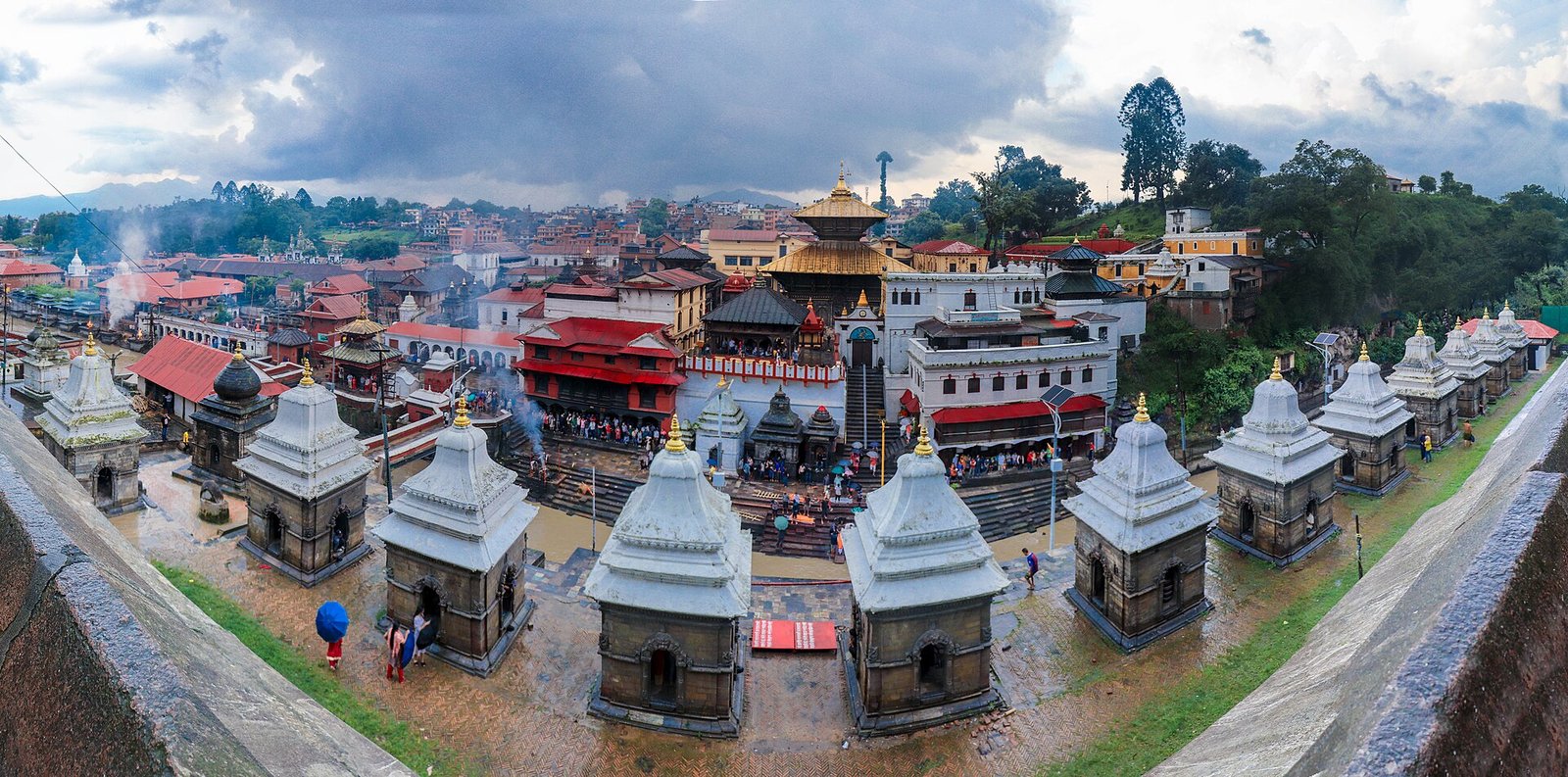
Pashupatinath is one of the most sacred places in Nepal for the last rites. Cremations take place every day on the ghats along the Bagmati, with Arya Ghat the one closest to the temple. For many Hindu families, a cremation here is believed to bring liberation to the departed soul.
Please remember that these are real funerals of real families. Watch, if at all, quietly from the opposite bank. Do not photograph or film the rites, do not walk among mourners, and keep children close. Many yatris simply offer a silent prayer for the departed as they pass.
Across the river you will see a long row of small, identical Shiva shrines, and further up, the forested slopes of Mrigasthali, where tradition says Shiva roamed in the form of a deer.
Is Pashupatinath a Jyotirlinga?
No. Pashupatinath is not one of the 12 Jyotirlingas listed in the Dwadasha Jyotirlinga Stotram; all twelve are in India (see our 12 Jyotirlinga list). Pashupatinath is, however, one of the holiest Shiva kshetras in the world.
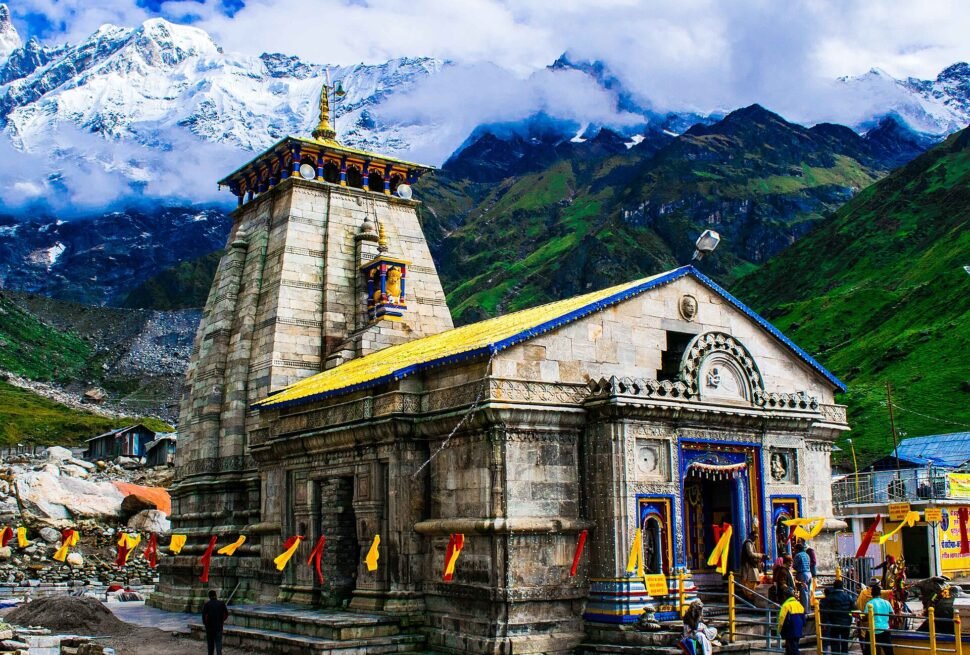
A popular tradition connects it with Kedarnath. When Lord Shiva, in the form of a bull, sank into the earth at Kedarnath to avoid the Pandavas, his hump remained there, and his head is believed by many to have emerged in Nepal. Some devotees link this head with Pashupatinath; in Bhaktapur, the Doleshwar Mahadev temple is honoured as the head of Kedarnath. In the Garhwal Panch Kedar tradition, the face is worshipped at Rudranath. Because of this story, many families like to take darshan at both Kedarnath and Pashupatinath. Our Kedarnath yatra guide covers the Indian half.
How is Mahashivratri celebrated at Pashupatinath?
Mahashivratri is the biggest day of the year at Pashupatinath. Published panchangs give Mahashivratri on 6 March 2027; confirm the date on the Nepali calendar closer to the time. In the days before, thousands of sadhus from India and Nepal gather in the temple grounds, lighting dhunis and receiving devotees.
The crowds are enormous. For Mahashivratri 2025, the temple trust expected around five lakh devotees, and reports described darshan inside lasting only a couple of seconds per person after hours in the queue. The temple opens in the early hours and stays open through the night.
Mahashivratri at Pashupatinath is a powerful experience, but it is not easy for senior citizens or small children. If your family wants calm darshan, choose another week. If you do go, book hotels and flights months ahead, carry water, and agree a meeting point in case you get separated. Our Mahashivratri 2027 guide compares Pashupatinath with other Shiva temples.
How do Indians reach Pashupatinath?
By air
Tribhuvan International Airport (KTM) in Kathmandu has direct flights from Delhi and several other Indian cities, including Varanasi and Kolkata; schedules change, so check current flights. Pashupatinath lies very close to the airport, usually 10–20 minutes by taxi depending on traffic, and about 5 km east of central Kathmandu (Thamel).
By road
Indians can also cross the open border by road. The main crossings used by yatris are:
| Indian side | Nepal side | Nearest Indian hub | Onward to Kathmandu |
|---|---|---|---|
| Sonauli | Bhairahawa (Belahiya) | Gorakhpur, Uttar Pradesh | Long road day (often 8–10 hours) or flight from Bhairahawa |
| Raxaul | Birgunj | Raxaul / Motihari, Bihar | Road day via Hetauda (often 6–8 hours) or flight from Simara |
| Rupaidiha | Nepalgunj | Bahraich / Lucknow, Uttar Pradesh | Domestic flight of about an hour |
Hill roads in Nepal are slow and can be affected by landslides in the monsoon, so road times are approximate. Indian private vehicles need a customs permit at the border; most yatris switch to a Nepal-registered vehicle or fly. The Nepalgunj route suits families from Uttar Pradesh, Uttarakhand and western Bihar; our two-day Pashupatinath Darshan from Nepalgunj starts with the flight from there.
What documents do Indians need for Nepal?
Indian citizens do not need a visa for Nepal. You do need a valid identity document:
- Adults: a valid Indian passport, or an original Voter ID card (EPIC) issued by the Election Commission of India. The Embassy of India in Kathmandu says printed or downloaded Voter IDs are not accepted.
- Not accepted for adults: Aadhaar, PAN card, driving licence and similar documents.
- Children and senior citizens: Indian government guidance allows children under 15 and seniors over 65 to travel on certain other photo IDs, including Aadhaar. Airlines and border officials do not always apply this the same way, so carry a passport wherever possible and check with your airline.
Money: under a Nepal government notice reported in 2026, Indian and Nepali citizens may carry Indian ₹200 and ₹500 notes up to ₹25,000 per person; ₹100 notes are widely accepted. Rules on currency have changed several times, so check the latest position before you travel. UPI and cards work in many places in Kathmandu, but carry some cash for offerings and small shops.
What is the best time to visit Pashupatinath?
- October to November: clear skies and pleasant days. Dashain and Tihar (Diwali) bring festive crowds and busy flights.
- December to February: cold mornings (near freezing at dawn) but calm darshan. Carry warm layers for the 4 am queue.
- March to April: pleasant weather; Mahashivratri (6 March 2027) is the one very crowded window.
- June to September: monsoon. The temple stays open, but rain, road landslides and flight delays are common. Shrawan Mondays draw large crowds.
For most families, a weekday morning between October and April gives the most peaceful darshan.
What else is near Pashupatinath?
Guhyeshwari: a few minutes’ walk upstream along the Bagmati, the Guhyeshwari temple is revered as a Shakti Peeth and is traditionally visited along with Pashupatinath, as Shiva and Shakti. Entry to the inner shrine is generally restricted in the same way as at Pashupatinath. See our Shakti Peeth yatra guide for the wider list.
Boudhanath: the great white stupa of Boudhanath, one of the largest in the world, is a short drive away and is often covered on the same day.
Kathmandu also has Budhanilkantha, with its reclining Vishnu in a water tank, and the old city squares of Kathmandu, Patan and Bhaktapur. Our four-day Kathmandu Valley Darshan Yatra covers the main temples at an easy pace.
Can I combine Pashupatinath with Muktinath?
Yes, and many families do. Muktinath, at about 3,700 m in Mustang, is one of the 108 Divya Desams of Lord Vishnu and is sacred to Hindus and Buddhists. The usual route is Kathmandu to Pokhara by road or air, a short flight from Pokhara to Jomsom, and a jeep to Muktinath. Jomsom flights run in the morning and are weather-dependent, so a buffer day is wise. Our Muktinath yatra guide explains documents, altitude and route.
What we arrange
Our team arranges Nepal yatras built around Pashupatinath: the seven-day Muktinath & Pashupatinath Yatra from Kathmandu, the two-day Pashupatinath Darshan from Nepalgunj and the Kathmandu Valley Darshan Yatra. We time darshan for the morning slot, keep the pace gentle for elders, and help with documents. For a plan for your family, use the enquiry form on this page or call/WhatsApp us (numbers on our Contact page).
Frequently asked questions
What are the darshan timings of Pashupatinath Temple?
The temple complex is open from about 4 am to 9 pm. Darshan of the main linga runs in a morning slot, from about 4 am until midday or early afternoon, and again in the evening from about 5 pm to 7 pm. The Bagmati aarti is held around dusk. Timings shift with seasons and festivals, so confirm locally on the day.
Is Pashupatinath one of the 12 Jyotirlingas?
No. All 12 Jyotirlingas are in India, and Pashupatinath is not among them. It is still one of the holiest Shiva temples in the world. A popular tradition links it with Kedarnath: Shiva’s hump remained at Kedarnath, and his head is believed by many to have appeared in Nepal, which is why families often visit both.
Can non-Hindus enter Pashupatinath Temple?
No. The main courtyard and sanctum are open only to Hindus, with gate staff making the final decision. Non-Hindus can view the temple from the eastern bank of the Bagmati, walk around the ghats and smaller shrines, and watch the evening aarti. Foreign nationals other than Indians pay an entry fee for the wider complex.
Is there an entry fee for Indians at Pashupatinath?
No. Indian and Nepali nationals enter Pashupatinath without a ticket. Other foreign nationals, including non-Indian SAARC citizens, pay a fee at the counter, listed at NPR 1,000 by the Nepal Tourism Board. Abhishek and special puja are paid separately through the temple priests. Carry your ID in case staff ask for proof of nationality.
Can I enter Nepal with an Aadhaar card?
Adults cannot. The Embassy of India in Kathmandu accepts only a valid Indian passport or an original Voter ID card; Aadhaar, PAN and driving licence are not accepted. Indian government guidance allows children under 15 and seniors over 65 to use other photo IDs including Aadhaar, but airlines may still ask for a passport, so check before you fly.
How far is Pashupatinath from Kathmandu airport?
Pashupatinath is very close to Tribhuvan International Airport, usually a 10–20 minute taxi ride depending on traffic. It is about 5 km east of central Kathmandu and Thamel. Many yatris on a short stopover take darshan on the morning of their departure because the airport is so near.
Can we watch the cremations at Arya Ghat?
Cremations take place daily on the Bagmati ghats, and people do watch quietly from the opposite bank. These are real family funerals, so keep a respectful distance, do not photograph or film, and do not walk among mourners. Many yatris simply offer a short silent prayer for the departed.
How many days do we need for Pashupatinath?
One full day is enough for Pashupatinath, Guhyeshwari and the evening aarti. Two to three days let you add Budhanilkantha, Boudhanath and the old city squares at an easy pace. If you are adding Muktinath, plan about a week in Nepal, including a buffer day for weather-dependent Jomsom flights.