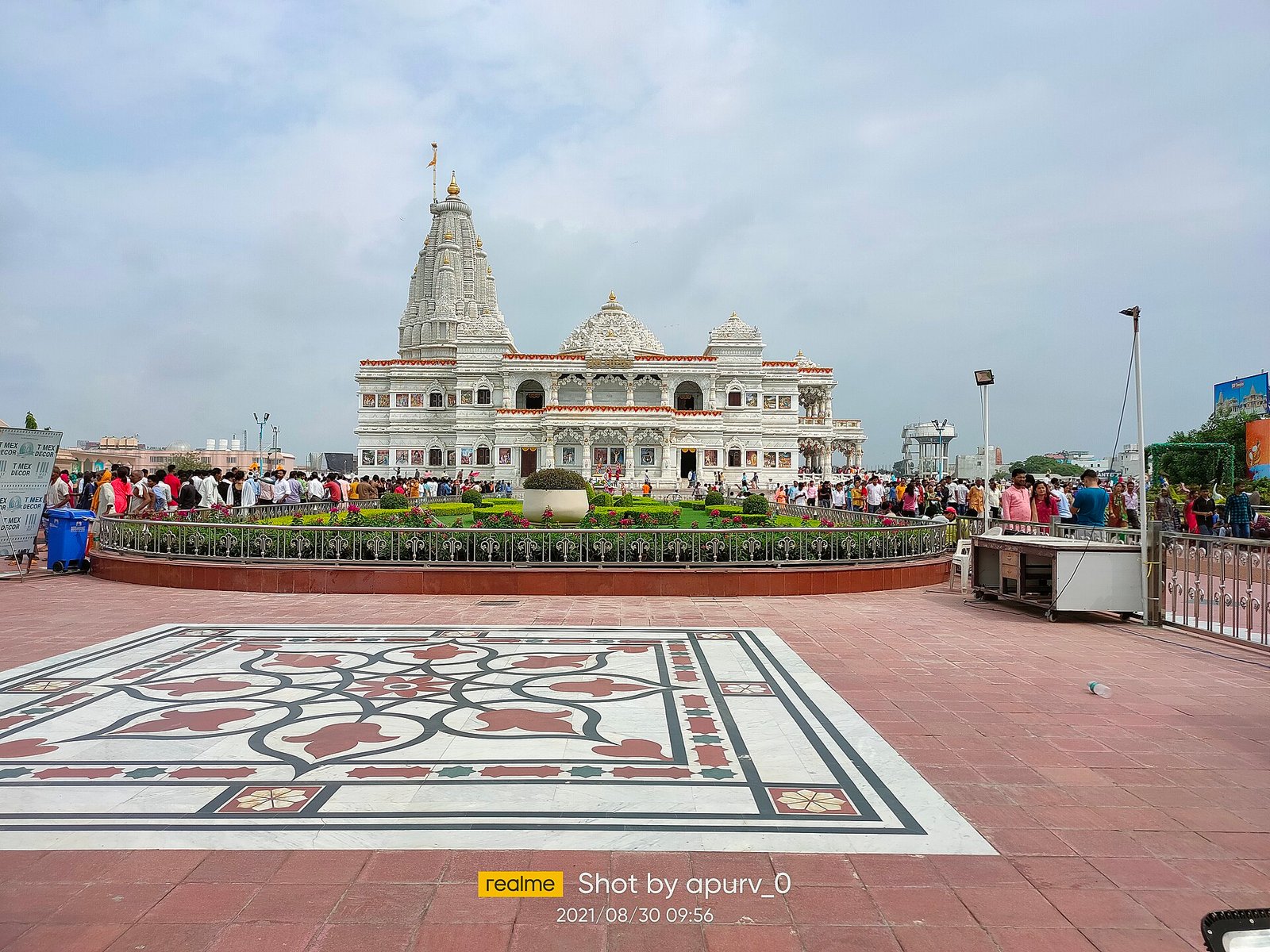
Quick answer: The ten temples at the heart of a Mathura–Vrindavan yatra are Shri Krishna Janmabhoomi, Dwarkadhish and Vishram Ghat in Mathura, and Banke Bihari, ISKCON Krishna Balaram, Prem Mandir, Radha Raman, Nidhivan, Govind Dev and Rangji in Vrindavan. Vrindavan temples close for a long afternoon rest (roughly 12:30 to 4 pm). Two days covers both towns; three to four days adds Govardhan, Barsana and Gokul.
Updated for the 2027 yatra season (facts checked October 2026)
Braj is not visited like other tirthas. Here the deity is treated as a child or a young prince, woken, fed, dressed and put to rest, and darshan follows that daily rhythm. Curtains open and close; temples shut for hours in the afternoon while Thakurji rests. Families who understand this enjoy Mathura and Vrindavan far more than those who arrive at 2 pm and find every door closed. Mathura, Krishna’s birthplace, and Vrindavan, the forest of his childhood leelas, are about 12 to 15 km apart. This guide covers the ten temples you should not miss, with their stories, timings, dress and distances, and how to plan the days.
Which are the main temples in Mathura and Vrindavan?
Mathura’s three essentials sit within about 3 km of each other: Janmabhoomi, Dwarkadhish and Vishram Ghat. Vrindavan’s temples cluster in the old town around Banke Bihari, with ISKCON and Prem Mandir on the Chhatikara–Raman Reti side. Old-town lanes are narrow and often closed to cars, so expect to walk or take e-rickshaws.
1. Shri Krishna Janmabhoomi, Mathura
Deity and significance: the site revered as the prison cell where Shri Krishna was born to Devaki and Vasudev. The complex includes the Garbha Griha shrine, the Keshavdev Mandir and the Bhagavata Bhavan with its large Radha-Krishna deities. Timings: reported as about 5:30 am to 12 noon and 4 to 9 pm in summer, and 6 am to 12 noon and 3 to 8:30 pm in winter. Rules: security is tight; phones, cameras, bags and electronic items are not allowed inside, so use the lockers or leave them in the vehicle. From station: about 3 to 3.5 km from Mathura Junction.
2. Dwarkadhish Mandir, Mathura
Deity: Krishna as Dwarkadhish, king of Dwarka, worshipped in the Pushtimarg tradition of Vallabhacharya. The temple was built in 1814 and is famous for its Shravan jhoola (swing) festival. Krishna as king is worshipped at the western dham too; see our guide to temples in Dwarka. Timings: darshan is in short “jhanki” windows morning and evening. For summer 2026 the evening schedule reported was Utthapan 4 to 4:20 pm, Bhog 4:45 to 5:05 pm, Sandhya Aarti 5:20 to 5:40 pm and Shayan 6:30 to 7:30 pm; winter timings differ. From station: about 3 km, in the old city near Vishram Ghat.
3. Vishram Ghat, Mathura
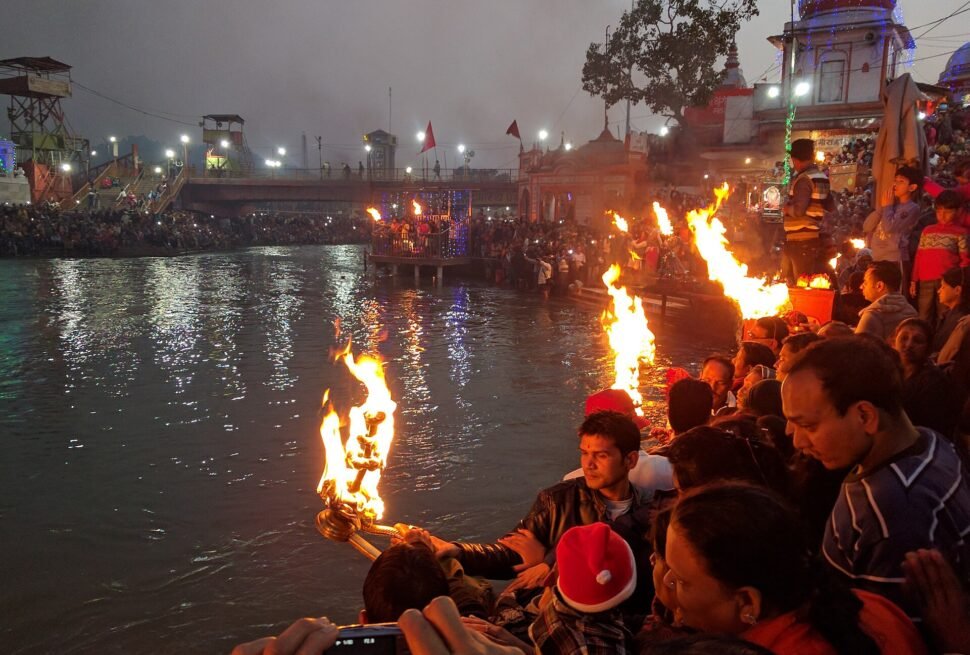
Significance: the ghat where Krishna is believed to have rested after slaying Kansa. It is the starting and ending point of the Braj parikrama, and the evening Yamuna aarti here is Mathura’s best known. Timings: ghat open always; aarti around sunset. From station: about 3.5 km.
4. Banke Bihari Mandir, Vrindavan
Deity: Krishna as Banke Bihari, “crooked in three places”, revealed by Swami Haridas. There are no bells and no regular aarti in the usual sense; a curtain is drawn every few minutes, a tradition explained by the belief that a devotee should not gaze too long. Mangla aarti happens only on Janmashtami, and the deity’s feet are shown only on Akshaya Tritiya. Timings: as reported in September 2025, summer 7 am to 12:30 pm and 4:15 to 9:30 pm; winter 8 am to 1:30 pm and 4 to 9 pm. Winter timings begin from Bhai Dooj after Diwali and run until Holi. Crowds: very heavy on weekends and festivals; the temple has introduced queue railings with separate entry and exit gates. From Mathura Junction: about 13 km.
5. ISKCON Krishna Balaram Mandir, Vrindavan
Deities: Krishna and Balaram, with Radha-Shyamasundar and Gaur-Nitai. Opened in 1975 by Srila Prabhupada, whose samadhi is in the complex. Continuous Hare Krishna kirtan, clean surroundings and a good prasad hall make it easy for seniors and children. Timings: about 4:30 am (mangala aarti) to 8:45 pm, closed roughly 1 to 4:30 pm. From Mathura Junction: about 12 km, on Raman Reti.
6. Prem Mandir, Vrindavan
Significance: a white Italian marble temple built by Jagadguru Kripalu Parishat and opened in 2012, dedicated to Radha-Krishna and Sita-Ram. The gardens have tableaux of Krishna leelas, and the evening lighting with a musical fountain draws large crowds. Timings: roughly 5:30 am to 12 noon and 4:30 to 8:30 pm. From Mathura Junction: about 12 km.
7. Radha Raman Mandir, Vrindavan
Deity: Radha Raman, a small, self-manifested deity believed to have emerged from a shaligram worshipped by Gopal Bhatt Goswami in 1542. The deity has never left the temple, and the kitchen fire is traditionally said to have burned continuously for centuries. Timings: short darshan windows morning and evening, with afternoon closure. From Mathura Junction: about 13 km, in the old town.
8. Nidhivan and Seva Kunj
Significance: two sacred groves of tulsi-like trees with twisted branches. Devotees believe Radha and Krishna still perform the raas leela here at night, so both are closed after the evening aarti and no one stays inside. Timings: daytime only, closing around sunset. From Mathura Junction: about 13 km.
9. Govind Dev Mandir, Vrindavan
Significance: a red sandstone temple built in 1590 by Raja Man Singh of Amber, once seven storeys high and among the grandest temples of north India. The original deity was moved to Jaipur for safety in the 17th century and is now worshipped there; worship continues in the old temple with a replacement deity. Timings: morning and evening windows. From Mathura Junction: about 13 km.
10. Rangji Mandir, Vrindavan
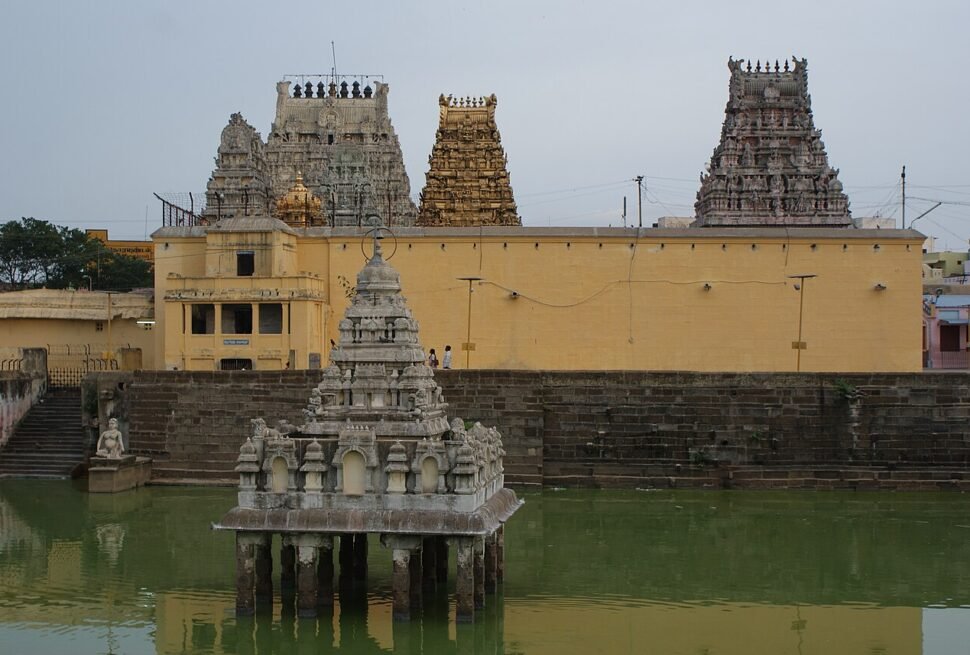
Deity: Vishnu as Ranganatha, in South Indian Dravidian style with a gold-plated dhwaja stambha and a gopuram. Its Brahmotsav in March to April, with the chariot festival, is the temple’s biggest event. Timings: about 5:30 am to 11 am and 4 to 9 pm. From Mathura Junction: about 12 km.
Mathura–Vrindavan temples at a glance
| Temple | Town | Approx. timings | From Mathura Jn | Note |
|---|---|---|---|---|
| Krishna Janmabhoomi | Mathura | 5:30 am to 12; 4 to 9 pm (summer) | 3 to 3.5 km | No phones or bags |
| Dwarkadhish | Mathura | Short jhanki windows | 3 km | Pushtimarg seva |
| Vishram Ghat | Mathura | Always; aarti at sunset | 3.5 km | Yamuna aarti |
| Banke Bihari | Vrindavan | 7 am to 12:30; 4:15 to 9:30 pm (summer) | 13 km | Heaviest crowds |
| ISKCON | Vrindavan | 4:30 am to 1; 4:30 to 8:45 pm | 12 km | Easy for seniors |
| Prem Mandir | Vrindavan | 5:30 am to 12; 4:30 to 8:30 pm | 12 km | Evening lighting |
| Radha Raman | Vrindavan | Morning and evening windows | 13 km | Self-manifested deity |
| Nidhivan | Vrindavan | Daytime only | 13 km | Closed after evening |
| Govind Dev | Vrindavan | Morning and evening windows | 13 km | 1590 sandstone temple |
| Rangji | Vrindavan | 5:30 to 11 am; 4 to 9 pm | 12 km | South Indian style |
All timings shift between summer and winter, and change completely on Janmashtami, Holi and Radhashtami. Check notices at each temple.
Beyond the two towns: Govardhan, Barsana, Nandgaon and Gokul
Braj covers a circle of about 84 kos. With an extra day you can visit Govardhan (about 22 km from Mathura), where devotees walk the roughly 21 km parikrama of the hill Krishna lifted; Gokul (about 15 km), where he was raised; and Barsana (about 45 to 50 km), Radha Rani’s village, with Nandgaon close by. Barsana’s Lathmar Holi in the week before Holi is world famous and extremely crowded.
How to plan a 1 to 3 day darshan
One day (rushed but possible)
- Janmabhoomi at opening, then Dwarkadhish and Vishram Ghat by 11 am.
- Drive to Vrindavan; Banke Bihari before it closes around 12:30 to 1:30 pm.
- Rest and lunch through the afternoon closure.
- ISKCON, Radha Raman and Rangji from 4:30 pm; Prem Mandir lighting after dark.
Two days
Day one in Mathura with the evening Yamuna aarti at Vishram Ghat. Day two in Vrindavan, starting with Banke Bihari at opening, when queues are shortest.
Three days
Add Govardhan parikrama (by e-rickshaw for seniors), Gokul and Barsana. For the full sankalp of the 84 kos, see the Braj Chaurasi Kos Yatra below.
Dress code and etiquette in Braj
- No formal dress code at most temples, but modest clothing is expected. At Banke Bihari the management has appealed to devotees to avoid short or revealing clothes.
- Monkeys in Vrindavan are notorious for grabbing spectacles, phones and bags. Wear glasses on a cord, keep bags zipped, and do not carry food openly.
- Greet with “Radhe Radhe”; it is the local way to say hello.
- Banke Bihari can be dangerously crowded on festival days. Keep children and elders close, and avoid weekends if you can.
- Agree e-rickshaw fares in advance; the old town is mostly closed to cars.
When is the best time to visit?
October to March is pleasant, with chilly mornings in December and January. Holi (February to March) and Janmashtami (August to September) are spiritually magnificent but bring lakhs of devotees, closed roads and long queues; plan with care and avoid them with seniors. April to June is very hot, with afternoons above 40°C. The monsoon brings the Shravan jhoola festivals, beautiful but humid.
How to reach Mathura and Vrindavan
- Train: Mathura Junction (MTJ) is on the Delhi–Agra–Mumbai and Delhi–Bhopal lines; fast trains from Delhi take about 2 hours.
- Road: Delhi to Mathura is about 160 to 180 km via the Yamuna Expressway, roughly 3 hours.
- Air: the nearest regular airports are Agra (about 60 km) and Delhi.
How we can help
Our Mathura Yatra (3 nights, 4 days from Delhi) covers both towns at a relaxed pace that respects the afternoon closures. The Mathura–Vrindavan Yatra with Agra (5 nights, 6 days) adds Govardhan and Barsana, and the Braj Chaurasi Kos Yatra (6 nights, 7 days) is for devotees who want the full parikrama. Browse North India yatras, or use the enquiry form on this page or call/WhatsApp us (numbers on our Contact page).
Frequently asked questions
What are the Banke Bihari temple timings?
As reported in September 2025, summer timings are about 7 am to 12:30 pm and 4:15 to 9:30 pm, and winter timings about 8 am to 1:30 pm and 4 to 9 pm. Winter timings start from Bhai Dooj after Diwali and continue until Holi. Festival days have special schedules, so check the temple notice before you go.
How many days are enough for Mathura and Vrindavan?
Two days is the comfortable minimum: one for Mathura and one for Vrindavan, working around the afternoon closures. Three days lets you add Govardhan, Gokul and Barsana. One day is possible only if you start early and accept seeing fewer temples, because most shrines close for three to four hours after lunch.
Why do Vrindavan temples close in the afternoon?
In Braj, Krishna is served like a living child or young prince. After the midday bhog, Thakurji is put to rest, so temples close for roughly three to four hours, usually from about 12:30 or 1 pm to 4 or 4:30 pm. Plan lunch and rest for this window and resume darshan in the evening.
Are mobile phones allowed in Krishna Janmabhoomi?
No. Security at Shri Krishna Janmabhoomi is strict and phones, cameras, bags and electronic items are not permitted inside. Lockers are available near the entrance but queues can be long, so the easiest option is to leave everything in your vehicle or hotel and carry only cash and ID.
What is the distance between Mathura and Vrindavan?
About 12 to 15 km, roughly 30 to 45 minutes by road depending on traffic. Banke Bihari is about 13 km from Mathura Junction. Shared autos, taxis and e-rickshaws run between the towns. The old lanes of Vrindavan are largely closed to cars, so the last stretch is usually on foot or by e-rickshaw.
Is it safe to take elders to Banke Bihari?
On ordinary weekday mornings, yes, with care. On weekends, Janmashtami, Holi and other festivals the crush can be dangerous for elders and children. Go at opening time on a weekday, keep the group together, and use ISKCON or Prem Mandir, which are far more spacious, for longer darshan.
What is the Govardhan parikrama distance?
The Govardhan parikrama is commonly given as about 21 km (seven kos) around the hill. Devotees walk it barefoot, often overnight on Purnima, while elders can do it by e-rickshaw in two to three hours. Govardhan is about 22 km from Mathura, so it fits well into a half-day.
When is the best time to visit Mathura Vrindavan?
October to March is ideal for comfort. Holi and Janmashtami are the most spiritually vibrant times but also the most crowded, with traffic restrictions and long queues. If you are travelling with seniors, choose a quieter month and visit on weekdays. Summer afternoons are very hot.