Quick answer: The Kailash parikrama (kora) is a walk of about 52 km around Mount Kailash, walked clockwise in three days from Darchen (about 4,670 m). Day 1 runs from Yam Dwar to Dirapuk, Day 2 crosses Dolma La pass (about 5,630 m) to Zuthulpuk in 9–12 hours, and Day 3 is a short walk out. Ponies help on most of the route, but it remains a demanding trek.
Updated for the 2027 yatra season (facts checked October 2026)
For most yatris, the parikrama is the heart of the Kailash yatra: three days of walking around the abode of Mahadev, through a valley that has been walked by pilgrims of four faiths for centuries. It is also the hardest part, physically and mentally. This guide describes each day as it is actually walked today, with distances, altitudes, where you sleep, where the ponies stop, and what to do if you decide not to walk.
Kailash parikrama at a glance
| Day | Route | Distance (approx.) | Walking time | Night halt and altitude |
|---|---|---|---|---|
| Before | Arrive Darchen by road from Mansarovar (about 40 km) | None | None | Darchen, about 4,670 m |
| Day 1 | Drive to Yam Dwar (Tarboche), walk up the Lha Chu valley to Dirapuk | About 10–12 km from Yam Dwar | 5–7 hours | Dirapuk, about 4,900 m |
| Day 2 | Dirapuk up to Dolma La, down past Gauri Kund to Zuthulpuk | About 22 km | 9–12 hours | Zuthulpuk, about 4,790 m |
| Day 3 | Zuthulpuk down the valley to the road head, drive to Darchen | About 8–10 km | 3–4 hours | Darchen or onward to Purang |
Published figures for the total distance range from about 48 to 53 km, depending on where you start counting and whether you walk the first stretch from Darchen or drive to Yam Dwar. Altitude figures for Dolma La also vary slightly between sources, from about 5,630 to 5,650 m.
Day 1: Yam Dwar to Dirapuk
Vehicles take the group from Darchen to Yam Dwar, near the great prayer flagpole of Tarboche, considered the gateway of the parikrama. Many yatris do a small puja here before setting out. The path then follows the Lha Chu river north through a wide valley with red cliffs, climbing gently for most of the day. This is the easiest day and the right one to find your rhythm: slow steps, steady breathing, frequent sips of water.
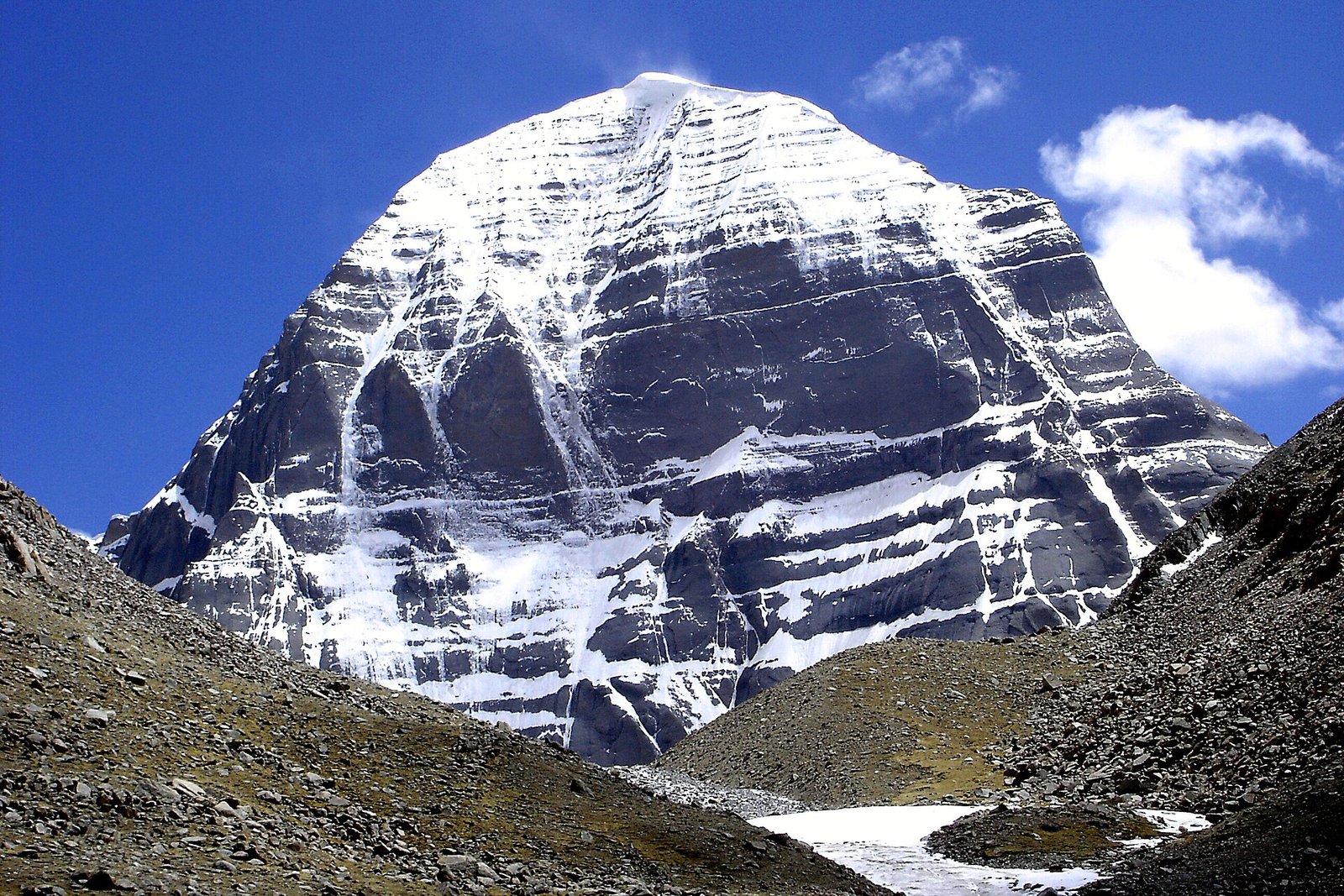
The reward comes in the afternoon. Near Dirapuk, the north face of Kailash rises directly ahead, a sheer wall of rock and snow that many yatris consider the most powerful darshan of the whole yatra. The MEA’s yatra booklet singles out Dirapuk as the place for the closest and clearest view of the mountain, especially at sunset. Those who want can walk a little further towards the base of the north face, the area associated with Charan Sparsh, though this needs extra time and permission; see our Charan Sparsh guide.
Night at Dirapuk is in basic guest houses with shared rooms and common toilets. It is cold, and sleep at about 4,900 m is often light. Eat a proper dinner even if you are not hungry, and drink water.
Day 2: Dolma La pass to Zuthulpuk, the hardest day
Start early, often before 6 am. The climb from Dirapuk to Dolma La gains roughly 700 m in a few kilometres, at altitudes where every step costs effort. On the way is Shiva Sthal, a stony slope where pilgrims traditionally leave behind a piece of clothing or a token as a symbol of leaving their old life behind. In Hindu understanding the crossing of Dolma La is linked with symbolic death and rebirth; Tibetan pilgrims associate the pass with the goddess Dolma (Tara).
The top of the pass is covered in prayer flags. Spend only a few minutes there: it is the highest point of the yatra and the air is thinnest. Just below, on the far side, lies Gauri Kund, a small emerald lake associated with Mata Parvati. Some yatris climb down to it to collect water; it is a steep detour and only for those with energy to spare.
The descent from Dolma La is steep, rocky and sometimes icy. Ponies cannot carry riders down this section, so everyone walks it, slowly, with trekking poles. After that, the path levels into a long valley to Zuthulpuk, associated with the cave of the yogi Milarepa. Expect to reach it in the late afternoon or evening, tired but deeply satisfied.
Day 3: Zuthulpuk to Darchen
An easy morning walk of about three hours along the valley, past grazing yaks and nomad tents, brings you to the road head where vehicles wait. The group drives back to Darchen to rejoin those who did not walk, and usually continues to Purang for a hot meal, a shower and a proper bed.
Ponies, porters and yaks: how they work
- Ponies (with a handler) and porters are hired at Darchen or arranged at Purang, and paid locally in Chinese yuan. On the government yatra, the official fee page lists pony and porter rates in yuan, subject to revision by local authorities.
- Ponies are limited in peak weeks, so tell your guide early at Darchen if you will need one.
- A pony helps most on Day 2’s climb. Riders must dismount for the descent from Dolma La.
- Even if you plan to walk, a porter for your bag makes a big difference. Carry only a light day pack with water, snacks, rain shell, gloves, cap, sunscreen and medicines.
- Agree clearly with your guide what is included: one way or round, and whether the pony goes to Zuthulpuk.
Who should not attempt the parikrama?
Be honest with yourself. The parikrama is not suitable for anyone with uncontrolled heart disease, high blood pressure or lung disease, and it is hard for anyone who cannot walk 8–10 km comfortably at home. If you have had headache, vomiting or breathlessness at the lake or Darchen, do not start. Many devout yatris choose to wait at Darchen, have darshan from Yam Dwar, and pray there for the walkers. That is a full and respected yatra too.
Options for those who do not walk
- Stay at Darchen for the two nights and rejoin the group on Day 3 (extra nights are usually paid locally).
- Go only as far as Yam Dwar for darshan and puja.
- Choose a darshan-only programme that skips the parikrama altogether.
Beliefs around the parikrama
These are matters of faith, recorded here as beliefs held by pilgrims:
- Hindus believe one parikrama of Kailash washes away the sins of a lifetime.
- In Tibetan tradition, 108 circuits are said to bring liberation, and some pilgrims do the walk in a single long day or by prostrating their whole body along the path.
- A parikrama in the Tibetan Year of the Horse (the current Horse year began at Losar in February 2026) is believed to carry special merit.
- Hindus, Buddhists and Jains walk clockwise; followers of the Bon religion walk anticlockwise.
Inner parikrama (Nandi parikrama)
A shorter but much steeper inner circuit goes closer to the mountain, past Nandi Parvat and the Saptarishi caves. It is generally open only to those who have completed the outer parikrama and needs special permission from the local authorities, which is not always granted. We offer it only as part of a longer programme with extra acclimatisation.
Preparing for the parikrama
- Train for at least two months: daily brisk walks building to 5–6 km, stairs, and longer weekend walks.
- Break in your trekking shoes well before the yatra.
- Choose a programme with a rest night at Purang and a night at Darchen before Day 1.
- Carry trekking poles; they save your knees on the Dolma La descent.
- Pack warm layers, gloves, a woollen cap, sunglasses and SPF 50. See our Kailash packing list.
- Learn the warning signs of altitude sickness and agree with your yatra manager when you will turn back. Our altitude guide explains them.
How we can help
Our full Kailash yatras include all three parikrama days with a Tibetan guide and guest houses at Dirapuk and Zuthulpuk; ponies and porters are hired locally. The 9-day yatra from Lucknow is the shortest full programme, the 14-day overland yatra gives the most acclimatisation, and the 13-day inner parikrama yatra adds the Nandi circuit, subject to permission. See all on our Kailash Mansarovar page, and use the enquiry form on this page or call/WhatsApp us (numbers on our Contact page).
Frequently asked questions
How long is the Kailash parikrama?
The outer parikrama is about 52 km, though published figures range from about 48 to 53 km depending on the start point. Most yatris complete it in three days: about 10–12 km to Dirapuk, about 22 km over Dolma La to Zuthulpuk, and about 8–10 km to the road head. Some Tibetan pilgrims walk it in a single day.
How high is Dolma La pass?
Dolma La is usually given as about 5,630 m, with some sources stating up to about 5,650 m. It is the highest point of the Kailash yatra. Yatris start before dawn from Dirapuk to cross it in the morning, spend only a few minutes at the top, and then make a steep descent past Gauri Kund that must be walked.
Can I do the Kailash parikrama on a pony?
Partly. Ponies with handlers can be hired at Darchen and carry riders for most of the route, including the climb to Dolma La. But the steep, rocky descent from the pass towards Gauri Kund must be walked, as ponies cannot carry riders safely there. Ponies are paid in Chinese yuan and allocated locally.
What if I cannot complete the parikrama?
Turning back is allowed and sometimes wise. On Day 1, the guide can arrange for you to return to Darchen. Once past Dirapuk, the route continues to the far side, so the decision before Day 2 matters most. Non-walkers wait at Darchen and rejoin the group; extra Darchen nights are usually paid locally.
Where do we stay during the parikrama?
In basic guest houses at Dirapuk and Zuthulpuk, with shared rooms, simple beds and quilts, and common toilets without hot showers. Food is simple: noodles, rice, soup and tea, with our cook’s vegetarian meals where possible. Carry snacks, a headlamp, wet wipes and warm night clothes.
Is the inner parikrama open to everyone?
No. The inner circuit, past Nandi Parvat and the Saptarishi caves, is steeper and more exposed, and is generally permitted only for those who have completed the outer parikrama. Permission is given by local authorities and is not guaranteed. It is offered only on longer programmes with extra acclimatisation days.
Which direction is the Kailash parikrama done?
Hindus, Buddhists and Jains walk clockwise, keeping the mountain on their right. Followers of Bon, the old religion of Tibet, walk anticlockwise. Yatri groups from India follow the clockwise route: Yam Dwar, Dirapuk, Dolma La, Zuthulpuk and back towards Darchen.