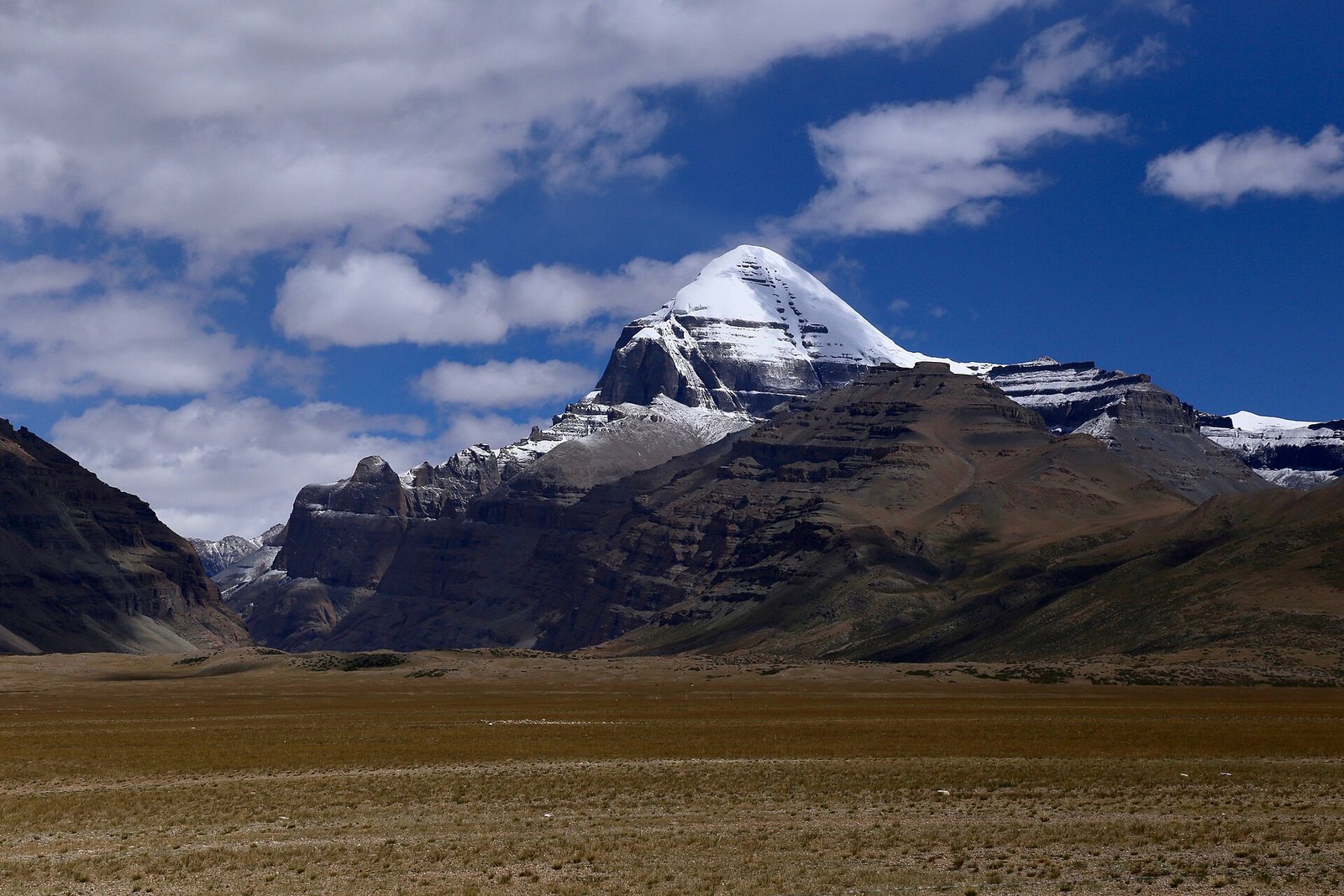
Quick answer: Kailash Mansarovar Yatra takes you to Mount Kailash and Lake Mansarovar in Tibet (China). Indians go either by the government yatra run by the Ministry of External Affairs (MEA) via Lipulekh or Nathu La, about about 21 to 22 days and chosen by computerised draw, or privately through Nepal in about 5 to 14 days. You need an Indian passport, good fitness and Chinese permission. 2027 dates are not yet announced.
Updated for the 2027 yatra season (facts checked October 2026)
This page collects the questions families ask us most often about Kailash Mansarovar, from the first “is it even possible for us?” to the last “can we bring Mansarovar jal home?”. Each answer stands on its own, so you can jump to the group you need. Where the rules for 2027 have not been announced, we tell you what applied in 2026 and say clearly that it may change.
For deeper reading, see our government vs Nepal route guide and the complete Kailash Mansarovar Yatra guide.
Kailash Mansarovar at a glance
| Point | Government yatra (MEA) | Private yatra via Nepal |
|---|---|---|
| How you get a place | Online application at kmy.gov.in, then computerised draw | Book with a registered operator; no draw |
| Routes | Lipulekh (Uttarakhand) or Nathu La (Sikkim) | Hilsa (helicopter via Nepalgunj and Simikot), Kerung (road from Kathmandu), or via Lhasa |
| Days (2026 pattern) | About 21 to 25, including about 4 days in Delhi | About 5 (darshan only) to 14 (with parikrama) |
| Who can go | Indian passport holders aged 18 to 70 | Indian passport holders, plus NRIs and foreigners subject to Chinese approval; age rule set by the Chinese side |
| Medical | Compulsory tests at DHLI and ITBP Base Hospital, Delhi | MBBS fitness certificate; operator may ask for more |
| Season | June to August (2026) | Roughly May to September |
| Highest point | Dolma La, about 5,630 m, on the parikrama; Mansarovar about 4,590 m | |
How we can help
We do not run the government yatra; only the MEA and its state agencies do. For the private routes through Nepal we arrange everything from Dehradun: Chinese group visa and Tibet permits through authorised partners, flights, helicopters, hotels, a yatra manager who travels with you, a Tibetan guide and pure vegetarian meals. Options include the 9-day Kailash Mansarovar Yatra from Lucknow, the 14-day overland yatra by bus and the 5-day darshan by helicopter without parikrama. See all options on our Kailash Mansarovar yatras page, or read in Hindi at कैलाश मानसरोवर यात्रा. For 2027 dates, use the enquiry form on this page or call/WhatsApp us (numbers on our Contact page).
Basic questions about Kailash and Mansarovar
Start here if you are new to the yatra and want to understand where you are going and why it matters.
What is the Kailash Mansarovar Yatra?
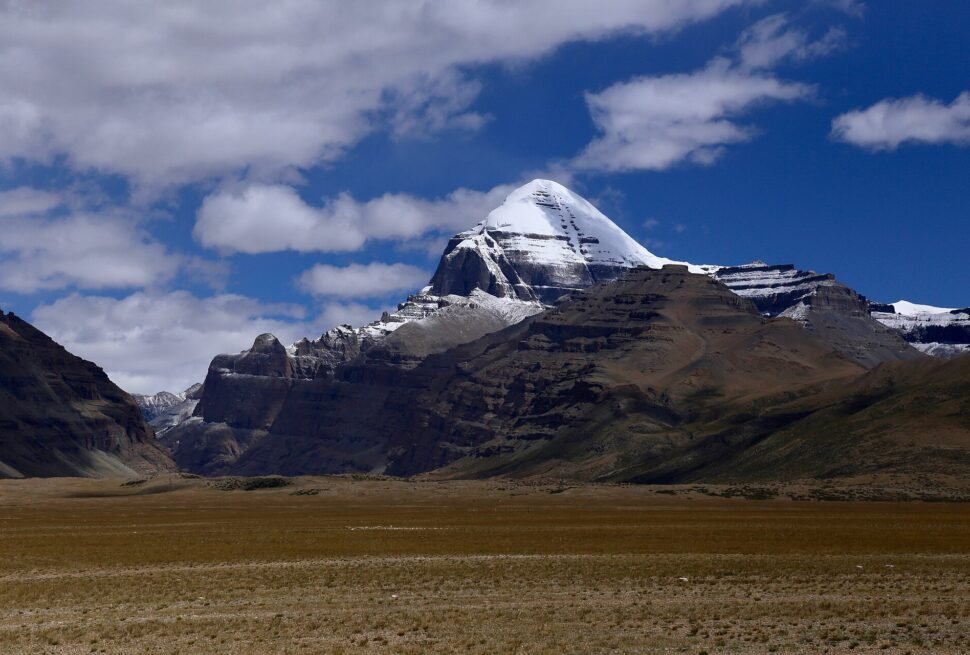
It is the pilgrimage to Mount Kailash, revered as the abode of Lord Shiva and Mata Parvati, and to Lake Mansarovar at its foot, in the Ngari region of western Tibet. Yatris offer puja and take holy water at the lake, have darshan of the mountain and, if fit, walk the three-day parikrama around it. It is equally sacred to Jains, Buddhists and followers of Bon.
Where exactly is Mount Kailash?
Mount Kailash is in the Tibet Autonomous Region of China, north of the point where India, Nepal and Tibet meet near Uttarakhand’s Pithoragarh district. The nearest town on the Tibetan side is Purang, also called Taklakot. Darchen, the village where the parikrama starts, sits at the southern foot of the mountain, a short drive from Lake Mansarovar.
How high is Mount Kailash?
Mount Kailash is commonly given as about 6,638 metres, though published figures vary by a few metres. Lake Mansarovar lies at about 4,590 metres, and Darchen at roughly 4,600 to 4,700 metres. The highest point most yatris reach is the Dolma La pass, about 5,630 metres, on the second day of the parikrama.
Has anyone climbed Mount Kailash?
No recorded ascent of Mount Kailash exists. For Hindus, Jains, Buddhists and Bon followers the mountain is too sacred to be climbed, and climbing it is not permitted. Yatris honour it by walking around it in the parikrama instead. Many stories are told about why it remains unclimbed; we treat these as matters of faith rather than proven fact.
Why is Lake Mansarovar so sacred?
Tradition holds that Lake Mansarovar was created in the mind of Lord Brahma, which is what its name means. Devotees believe that a dip in its waters or puja on its shore washes away sins, and many carry its water home as prasad. It is a large freshwater lake, about 88 km around, with Mount Kailash visible across it on clear days.
What is Rakshastal?
Rakshastal is the lake just west of Mansarovar. Its water is salty and, by tradition, it is linked with Ravana, who is said to have done tapasya here to please Lord Shiva. Yatris usually see it from a viewpoint on the drive and do not bathe in it. A natural channel, the Ganga Chhu, connects Mansarovar to Rakshastal.
Is Adi Kailash the same as Kailash Mansarovar?
No. Adi Kailash is a separate peak of about 5,945 metres in Pithoragarh district, Uttarakhand, inside India, and needs only an Inner Line Permit. Mount Kailash and Mansarovar are in Tibet and need a passport and Chinese permission. Our Adi Kailash vs Kailash Mansarovar guide explains the differences in detail.
2027 dates and season questions
Dates for 2027 have not been announced by the MEA or by the Chinese side as of October 2026. These answers explain the usual pattern so you can plan around it.
When will Kailash Mansarovar Yatra 2027 start?
No official 2027 dates have been announced yet. In 2026 the government yatra ran from June to August, and the private season through Nepal began in mid-May. A similar pattern is likely for 2027, but it depends on announcements by the Ministry of External Affairs and approvals from the Chinese side. We update our package pages as soon as dates are confirmed.
When does registration for the government yatra usually open?
In 2026 the MEA opened online applications at kmy.gov.in at the end of April, closed them on 19 May and held the computerised draw on 21 May. Nothing has been announced for 2027. Keep your passport valid and watch kmy.gov.in and MEA press releases from about March. Our registration guide walks through each step.
When should I book a private yatra through Nepal for 2027?
Start talking to your operator by February or March. Resident Indians usually hand over their passport about a month before departure for the Chinese group visa, and popular full moon departures fill early. Booking ahead also gives you time for medical tests and walking practice. Pay only after you have the cancellation terms in writing.
Which is the best month for Kailash Mansarovar?
June and the first half of September are usually the most comfortable. May and early June can be very cold with snow on Dolma La. July and August bring rain to the Nepal approach routes, which can delay flights at Simikot or block roads near Kerung, although western Tibet itself is drier. Late September turns colder, and the season ends with the first heavy snow.
How cold is it at Mansarovar in summer?
Climate records for the lake show average daytime highs of about 13 to 14°C in June and July, with nights near or below freezing. At Dolma La it is colder, and snow or sleet can fall in any month. Wind across the plateau makes it feel colder still. Pack a down jacket, thermals, woollen cap and gloves even for a July departure.
Are full moon dates special for the yatra?
Many devotees like to be at Mansarovar on a Purnima, when the moonlit lake and mountain are a sight they never forget. Groups timed for full moon nights fill first, so book early if this matters to you. The Tibetan Saga Dawa festival, usually in May or June, also draws large crowds to the Kailash area.
Does the yatra run in winter?
No. From about October to April, snow, extreme cold and closed passes make the yatra impractical, and neither the government yatra nor private pilgrim groups operate. If you want Kailash darshan outside the summer season, there is no reliable option. Plan for the summer window and use the winter months for fitness training and paperwork.
Route questions
There are two systems: the government yatra through India and the private yatra through Nepal. Each has its own routes.
What is the difference between the government and private routes?
The government yatra is organised by the MEA with KMVN and Sikkim Tourism Development Corporation, uses the Lipulekh or Nathu La passes, takes about three weeks and selects yatris by draw. Private yatras are run by registered operators through Nepal, with no draw, many departure dates and durations of about 5 to 14 days. The altitude and darshan inside Tibet are the same.
What is the Lipulekh route?
The Lipulekh route goes through Kumaon in Uttarakhand: Delhi, Tanakpur, Dharchula, Gunji and over the Lipulekh pass, about 5,300 metres, into Tibet. In 2026 the first batch was flagged off from Tanakpur on 5 July and crossed into Tibet on 10 July. KMVN runs the Indian side. It has more walking and higher camps on the Indian side than Nathu La.
What is the Nathu La route?
The Nathu La route runs from Delhi by air to Bagdogra, then via Gangtok and the Nathu La pass in Sikkim, and across the Tibetan plateau by vehicle. The official FAQ puts total walking at about 35 to 40 km, mostly the parikrama itself. It is gentler for non-trekkers but costs more, and the altitude inside Tibet is the same as on other routes.
What is the Hilsa or Simikot route?
This is the most used private route for Indian yatris. You drive about 190 km from Lucknow to Nepalgunj, fly to Simikot in Humla, take a helicopter to Hilsa on the border, cross on foot and drive about 105 km to Mansarovar. It is the shortest route, but flights at Simikot depend on weather and delays of a day or two are common.
What is the overland route via Kerung?
From Kathmandu the road runs north through Syabrubesi to the Rasuwagadhi border, enters Tibet at Kerung (Gyirong) and continues west through Saga to Mansarovar. It takes about 12 to 14 days, needs no small aircraft and lets the body adjust slowly. In August 2026, flash floods in Rasuwa damaged roads on this corridor, so monsoon departures need spare days.
Can I go to Kailash via Lhasa?
Yes. Some yatris fly from Kathmandu to Lhasa and drive west through Shigatse and Saga. It is the longest private option, about 14 days, and usually costs the most, but it adds Lhasa and gives a full week of gradual acclimatisation before Mansarovar. Our Kailash Mansarovar Yatra via Lhasa follows this route.
Is the Tatopani (Kodari) border open for Kailash?
It was reported closed in 2026, so it is not used for Kailash at present. Private yatras through Nepal currently enter Tibet at Kerung by road or at Hilsa after the Simikot helicopter, or fly to Lhasa. Border status can change from season to season, so ask your operator which crossing their 2027 groups will use.
Which route is shortest?
The Lucknow, Nepalgunj, Simikot and Hilsa route. A darshan programme with Mansarovar puja and darshan from Yam Dwar, without the parikrama, takes about five days from Lucknow. With the full three-day parikrama it takes about nine days. Keep a couple of spare days at home after your return date in case weather holds flights at Simikot.
Which route is best for senior citizens?
For elders who should not walk, a short helicopter darshan via Hilsa without parikrama keeps the time at high altitude to a minimum. The Lhasa and Kerung routes climb more slowly, which some doctors prefer, but they mean longer journeys. On the government side, Nathu La has less walking. Whatever the route, a doctor’s clearance comes first.
Which route is best for doing the full parikrama?
Any route that includes the three walking days works, but slow acclimatisation helps on Dolma La. The 9-day Lucknow route is the quickest complete programme. The overland Kerung route, about 14 days, climbs gradually and is usually the most economical way to complete the parikrama. The government yatra also includes the parikrama for those selected.
Government yatra registration questions
These answers cover the MEA yatra only. Private routes have no draw.
How do I apply for the government Kailash yatra?
Apply online at kmy.gov.in when the MEA announces the yatra; only online applications are accepted. You choose Lipulekh, Nathu La or both in order of preference, upload your passport details and photograph, and submit before the deadline. Selection is by computerised draw. If chosen, you pay the confirmation amount and report to Delhi on your batch date.
How are yatris selected?
By a computerised, random and gender-balanced draw. In 2026 the draw was held on 21 May, two days after applications closed, and results went out by SMS and email. Applying early does not improve your chances. If you are not selected you may be wait-listed, and wait-listed yatris are sometimes confirmed later when seats fall vacant.
How many seats are there?
In 2026 there were 1,000 seats in 20 batches of 50 yatris, 10 batches on each route. In 2025, when the yatra resumed after a five-year break, 750 yatris were selected. The number for 2027 will be fixed by the MEA in consultation with the Chinese side and announced with the application notice.
Can a husband and wife apply together?
Yes. The official FAQ asks spouses to complete their online applications together before the deadline, and incomplete applications are rejected. Check the application form for the current option to link applicants, because the draw treats applications according to the rules notified each year. Do not assume that one person’s selection guarantees the other’s.
What is the confirmation amount?
In 2026 selected yatris paid a non-refundable confirmation amount of ₹5,000 to KMVN for Lipulekh or Sikkim Tourism Development Corporation for Nathu La. Once paid and confirmed in any batch, it is not refunded. Wait-listed applicants who are never confirmed get their money back, but only after all batches finish.
Does the MEA charge a fee or give a subsidy?
The Ministry itself charges no fee and gives no subsidy. You pay the state agencies for services in India, the Chinese side for services in Tibet, and separately for medical tests and the visa. Some state governments give their residents financial help after the yatra; see our state subsidy guide and check your state’s current notification.
Can I apply for the government yatra and also book privately?
Many families do exactly that. Apply at kmy.gov.in when the window opens and hold a private booking with clear cancellation terms as back-up. If you are selected, cancel the private booking as per its policy. Ask your operator in writing what is refundable, because visa and permit fees usually are not, and avoid paying non-refundable amounts on both sides before the draw.
Can a travel agent get me a seat on the government yatra?
No. Seats on the government yatra are allotted only through the MEA’s computerised draw, and no agent or organiser can sell or guarantee one. Anyone claiming to is not telling the truth. An agent can help you fill the online form, but the selection is entirely the Ministry’s. Private yatras via Nepal are a separate system.
Eligibility, age and medical questions
Fitness is the single biggest factor in a safe Kailash yatra. Read these with your doctor.
What is the age limit for Kailash Mansarovar Yatra?
For the 2026 government yatra the age range was 18 to 70 years, counted as on 1 January of the yatra year. On the private Nepal route the Chinese side sets the age rule; operators commonly cite 70 as the limit, and some report conditional approval for older yatris with extra requirements. Confirm the 2027 rule in writing before paying. See our eligibility guide.
Is there a BMI limit?
The government yatra advises a BMI of 25 or below. The official FAQ says a higher BMI does not automatically disqualify you if other tests are satisfactory, but you are encouraged to bring it down to 25. Private operators do not usually set a BMI limit, but extra weight makes the parikrama and altitude harder, so losing a few kilos helps.
Can NRIs go on Kailash Mansarovar Yatra?
NRIs who hold an Indian passport can apply for the government yatra if they meet the rules. On private routes, NRIs usually get their Chinese visa in Kathmandu rather than Delhi and are generally grouped with other NRIs or foreign passport holders. Rules for NRI groups change, so ask your operator how they will handle your visa for 2027.
Can OCI cardholders or foreigners go?
OCI cardholders, PIO holders and foreign passport holders cannot apply for the government yatra. They can usually go privately through Nepal, with the Chinese visa processed in Kathmandu, which in 2026 took several working days and often needed a personal biometric visit. Approval rests entirely with the Chinese authorities, so plan extra time.
What medical tests are done on the government yatra?
Selected yatris spend about four days in Delhi, where they are tested at the Delhi Heart and Lung Institute (DHLI) and then the ITBP Base Hospital. Reports from other hospitals are not accepted. Further checks are done at Gunji on the Lipulekh route and Sherathang on the Nathu La route. Our medical test guide explains each stage.
What if I am declared medically unfit?
If the doctors declare you unfit, you cannot go that year, and the official FAQ says you will not be moved to a later batch even after recovery. Money paid for medical tests is not refunded. Uncontrolled blood pressure, diabetes, asthma, heart disease and epilepsy are common reasons. Get a full check-up months ahead and bring these under control first.
What fitness proof is needed for the private route?
Usually a medical fitness certificate from an MBBS doctor, issued within about a month or six weeks of travel, stating that you are fit for high altitude. Some operators ask for specific tests such as an ECG. The Chinese side may check health papers at the border. Be honest with your doctor and your operator about every condition and medicine.
Can diabetics or people with blood pressure do the yatra?
Many do, if the condition is well controlled and their doctor agrees. On the government yatra, uncontrolled blood pressure or sugar can lead to rejection at the Delhi tests. Carry double the medicines you need, keep sugar snacks handy and check readings daily. People with heart or lung disease should take specialist advice; Adi Kailash may be the safer choice.
Are young people safer at altitude than older people?
Not necessarily. The official government FAQ notes that people aged about 19 to 30 are, if anything, more prone to high-altitude sickness than older groups, often because they climb too fast and ignore early signs. Age is only one factor. Pace, acclimatisation days, hydration and honesty about symptoms matter at every age.
Can children go on the Kailash yatra?
Not on the government yatra, which requires applicants to be at least 18. On private routes, rules for minors depend on the Chinese side and change from season to season. Even where allowed, nights above 4,500 metres are hard on young bodies, so most families leave children at home or choose an aerial darshan or Adi Kailash instead.
Documents, visa and permit questions
Paperwork for Kailash is international and slower than for any yatra inside India. Start early.
Do I need a passport for Kailash Mansarovar?
Yes, always. On the government yatra, the 2026 rule asked for a passport valid at least six months beyond September of the yatra year. On private routes, carry a passport valid for at least six months beyond your return date, with at least two blank pages. An Aadhaar or voter ID is not enough to enter Tibet. See our documents guide.
What visa is needed for Tibet?
Pilgrims travel on a Chinese group visa together with Tibet permits, arranged by the MEA for the government yatra or by your registered operator for private routes. The group visa lists everyone on one sheet, so the whole group must enter and leave Tibet together. You cannot get an individual tourist visa and go to Kailash on your own.
When do I submit my passport for the private yatra?
In 2026, resident Indians handed their original passports to their operator’s office about a month before departure, so the group visa could be processed at the Chinese Embassy in New Delhi. Do not plan any foreign travel during that month. Your passport is returned with the visa before you leave, or handed over at the start of the yatra.
Do Indians need a visa for Nepal?
No. Indian citizens do not need a visa for Nepal, but on a Kailash yatra you must carry your passport, because it is checked at both the Nepal and Tibet borders. For an aerial darshan flight that does not enter Tibet, a passport or Election Commission voter ID is enough to enter Nepal.
Which other documents should I carry?
Carry your original passport, photocopies kept separately, six recent passport-size photographs with a white background, your medical certificate, a PAN card copy (needed for TCS on overseas packages), travel insurance papers and any indemnity forms your organiser asks for. On the government yatra, selected yatris also sign indemnity bonds and undertakings in Delhi.
Is travel insurance compulsory?
It is not always compulsory, but we strongly advise it. Choose a policy that clearly covers trekking or travel above 4,500 metres, emergency evacuation including helicopter rescue, and hospital treatment abroad. Many standard policies exclude high altitude, so read the wording. Rescue from remote parts of Tibet is slow and expensive without cover.
Can I travel alone to Kailash without a group?
No. Indian pilgrims must travel in an approved group, either a government batch or a group arranged by a registered operator with a licensed Tibetan guide. Independent travel to Kailash is not permitted. Solo yatris simply join a group departure; you will usually share a room with another yatri of the same gender.
How do I know my operator is genuine?
Ask how they obtain the Chinese visa and Tibet permits, which Nepali and Tibetan partners they use, and for written inclusions and cancellation terms. In June 2026 the MEA reminded yatris to make sure all Chinese visas and permits are in hand before setting out and to confirm the operator is registered, after some Indians were stranded in Nepal without papers.
Cost and payment questions
We never quote a market average because prices change every season. Here is how costs work.
How much does the government Kailash yatra cost?
For 2026, Outlook Traveller estimated about ₹2.09 lakh per person via Lipulekh and about ₹3.31 lakh via Nathu La, before extras. The MEA fee page lists components such as the KMVN or STDC charges, Tibet services in US dollars, the Chinese visa fee and DHLI medical tests. Our Kailash cost guide breaks these down.
How much does a private Kailash yatra through Nepal cost?
It depends on route, days and inclusions. The Kathmandu Post reported typical Nepal-route packages at about ₹2.5 to 3 lakh per person in May 2026. On our own pages, the 14-day overland yatra is listed from ₹2,55,000 per person and the 9-day yatra from Lucknow from ₹3,15,000 per person. Always compare what is included, not just the headline figure.
What is usually included in a private package?
Most include the Chinese visa and Tibet permits, hotels in Nepal and guesthouses in Tibet on sharing basis, vegetarian meals, flights or helicopters in Nepal on the Hilsa route, vehicles in Tibet, a Tibetan guide, support staff, oxygen and a basic medical kit, and puja at Mansarovar. Check each package page, because inclusions differ.
What costs extra on a Kailash yatra?
Usually ponies and porters for the parikrama, travel to the starting city, travel insurance, tips, GST and TCS, personal expenses, and extra nights caused by weather delays beyond the planned buffer. Yatris who skip the parikrama may also pay for their Darchen nights locally. Ask for the exclusions list in writing before you pay.
What is TCS on a Kailash package?
TCS is tax collected at source on overseas tour packages under Indian income-tax rules. It is shown separately on your invoice, and you can adjust it against your income-tax liability when you file your return. The rate depends on the rules in force when you pay, so ask your organiser to confirm the applicable 2027 rate and keep your PAN ready.
How much are ponies and porters for the parikrama?
On the government yatra, the MEA fee page listed a Chinese-side pony with handler at RMB 2,370 and a porter at RMB 990 for both ways, subject to revision by the Tibetan authorities. On private yatras, ponies and porters are hired at Darchen and paid in yuan. Rates are revised by the local authorities, so ask your guide for the current figure.
Do I need Chinese currency?
Yes, carry some Chinese yuan in cash for ponies, porters, tips and small purchases in Tibet. Indian rupees are not accepted there, and Indian debit and credit cards rarely work. Exchange money in India or Kathmandu before you leave, or ask your organiser how they arrange it. Keep small notes and store cash in two separate places.
Are there refunds if the yatra is cancelled?
It depends on the reason and the organiser’s written policy. Visa and permit fees, and flights or helicopters already booked, are usually not refundable. On the government yatra, payments made after confirmation are not refunded even if unused. If the Chinese side cancels permits, terms vary, so read the cancellation clause carefully and consider insurance that covers cancellation.
Parikrama and darshan questions
The parikrama is the heart of the yatra for many devotees, but darshan and Mansarovar puja are possible without it.
What is the Kailash parikrama?
The outer parikrama, called kora in Tibetan, is a walk of about 52 km around Mount Kailash, done clockwise by Hindus and Buddhists over three days. It starts near Darchen at Yam Dwar, passes the north face at Dirapuk, crosses Dolma La at about 5,630 metres and ends back near Darchen. Our Kailash parikrama guide covers each day.
What happens on each day of the parikrama?
Day one goes from Yam Dwar to Dirapuk along a gentle valley, about 6 to 7 hours, with darshan of the north face in the evening. Day two is the hardest, about 22 km and 9 to 12 hours over Dolma La past Gauri Kund to Zuthulpuk. Day three is an easy walk of about 3 hours back to the road head.
Is the parikrama compulsory?
No. Many yatris do puja at Mansarovar, drive around the lake, have darshan of Kailash from Yam Dwar near Darchen and then wait at Darchen while others walk. Their yatra is complete in faith. If your doctor advises against walking at over 5,000 metres, a darshan programme without parikrama is the right choice.
Can I do the parikrama on a pony?
Ponies can be hired for much of the way, with a handler, and many yatris use one on the long second day. But the steep, rocky descent from Dolma La must usually be walked, so you still need some strength and balance. Ponies are limited in number on busy days, and rates are fixed locally and paid in yuan.
What is Yam Dwar?
Yam Dwar is a small gateway structure near Darchen where the outer parikrama traditionally begins. Passing through it is believed to free one from the fear of Yama, the god of death. Even yatris who do not walk the parikrama are usually driven to Yam Dwar for a clear darshan of Mount Kailash and a moment of prayer.
Can I touch the mountain on Charan Sparsh?
Charan Sparsh is a walk from the Dirapuk area towards the base of the north face, where some yatris wish to touch the mountain’s lower slopes. It is a steep extra climb at very high altitude, depends on the weather and on what the Chinese authorities and your guide allow that season, and is never guaranteed. Our Charan Sparsh guide explains more.
What is the inner parikrama?
The inner or Nandi parikrama is a shorter but much steeper circuit that passes close to the south face, behind the Nandi peak, and up to the Saptarishi caves. Tibetan tradition reserves it for those who have done many outer circuits. It needs special permission and good weather, so treat it as a possibility, not a promise. Our Inner Parikrama yatra includes it when allowed.
Can I take a dip in Lake Mansarovar?
A holy dip is a deeply desired part of the yatra, but whether bathing is allowed, and where, is decided by the local Chinese authorities and has changed over the years. When it is not permitted, yatris take water from the shore for abhishek and sprinkle it on themselves. The water is extremely cold, so elders should be careful.
Can I bring Mansarovar water home?
Yes, yatris commonly bring back Mansarovar jal in sealed bottles as prasad for family and puja at home. Use strong plastic bottles with tight caps and keep them upright in checked luggage. Remember that airline liquid rules apply on any flight, so do not carry large bottles in your cabin bag. Small, well-sealed quantities travel best.
Is there a temple at Kailash?
There is no Hindu temple on the mountain itself; Mount Kailash is worshipped as the deity’s abode. Around the lake and along the parikrama there are Tibetan Buddhist monasteries, such as Chiu near Mansarovar and the monasteries at Dirapuk and Zuthulpuk. Hindu yatris perform their own puja and havan on the lake shore with a priest from their group.
Altitude, health and safety questions
Thin air, not the walking, is the real challenge at Kailash. These answers do not replace a doctor’s advice.
Will I get altitude sickness at Kailash?
Many yatris feel some symptoms, such as headache, breathlessness, poor sleep or loss of appetite, especially on the first nights above 4,500 metres. Most settle with rest, water and acclimatisation days. Severe symptoms such as confusion, breathlessness at rest or a wet cough need immediate descent and medical help. Read our altitude sickness guide before you go.
How much oxygen is there at Kailash?
At the heights of Mansarovar and Dolma La, each breath carries roughly half to a little more than half the oxygen it does at sea level. That is why walking feels hard even on flat ground and why rest days matter. Organised groups carry oxygen cylinders and pulse oximeters, and guides check readings, but these are support, not a substitute for acclimatisation.
Should I take Diamox?
Some doctors prescribe acetazolamide (Diamox) to help prevent altitude sickness, but it does not suit everyone and has side effects and drug interactions. Never take it on a friend’s advice. Discuss it with your own doctor well before the yatra, along with your regular medicines. Slow ascent and rest days remain the best prevention.
How should I prepare physically?
Start two to three months ahead. Walk 5 to 8 km a day, add slow stair climbing with a light backpack, and practise pranayama for breath control. Bring blood pressure, sugar and weight under control early. If you plan the parikrama, you should be able to walk comfortably for several hours with short rests. Preparation makes the yatra far more joyful.
What medical help is available in Tibet?
Very little beyond basic clinics in towns such as Purang and Darchen. Groups carry oxygen and a first-aid kit, and guides watch for warning signs. Evacuation from the plateau is slow and depends on weather and administrative procedures, as the official government FAQ notes. This is why honest health screening, insurance and acclimatisation days are essential.
Is Kailash Mansarovar Yatra safe?
It is safe for healthy, well-prepared yatris who respect the altitude, travel with a reliable organiser and keep buffer days. The main risks are altitude illness, cold, and weather delays on the Nepal approach routes. People with serious heart or lung conditions face real danger. Talk to your doctor first and follow your guide’s advice on the spot.
Can I drink alcohol or smoke during the yatra?
Please do not. Alcohol and smoking both worsen altitude sickness, disturb sleep and dehydrate you, and they sit uneasily with the spirit of a dharmik yatra. Sleeping pills are also best avoided at altitude unless your doctor specifically approves them. Drink plenty of water, soups and warm drinks instead.
Are women safe on the Kailash yatra?
Yes. Many women, including single women and senior mothers, do the yatra every year in organised groups. Rooms are shared with other women in your group, and a yatra manager and guide travel throughout. Facilities are basic, especially toilets on the parikrama, so carry wet wipes, sanitary supplies and a small torch.
Practical questions about life on the yatra
Food, rooms, phones, luggage and daily routine on the plateau.
What food is available on the yatra?
Organised groups serve pure vegetarian meals cooked by their own kitchen staff, such as dal, rice, roti, sabzi, khichdi, soup and porridge. Outside the group, vegetarian choices in Tibet are limited. Carry dry fruits, energy bars and electrolyte powder for the walking days. Appetite drops at altitude, so eat small amounts often.
Where do we stay in Tibet?
Hotels in towns such as Purang, Saga and Darchen are simple but usually have beds, blankets and sometimes attached bathrooms. Guesthouses at Mansarovar and on the parikrama at Dirapuk and Zuthulpuk are basic, often with several beds to a room and shared outdoor toilets. Hot water and heating are limited, so bring a warm sleeping layer.
Does my Indian SIM work in Tibet?
Generally no. Indian SIMs do not work in Tibet, and roaming should not be relied on. Guides usually carry a local phone for emergencies, and some hotels have patchy Wi-Fi. Tell your family before leaving that you may be out of contact for several days, and share your group leader’s contact details with them.
How much luggage can I take?
Small aircraft and helicopters in Nepal have strict limits, and your operator will give exact figures; typically only a modest checked bag and a small day pack. Extra bags can usually be left in Kathmandu or Nepalgunj. On the parikrama, porters or ponies carry larger bags, and you carry only water, snacks, rain gear and a warm layer.
What should I pack for Kailash?
A down jacket, thermals, fleece, woollen cap, gloves, warm socks, rain jacket, broken-in walking shoes, sunglasses with UV protection, high-SPF sunscreen, lip balm, a water bottle, torch, medicines and a small puja kit. Days can be sunny and harsh, nights freezing. Our Kailash packing list has the complete checklist.
Are there restrictions on what I can carry into Tibet?
Yes. Pictures, books or videos related to the Dalai Lama, and political material about Tibet, are not allowed and can cause serious trouble at the border. Drones are not permitted. Do not photograph soldiers, checkposts or border installations. Your guide will brief you; when in doubt, leave the item at home and follow instructions.
Can I do puja and havan at Mansarovar?
Yes. Most organised groups hold a puja or small havan on the shore of Mansarovar with a priest or yatra manager leading the mantras. Bring your own small puja items, such as roli, rice, a diya, incense and flowers if available, and a bottle for Mansarovar jal. Keep the lake shore clean and take all waste back with you.
How do toilets and bathing work on the plateau?
Toilets in Tibetan guesthouses and on the parikrama are basic, often outdoor pit toilets, and can be cold and windy. Carry tissue, wet wipes and sanitiser. Bathing is rarely possible outside the town hotels, and is best avoided at altitude anyway to prevent chills. Most yatris manage with wipes and a change of warm clothes.
What happens if weather delays my group?
Delays at Simikot and Hilsa are common on the helicopter route, and roads near Kerung can be blocked in the monsoon. Good organisers build in a buffer day, but extra nights beyond it are usually charged at actual. Keep two spare days at home after your planned return and avoid tight onward connections. Patience is part of the yatra.
Questions about alternatives to the full yatra
If Tibet is out of reach this year, there are other ways to have darshan of Kailash or to begin with a Himalayan Shiva yatra in India.
Can I see Kailash without entering Tibet?
Yes. There is an aerial darshan flight from Nepalgunj along the Nepal side of the border, a road and jeep yatra to the Limi Lapcha viewpoint in Nepal’s Humla district, and, on clear days, a viewpoint near the old Lipulekh pass in Pithoragarh opened by Uttarakhand Tourism in 2024. None includes Mansarovar snan or the parikrama, but none needs a Chinese visa.
What is the Kailash aerial darshan?
A chartered aircraft flies from Nepalgunj along the Nepal side of the border, and in clear weather Mount Kailash and Lake Mansarovar are seen through the windows. It never crosses the border, so no visa is needed, and there is no altitude exposure. Our Kailash Mansarovar Aerial Darshan is a three-day programme from Lucknow, listed from ₹64,000 per person.
Is Adi Kailash a good first step before Kailash?
For many families, yes. Adi Kailash and Om Parvat are in India, need no passport, involve very little walking and keep nights at about 3,200 metres at Gunji. If you manage it comfortably, Kailash Mansarovar the following season becomes a much more confident plan. See our Adi Kailash yatras.
What is the Limi valley darshan?
From the Limi Lapcha viewpoint in Humla, Nepal, the south face of Kailash and Lake Mansarovar can be seen across the border on a clear day. It needs no Chinese visa, but it is a serious high-altitude journey by flight and rough jeep road, with nights at around 4,150 metres. Our programme takes six days from Lucknow.