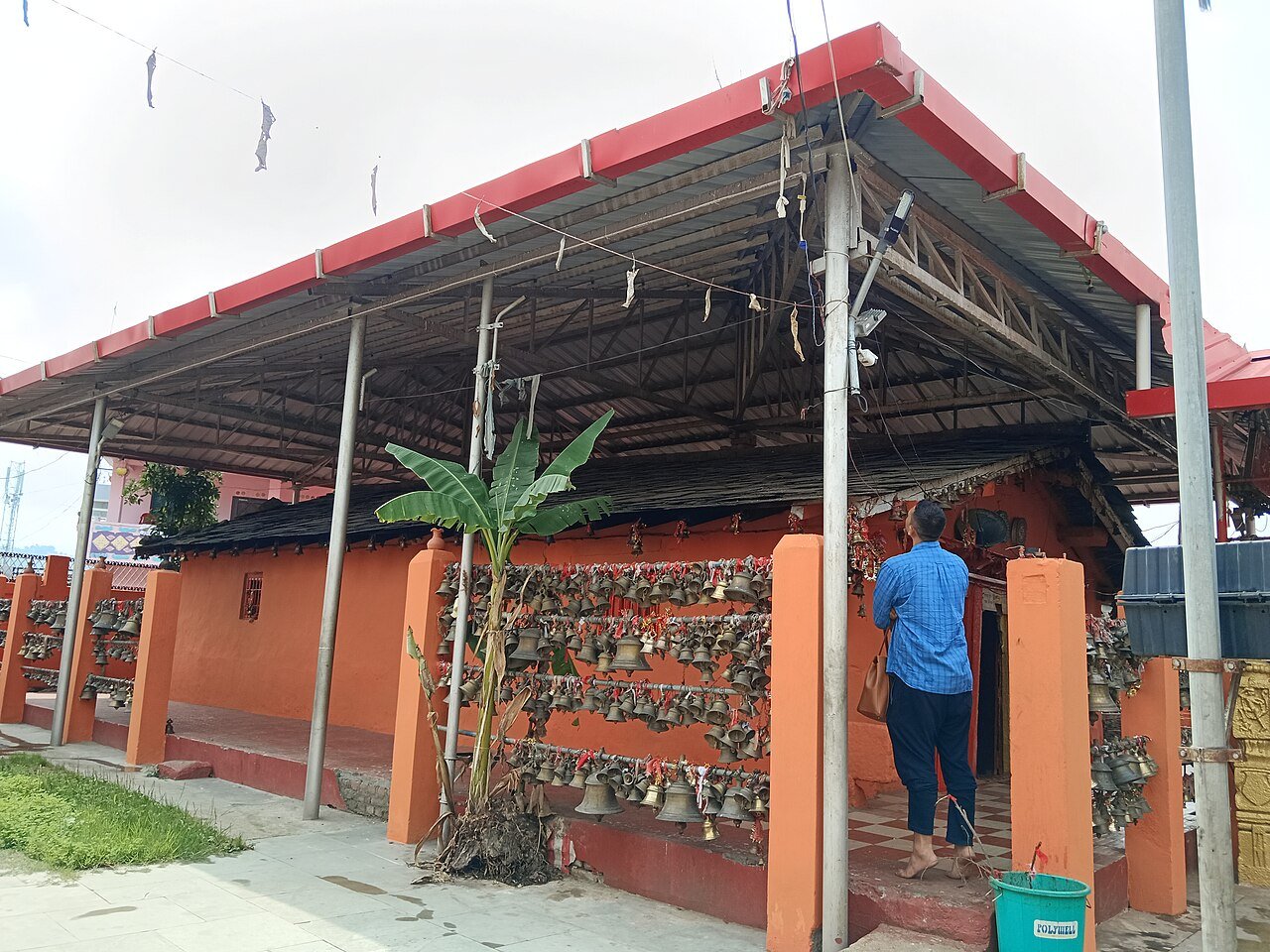
Quick answer: The best-known Golu Devta temple is at Chitai, about 8 km from Almora on the Almora–Pithoragarh road in Kumaon, Uttarakhand. Golu Devta, worshipped as a form of Gaur Bhairav, is the god of justice of Kumaon. Devotees leave written petitions and hang brass bells when a prayer is answered. Other major shrines are at Ghorakhal near Bhowali, Gwarail Chaur in Champawat and Chamarkhan near Tarikhet.
Updated for the 2027 yatra season (facts checked October 2026)
Who is Golu Devta?
Golu Devta, also called Goljyu, Goril, Gwall or Gwel Devta, is the most loved folk deity of Kumaon. He is worshipped as a form of Gaur Bhairav, and through Bhairav as a form of Shiva. In many Kumaoni and some Garhwali families he is the kul devta (family deity), and he is invited at the start of family pujas.
His legend is tied to Champawat. In the version most families tell, the jealous older queens of King Jhal Rai replaced Queen Kalinka’s newborn son with a stone and set him adrift on the river. A fisherman raised him. Years later the boy asked the queens how a woman could give birth to a stone if his wooden horse could not drink water. The truth came out, his mother was restored, and he became known for fearless, fair judgement. He is pictured riding a white horse, wearing a white turban and carrying a bow and arrow.
That is why he is called the god of justice (nyay ke devta). People facing a court case, land dispute or family quarrel bring their matter to his darbar.
Why do devotees write letters and hang bells at Golu Devta temples?
The custom that makes these temples unique is the written petition. A devotee writes a request or complaint, signs it and ties it in the compound, like an application before a judge. Older petitions were often on stamp paper; plain paper is common now. At Chitai you will see thousands of such letters tied along the railings and pillars.
The second custom is the bell. Devotees promise Golu Devta a bell, and when the prayer is answered they return to hang it. Over decades the compounds have filled with bells of every size, which is why Chitai is called the temple of bells.
In villages, families also hold a jagar, a night-long ritual of drums and songs in which the deity is invited to speak through a medium; it is a family or village matter, not part of a yatri’s visit.
Where are the main Golu Devta temples?
There are many village shrines to Golu Devta across Kumaon, but four temples draw most yatris. Distances below are approximate road distances from official district pages and should be checked on a map before you set out.
| Temple | Where it is | Approx. distance | Why yatris go |
|---|---|---|---|
| Chitai Golu Devta | Almora district, on the Almora–Pithoragarh road | About 8 km from Almora; about 90 km from Kathgodam | The most famous shrine, with thousands of bells and petitions |
| Ghorakhal Golu Devta | Nainital district, next to Ghorakhal Sainik School | About 3 km from Bhowali; about 14 km from Nainital; about 37 km from Kathgodam | Easiest to add to a Nainital or Kainchi Dham visit |
| Gwarail Chaur (Gwal Devta), Champawat | Champawat district | About 2 km from Champawat town | Linked with the place of the deity’s origin |
| Chamarkhan (Gwel Devta) | Tarikhet area, Almora district, near Ranikhet | Short drive from Ranikhet (check locally) | A quieter shrine with strong local worship |
Chamarkhan’s area is often spelt “Tadikhet”; the tehsil name is Tarikhet. Smaller shrines such as Dana Golu near Chitai are visited mostly by local families.
What is special about the Chitai Golu Devta mandir?
Chitai sits on a forested hilltop of pine and oak, a short climb up from the road. Temple tradition says it was built around the 12th century by a commander of the Chand kings; another local account links it to the period when the Chand capital moved from Champawat to Almora. The present sanctum has a marble image of Golu Devta on horseback.
The steps up pass under rows of bells and tied letters. Remove footwear before the sanctum and ask before taking photographs. Shops at the base sell bells and puja material.
Chitai is also close to Binsar Wildlife Sanctuary (the sanctuary gate is roughly 4 km away) and on the road towards Jageshwar Dham, so it fits naturally into a day around Almora.
What is the distance from Almora to the Golu Devta temple?
The Kumaon divisional website gives Chitai as about 8 km from Almora town, usually 20 to 30 minutes by taxi. Shared jeeps on the Pithoragarh and Jageshwar routes also pass the temple.
If you are searching for “Ghorakhal Golu Devta”, that is a different temple near Bhowali in Nainital district, about 65 km before Almora on the Kathgodam–Almora road.
What are the Golu Devta temple timings?
None of the four temples publishes official timings online. Chitai and Ghorakhal are generally open from early morning until evening, with the busiest hours in the late morning. Hours change on festival days and in winter, so confirm locally if arriving late. We suggest reaching Chitai before noon.
How to reach Golu Devta temple from Kathgodam, Delhi or Nainital
- Nearest railhead: Kathgodam, which has trains from Delhi, Lucknow and Dehradun. From Kathgodam, Ghorakhal is about 37 km and Chitai about 90 km by road (roughly 3 to 3.5 hours to Chitai).
- Nearest airport: Pantnagar, about 73 km from Ghorakhal and roughly 125 to 135 km from Chitai.
- From Delhi by road: Almora is roughly 360 to 400 km from Delhi, a long day’s drive via Moradabad, Haldwani and Bhowali. Overnight buses also run from Delhi’s Anand Vihar ISBT to Almora.
- From Nainital: drive to Bhowali (Ghorakhal is 3 km away), then past Kainchi Dham to Almora and Chitai. Allow most of a day for all three.
- For Champawat: the nearest station is Tanakpur, and the temple is about 2 km from Champawat town.
When is the best time to visit Golu Devta?
The temples are open all year. March to June and September to November are the most comfortable months, with clear roads and mild days. The monsoon (July to mid-September) brings landslides, so keep spare time. Winters are cold but darshan continues and crowds are thinner.
Festival days, Navratri and weekends bring large local crowds. For quiet time with your petition, choose a weekday morning.
How does Golu Devta fit into a Kumaon yatra circuit?
Golu Devta is usually not a separate journey; families add his darshan to a wider Kumaon yatra. A practical order from Kathgodam is:
- Kathgodam to Bhowali, with darshan at Ghorakhal Golu Devta.
- On to Kainchi Dham, Neem Karoli Baba’s ashram (see our Kainchi Dham guide for timings and crowd tips).
- Almora, with darshan at Chitai Golu Devta.
- Jageshwar Dham, the valley of more than a hundred stone Shiva temples that many regard as the Nagesh Jyotirlinga, about 35 km beyond Almora.
Our three-day Kumaon Yatra already includes Chitai Golu Devta along with Jageshwar Dham and the Varahi Devi Shakti Peeth at Devidhura, starting from Pantnagar or Lalkuan.
Many yatris also combine Golu Devta with an Adi Kailash yatra. Our Adi Kailash and Om Parvat Yatra from Kathgodam begins and ends in the same Kumaon hills, so a day at Chitai, Kainchi or Jageshwar can be added before or after the high-altitude part. Seeking Golu Devta’s blessing before setting out for Adi Kailash is a custom many Kumaoni families follow. See how to reach Adi Kailash or all our Adi Kailash yatras.
What we arrange
Our team plans Kumaon yatras with a private vehicle, a local hill driver, hotel stays and a coordinator on call, timing each day so you reach Chitai and Jageshwar in daylight. If you want only Golu Devta and Kainchi Dham, or want them added to an Adi Kailash yatra, tell us your dates. Use the enquiry form on this page or call/WhatsApp us (numbers on our Contact page).
Frequently asked questions
Which is the main Golu Devta temple?
The Chitai Golu Devta temple near Almora is the best known and the most visited. It is famous for the thousands of brass bells and written petitions that fill its compound. Champawat is traditionally regarded as the deity’s place of origin, and Ghorakhal near Bhowali is the easiest to reach from Nainital. All three are important to Kumaoni families.
How far is Chitai Golu Devta temple from Almora?
Chitai is about 8 km from Almora town on the road towards Pithoragarh and Jageshwar. By taxi the drive usually takes 20 to 30 minutes, depending on traffic in the town. Shared jeeps on this route pass the temple, but a private taxi is more comfortable for elderly yatris who also need time for the steps up to the shrine.
Is Ghorakhal Golu Devta the same as Chitai?
No. They are two separate temples to the same deity. Ghorakhal is in Nainital district, about 3 km from Bhowali and next to the Sainik School. Chitai is near Almora, roughly a two-hour drive further into the hills. Many yatris visit Ghorakhal on the way up from Kathgodam and Chitai a few hours later.
How do I write a petition to Golu Devta?
Write your request clearly on a sheet of paper, as you would write an application: your name, the matter, and what you are praying for. Sign it, offer it with folded hands at the sanctum and tie it in the compound where other letters hang. Some devotees use stamp paper, but plain paper is fully accepted. Many also promise a bell for when the prayer is answered.
What is offered to Golu Devta?
Traditional offerings include a bell, white cloth, a white turban or shawl, ghee, milk, curd, and halwa-puri. Shops at the base of Chitai and Ghorakhal sell bells of different sizes and puja material. You do not need an elaborate offering; a sincere prayer with a small bell or flowers is common practice among visiting yatris.
Can senior citizens visit Chitai temple easily?
Yes, with a little care. Vehicles stop on the main road and there is a short walk up steps to the sanctum. Most elderly yatris manage it at a slow pace. Carry warm layers outside summer, avoid the slippery steps right after rain, and plan the visit for the morning so you are not walking back in fading light.
Can I combine Golu Devta darshan with the Adi Kailash yatra?
Yes. Our Adi Kailash yatras from Kathgodam start and end in Kumaon, so darshan at Chitai, Ghorakhal, Kainchi Dham or Jageshwar can be added as an extra day before or after the yatra. Tell our team when you enquire, and we will plan the drive so the additions do not cut into rest days needed for high altitude.