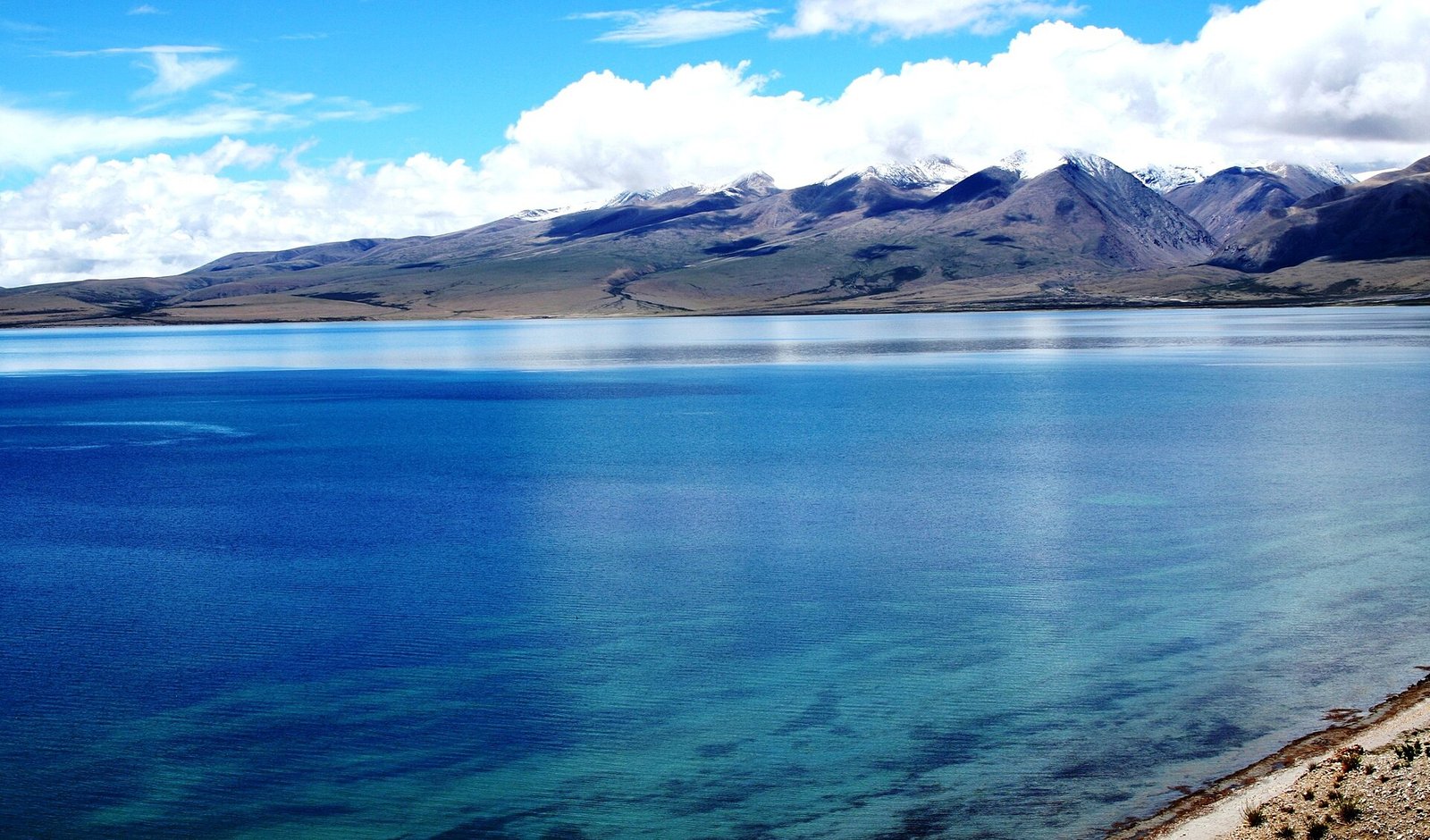
Quick answer: Mount Kailash and Lake Mansarovar are in China, not India. Both lie in Burang (Purang) County of the Ngari region in western Tibet, part of the Tibet Autonomous Region, roughly 100 km north of the Lipulekh pass in Uttarakhand. That is why Indian yatris need a passport and Chinese permits. From Indian soil you can see Kailash only from a viewpoint near old Lipulekh, and the Indian Kailash tirtha is Adi Kailash in Pithoragarh.
Updated for the 2027 yatra season (facts checked October 2026)
Many families who call us are surprised to learn that Kailash needs a passport. For centuries Kailash and Mansarovar have been at the heart of Hindu belief, the abode of Bhagwan Shiva and Mata Parvati, so it feels natural to assume they are in India. They are not. This guide explains, simply and without politics, where they are, how that came about, what it means for your documents, and how an Indian yatri can still have darshan.
Is Mount Kailash in India or China?
Mount Kailash is in China. It stands in Burang County, Ngari Prefecture, in the Tibet Autonomous Region of the People’s Republic of China. Tibetans call it Gang Rinpoche, the precious jewel of snow. Its height is commonly given as about 6,638 m.
It sits just north of the point where India, Nepal and China meet. The nearest Indian territory is the Vyas valley of Pithoragarh district in Uttarakhand, and the nearest Nepali district is Humla. So Kailash is close to India, but on the Tibetan side of the Himalayan watershed.
Is Lake Mansarovar in Tibet too?
Yes. Lake Mansarovar (Tibetan: Mapham Yumtso) is also in Burang County, Tibet, south of Kailash at about 4,590 m. Its neighbour, Rakshastal, lies to the west. Darchen, the small town at the foot of Kailash where the parikrama begins, is about 40 km from the lake by road. All three, the mountain, the lake and the parikrama route, are in Tibet.
For more on the two lakes and the puja on the shore, see our guide to Lake Mansarovar and Rakshastal.
Why is Kailash Mansarovar not in India?
The short answer: Kailash and Mansarovar have always been in the Tibetan region, and Tibet has been administered by China since the early 1950s. They were never part of the modern Indian state formed in 1947. Here is the background, kept brief and factual.
- Before 1950: The Kailash area was part of the Tibetan world. Indian pilgrims, traders and sadhus crossed the Himalayan passes by custom, and the tradition of the yatra is many centuries old. Historical records also show that a few villages near the lake, Minsar being the one usually named, paid revenue to the rulers of Ladakh and later Jammu and Kashmir for a long period, but the mountain and the lake themselves were in Tibet.
- 1950–51: Tibet came under the control of the People’s Republic of China.
- 1954: India and China signed the Agreement on Trade and Intercourse between the Tibet Region of China and India, often called the Panchsheel Agreement. It described Tibet as “the Tibet Region of China”, included provisions for pilgrims, and named border passes including Lipulekh. The agreement ran for eight years and lapsed in June 1962.
- 1959–1962: Access became restricted after unrest in Tibet in 1959, and the borders closed after the India–China conflict of 1962.
- 1981: The government-organised Kailash Mansarovar Yatra resumed under an agreement between the two countries, and has run in most years since, with a long pause from 2020 and resumption in 2025.
Whatever one’s personal feelings, for a yatri the practical position is simple: Kailash and Mansarovar are reached by crossing an international border, under Chinese rules.
What does this mean for documents?
Because you are entering China, a few things follow:
- A valid Indian passport is essential. Aadhaar or voter ID is not enough.
- Chinese visa and Tibet permits. On the government yatra these are arranged as part of the programme. On the private route through Nepal, an authorised operator applies for a group visa and the Tibet travel permits on your behalf.
- Medical fitness, because you will sleep at about 4,500 m or higher.
- Eligibility limits. The government yatra is only for Indian citizens with an Indian passport; in 2026 it was for ages 18–70. The private route is open to Indian passport holders and others, subject to Chinese approval.
Our Kailash Mansarovar documents guide lists every paper in detail.
How do Indians reach Kailash Mansarovar?
There are three ways in, and the table puts them side by side. Figures are from the 2026 season; 2027 dates and rules have not been announced as of October 2026.
| Route | Run by | How you get a place | Indicative length (2026) | Good for |
|---|---|---|---|---|
| Lipulekh pass, Uttarakhand | Ministry of External Affairs, with KMVN on the Indian side | Online application at kmy.gov.in, then computerised draw | About 22 days | Fit Indian citizens with three weeks free in June–August |
| Nathu La pass, Sikkim | Ministry of External Affairs, with Sikkim Tourism Development Corporation | Same draw; you can choose one or both routes | About 21 days | Those who prefer more travel by vehicle and less walking on the Indian side |
| Through Nepal (Hilsa, Kerung or Lhasa) | Private, registered operators | Direct booking, no draw | About 5 days (darshan only) to 14 days (with parikrama) | Families who want fixed dates, shorter yatras, NRIs |
The government routes are not open to private operators. In 2026 the MEA ran 20 batches of 50 yatris, ten on each route. Most Indian yatris now travel through Nepal, most often by flights to Nepalgunj and Simikot and a helicopter to Hilsa on the border. Our route comparison guide explains each in depth, and our Kailash Mansarovar yatras page lists the private programmes we organise.
Can you see Mount Kailash from India?
Yes, on a clear day. In October 2024 Uttarakhand Tourism began offering Kailash darshan from a viewpoint near the old Lipulekh pass in the Vyas valley of Pithoragarh district, at roughly 5,500 m (reports give about 18,300 ft). The first small group saw the peak on 3 October 2024. Vehicles go up to the pass area and the last stretch is a short walk, reported as under a kilometre, but at an altitude where every step is slow.
A few honest points before you plan it:
- It is a distant darshan across the border, roughly 100 km away, not a visit to the mountain. There is no lake snan and no parikrama.
- It needs the same Inner Line Permit from Dharchula as Adi Kailash and Om Parvat, and is open only to Indian citizens.
- It has run as part of specific packages, including helicopter programmes from Pithoragarh. Whether and how it operates in 2027 will be known only when the season opens, so check before booking.
- Clouds can hide Kailash completely. Early morning in late September and October usually gives the best chance.
Another option is Kailash darshan from the Limi valley in Nepal’s Humla district, which also needs no Chinese visa. See our Kailash Darshan from Limi Valley yatra.
Is there a Kailash in India?
Yes. Adi Kailash, also called Chhota Kailash or Baba Kailash, stands above Jolingkong in the Kuti valley of Pithoragarh, Uttarakhand, at about 5,945 m. At its foot is Parvati Kund with a small Shiv temple. It is counted among the Panch Kailash and is a tirtha in its own right, not a copy of Mount Kailash. The same yatra usually includes darshan of Om Parvat from Nabhidhang.
Adi Kailash needs no passport, only an Inner Line Permit, Indian photo ID, medical certificate and police verification. Walking is light, and nights are spent at Gunji, about 3,200 m. For many families who cannot go to Tibet, it is the Himalayan Shiva yatra of their life; for others it is a good test of how the body handles altitude before attempting Kailash. Read our Adi Kailash vs Kailash Mansarovar comparison, or see the Adi Kailash yatras we organise.
What we arrange
Our team organises Kailash Mansarovar yatras through Nepal with authorised partners for visas and Tibet permits, and Adi Kailash and Om Parvat yatras inside India, including the Inner Line Permit paperwork at Dharchula. On high-altitude yatras the emergency oxygen cylinder, pulse oximeter and first-aid kit are carried by the guide with the group. If you are unsure which route or yatra suits your family, use the enquiry form on this page or call/WhatsApp us (numbers on our Contact page). Hindi readers can see कैलाश मानसरोवर यात्रा.
Frequently asked questions
Is Mount Kailash in India or China?
Mount Kailash is in China. It lies in Burang County, Ngari Prefecture, in the Tibet Autonomous Region, just north of where India, Nepal and China meet. The nearest Indian area is the Vyas valley of Pithoragarh district, Uttarakhand. Indian yatris therefore need a passport and Chinese permission to reach the mountain and do the parikrama.
Is Mansarovar in India?
No. Lake Mansarovar is in Tibet, China, south of Mount Kailash at about 4,590 m, in the same Burang County. Rakshastal lies just west of it. Snan and puja at Mansarovar are done on the Tibetan side, so a passport and Chinese permits are needed, whether you go on the government yatra or through Nepal.
Why do Indians need a passport for Kailash Mansarovar?
Because Kailash and Mansarovar are in Tibet, which has been administered by China since the early 1950s. Crossing into Tibet is international travel. On the government yatra the MEA arranges the Chinese visa as part of the programme; on the private route through Nepal, an authorised operator applies for the group visa and Tibet permits on your behalf.
When did Kailash become part of China?
Kailash has always been in the Tibetan region. Tibet came under the control of the People’s Republic of China in 1950–51, and India’s 1954 agreement with China referred to “the Tibet Region of China”. Pilgrimage from India stopped after 1962 and resumed under a bilateral arrangement in 1981.
Can I see Mount Kailash from Indian territory?
Yes, on a clear day, from a viewpoint near the old Lipulekh pass in Pithoragarh district, opened by Uttarakhand Tourism in October 2024. It is a distant darshan at very high altitude and needs an Inner Line Permit. It has run as part of specific packages; check whether it is operating in your season before you plan.
What is the Indian Kailash?
Adi Kailash in Pithoragarh, Uttarakhand, at about 5,945 m, with Parvati Kund at its foot. It is a separate tirtha, counted among the Panch Kailash, and needs only an Inner Line Permit, not a passport. Most yatras combine it with Om Parvat darshan, and they take about 5 to 8 days by road.
Is Kailash Mansarovar Yatra open for 2027?
As of October 2026, 2027 dates have not been announced by the Ministry of External Affairs or the Chinese side. In 2026 the government yatra ran from June to August and private departures through Nepal began in mid-May. Keep your passport valid and watch kmy.gov.in from about March.