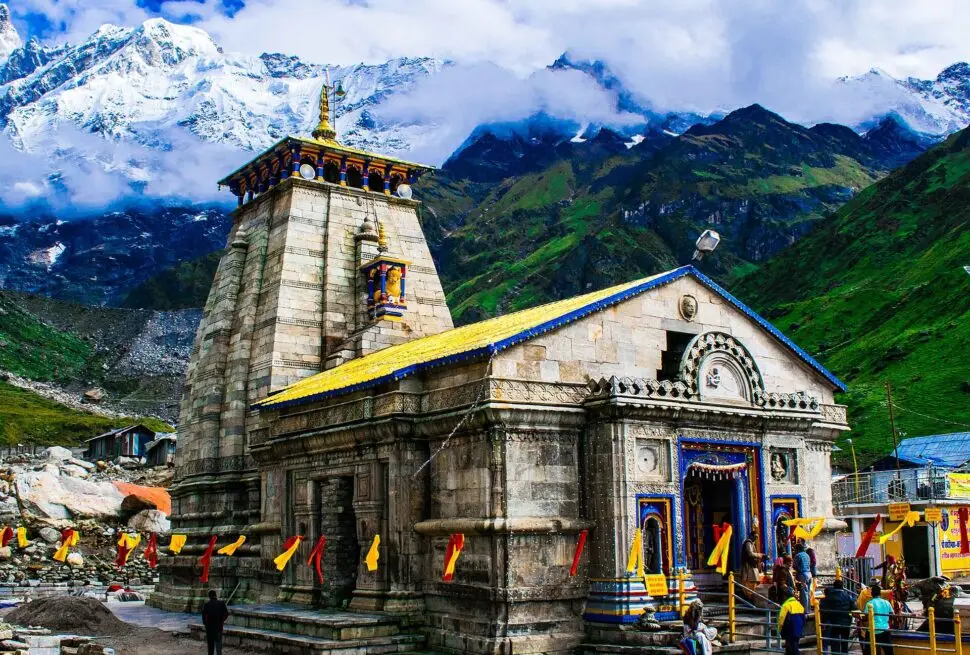
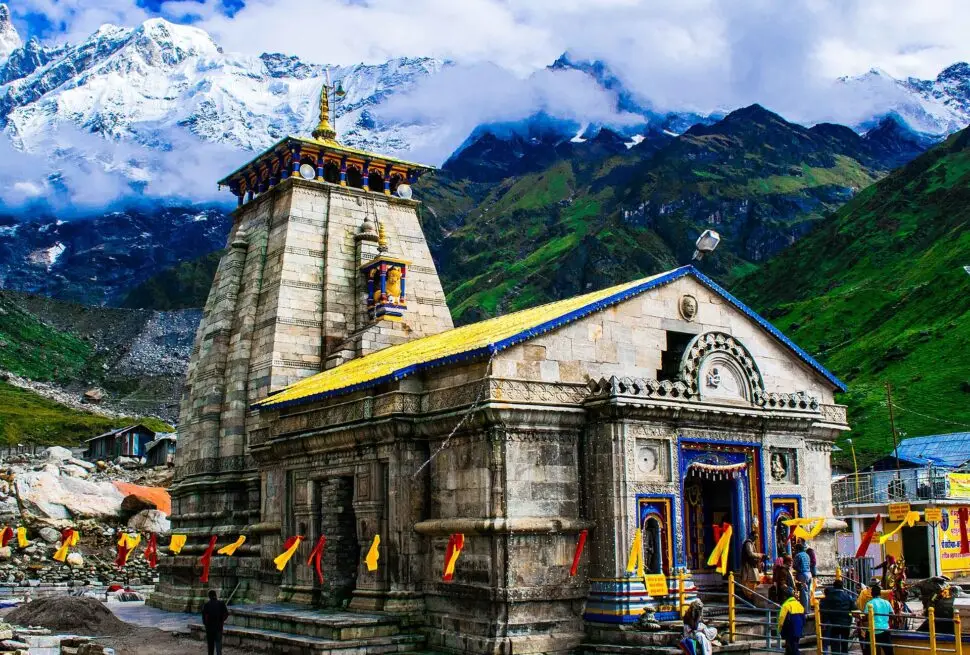
Quick answer: The Panch Badri are five temples of Bhagwan Vishnu in Chamoli district, Uttarakhand: Badrinath (Badri Vishal), Yogdhyan Badri at Pandukeshwar, Bhavishya Badri at Subhain near Tapovan, Vridha Badri at Animath near Joshimath, and Adi Badri near Karnaprayag. Badrinath is the main dham. The other four lie along or near the Badrinath road, and some are reached with a short walk.
−9°C / 6°C
−9°C / 8°C
−9°C / 8°C
Forecast estimate for this spot, not a thermometer reading at the temple; actual weather can differ. Always follow official IMD alerts. Weather data: MET Norway (CC BY 4.0), updates automatically; tap Refresh for the latest.
Updated for the 2027 yatra season (facts checked November 2026).
| What they are | Five temples of Bhagwan Vishnu; Badrinath is the main dham |
|---|---|
| Location | Chamoli district, Uttarakhand |
| Badrinath height | About 3,133 m |
| Yogdhyan Badri | Pandukeshwar; a winter seat of Badrinath |
| Bhavishya Badri | Subhain village, about 17 km from Joshimath; last stretch on foot |
| Vridha Badri | Animath village, about 7 km from Joshimath; reported open all year |
| Adi Badri | About 17–19 km from Karnaprayag, towards Gairsain and Ranikhet |
| Badrinath opening date | Traditionally announced on Basant Panchami |
Most yatris know only Badrinath, but in the Alaknanda valley Bhagwan Badri Narayan is worshipped at four more temples, each with its own form and story. Visiting all five is called the Panch Badri yatra. This guide explains where each temple is, how to reach it, which ones you can visit in winter and how to plan them in a sensible order.
This page is part of our Badrinath Yatra Guide. Planning the yatra? See our Char Dham and Badrinath yatra packages.
What are the Panch Badri temples?
The five are listed by the Chamoli district administration as Badri Vishal (Badrinath), Yogdhyan Badri, Vridha Badri, Bhavishya Badri and Adi Badri. All five are in Chamoli district. Here is a quick view:
| Temple | Where | How you reach | Belief |
|---|---|---|---|
| Badrinath (Badri Vishal) | Badrinath, between the Nar and Narayan parvat, about 3,133 m | By road | The main dham, where Vishnu did tapasya as Nar-Narayan |
| Yogdhyan Badri | Pandukeshwar, on the Joshimath–Badrinath road near Govindghat | By road, then a short walk down | Vishnu in a seated meditation pose; linked with King Pandu |
| Bhavishya Badri | Subhain village, beyond Tapovan towards the Niti valley, about 17 km from Joshimath | By road, then a walk up a village path | The future Badrinath, to be worshipped when the path to Badrinath is blocked |
| Vridha Badri | Animath village, about 7 km from Joshimath | By road, then a short walk through the village | Vishnu appeared here in the form of an old man |
| Adi Badri | On the road from Karnaprayag towards Ranikhet, about 17–19 km from Karnaprayag | By road | The “first” Badri; a group of old stone temples |
Where is each Badri temple and what is its story?
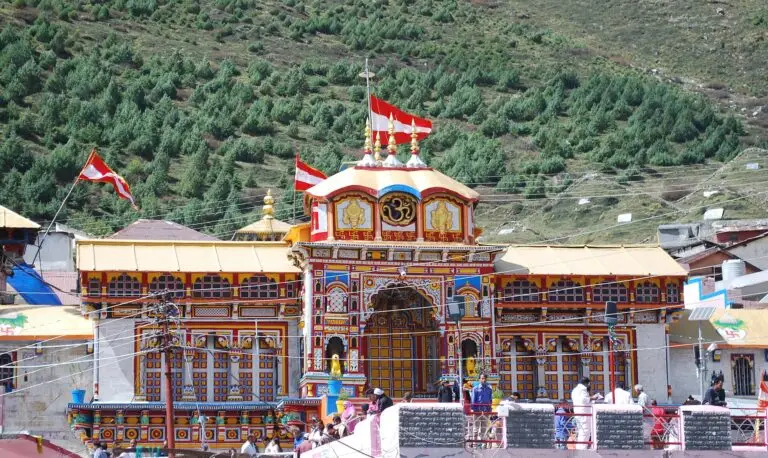
Badrinath (Badri Vishal). The chief temple of the group and one of the Char Dham, on the Alaknanda at about 3,133 metres. Tradition says Vishnu did tapasya here as Nar and Narayan, and Mata Lakshmi shaded him in the form of a badri (berry) tree. Our Badrinath yatra guide covers darshan, Tapt Kund, Mana village and timings in detail.
Yogdhyan Badri, Pandukeshwar. In Pandukeshwar village, below the highway between Govindghat and Hanuman Chatti, Vishnu is worshipped seated in meditation. Tradition says King Pandu did penance here, and the village carries his name. Old copper-plate inscriptions of the Katyuri kings are associated with the temple. Most importantly for yatris, Pandukeshwar is a winter seat of Badrinath: when the dham closes, Shri Uddhav ji and Shri Kuber ji are brought down from Badrinath and worshipped here through the winter.
Bhavishya Badri, Subhain. Beyond Tapovan, on the road towards Lata and the Niti valley, a path climbs through deodar forest to the small temple at Subhain. The belief is that a day will come when the Nar and Narayan parvat close the road to Badrinath, and Badri Narayan will then be worshipped here. Local belief links this with the Narsingh murti at Jyotirmath. The image here is said to be slowly taking shape on its own. Sources differ on how far you walk, because the motor road has been extended in recent years, so confirm the walking distance locally.
Vridha Badri, Animath. In the village of Animath, about 7 km from Joshimath, Vishnu is worshipped in the form of an old man (vriddha). One story says he appeared like this to Narad Muni; another links the murti with Adi Shankaracharya. Some believe Vridha Badri was where Badri Narayan was worshipped before Badrinath. Reports agree that this temple stays open through the year, which is why it matters to winter yatris.
Adi Badri, near Karnaprayag. Adi Badri is a cluster of old stone temples beside the road from Karnaprayag towards Gairsain and Ranikhet. The Chamoli district administration describes sixteen small temples, seven of them older flat-roofed shrines from the late Gupta period, with a black stone image of Narayan about one metre high. Local tradition credits the temples to Adi Shankaracharya, and it is said that pilgrims worshipped here when Badrinath could not be reached.
Why do some lists name Dhyan Badri instead?
Lists of the Panch Badri are not the same everywhere. The wider group called the Sapta Badri adds Dhyan Badri in the Urgam valley and Ardha Badri. Some books and priests put Dhyan Badri in the Panch Badri in place of Vridha Badri, and a few include Narsingh Badri at Jyotirmath. The five above follow the list used by the Chamoli district administration. Dhyan Badri lies close to Kalpeshwar, the fifth Kedar, so families doing the Panch Kedar often add it; see our Panch Kedar guide.
In what order should you do the Panch Badri yatra?
Following the road up from Haridwar, the temples come in this order, which keeps back-tracking to a minimum:
- Adi Badri: turn off at Karnaprayag for the short drive towards Gairsain.
- Vridha Badri: at Animath, as you approach Joshimath.
- Bhavishya Badri: a side visit from Joshimath past Tapovan towards Subhain.
- Yogdhyan Badri: at Pandukeshwar, on the road from Joshimath to Badrinath.
- Badrinath: the final darshan at the dham.
Joshimath (officially Jyotirmath) is the natural base for the three middle temples. Narsingh temple there, the winter seat of the Shankaracharya gaddi of Badrinath, is worth a darshan too.
Which Badri temples can you visit in winter?
Badrinath is open only in the yatra season. In 2026 the kapat were reported to close on 16 November at 9:37 pm, and the 2027 opening date is traditionally announced on Basant Panchami. In winter, Badri Narayan is worshipped at Jyotirmath (Narsingh temple) and Pandukeshwar (Yogdhyan Badri, where Uddhav ji and Kuber ji stay). Vridha Badri is reported to stay open all year. Adi Badri is on a lower road and is generally reachable, but confirm locally before a winter visit. Bhavishya Badri is higher and snow can make the path difficult. Winter weather can block roads beyond Joshimath, so a winter Panch Badri plan should stay flexible.
How much walking does the Panch Badri yatra involve?
Much less than the Panch Kedar. Badrinath and Adi Badri are by the road. Yogdhyan Badri and Vridha Badri need a short walk down from the road through the village, and the climb back is the harder part for elders. Bhavishya Badri has the longest walk, uphill on a forest path. Carry a walking stick, good shoes, water and a light jacket, and keep a slow pace above Joshimath.
How Yatra To Temples can help
Our Panch Badri Yatra covers all five temples from Haridwar and back, with Joshimath as the base, a private vehicle, hotel stays, help with Char Dham registration for Badrinath and phone support from our team. On the Char Dham Yatra by road, which also starts and ends at Haridwar, the Badri temples other than Badrinath are not part of the plan; ask us whether one can be added, as it usually needs extra time. Send an enquiry through the form, or call/WhatsApp us using the numbers on our Contact page. Official notes on Adi Badri are on the Chamoli district website.
Related guides: Also read Badrinath winter darshan.
Latest yatra updates
Frequently asked questions
What are the names of the Panch Badri?
The Panch Badri are Badrinath (Badri Vishal), Yogdhyan Badri at Pandukeshwar, Bhavishya Badri at Subhain, Vridha Badri at Animath and Adi Badri near Karnaprayag. All five are temples of Bhagwan Vishnu in Chamoli district, Uttarakhand. Some lists name Dhyan Badri in the Urgam valley in place of one of these.
Which is the first of the Panch Badri?
Badrinath, called Badri Vishal, is the first and most important of the Panch Badri. Adi Badri means “the first Badri” by name, and some believe it is the oldest place of Badri Narayan worship, but Badrinath remains the principal dham of the group.
Which Panch Badri temple is open all year?
Vridha Badri at Animath, near Joshimath, is reported to remain open throughout the year. Yogdhyan Badri at Pandukeshwar is a winter seat of Badrinath, where Uddhav ji and Kuber ji are worshipped after the dham closes. Badrinath itself is closed in winter.
Where is Bhavishya Badri and why is it called the future Badri?
Bhavishya Badri is at Subhain village beyond Tapovan, about 17 km from Joshimath towards the Niti valley. Tradition says the Nar and Narayan parvat will one day block the road to Badrinath, and Badri Narayan will then be worshipped here. The last stretch is a walk up a forest path.
How far is Adi Badri from Karnaprayag?
Adi Badri is about 17 to 19 km from Karnaprayag, on the motor road towards Gairsain and Ranikhet. The Chamoli district administration describes it as a group of sixteen small temples, some from the late Gupta period, with a black stone image of Narayan.
Can the Panch Badri be combined with the Panch Prayag?
Yes. All five prayags lie on the same road from Rishikesh to Badrinath, and Adi Badri is just off it at Karnaprayag. Many families plan both together, with Joshimath as a base for the upper temples and Vishnuprayag.
Sources
- District Chamoli (NIC) – Adbadri
- District Chamoli (NIC) – Bhavishya Badri
- Garhwal Division, Government of Uttarakhand – Badrinath
- Shri Badarinath Kedarnath Temple Committee – Official website
Related guides
 Badrinath Yatra Guide: Darshan, Tapt Kund and Mana
 Hemkund Sahib Opening Date 2027 and Closing Date (10 Oct 2026)
 Mana Village Guide: Vyas Gufa, Bhim Pul and Vasudhara Falls
More on Badrinath Yatra: Hemkund Sahib Opening and Closing Date · Mana Village Guide · Valley of Flowers Trek Guide · Badrinath Yatra from Delhi · Badrinath Weather and Temperature · Badrinath Opening and Closing Date · Badrinath Temple History, Timings and Darshan Guide · Badrinath Winter Darshan · Badrinath Distance from Haridwar, Rishikesh, Delhi · Char Dham and Badrinath yatra packages