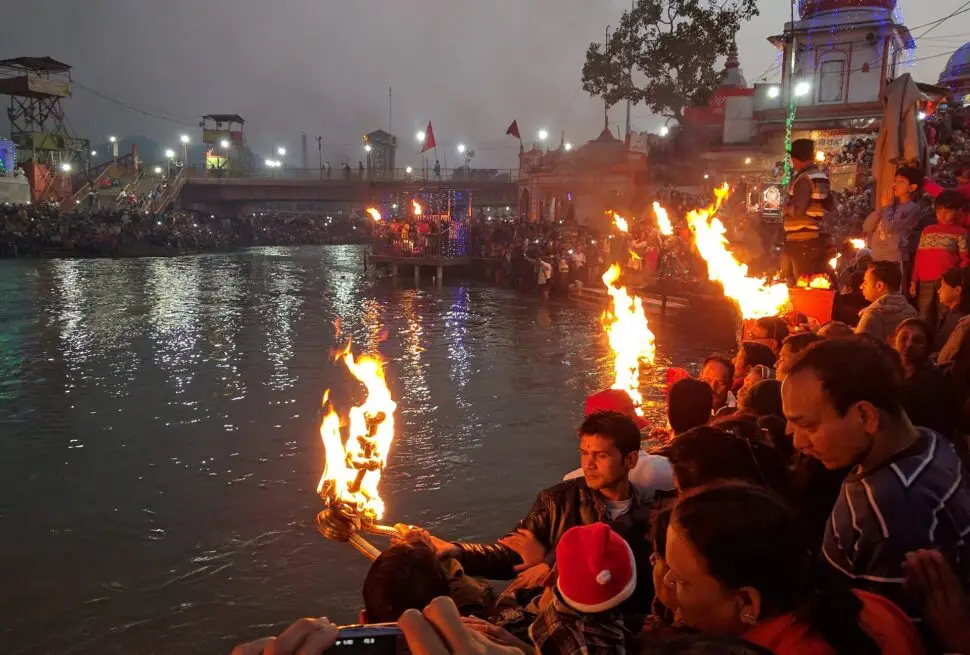
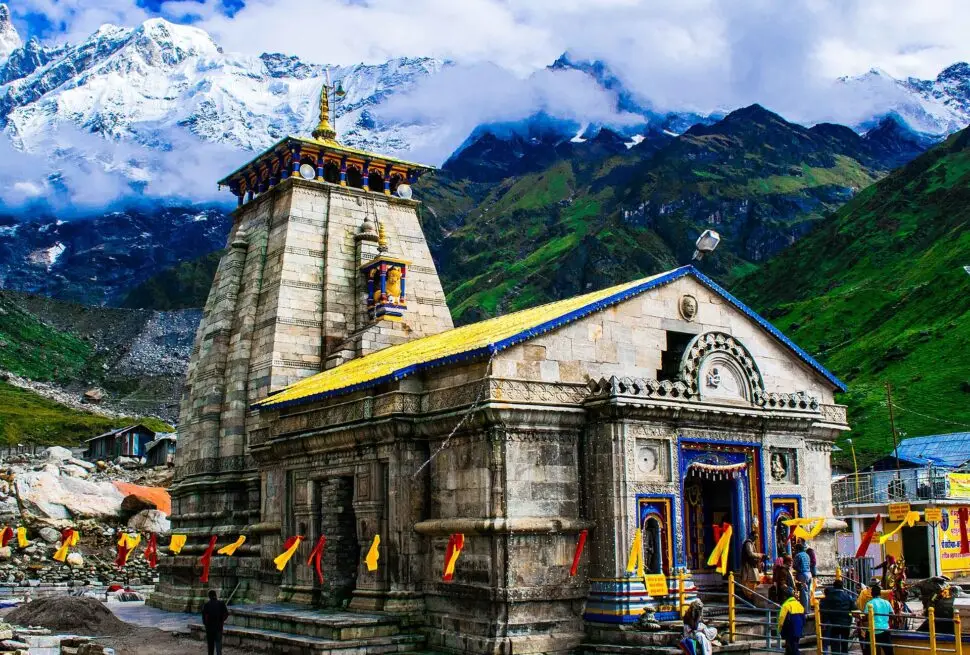
Quick answer: The Panch Prayag are the five holy river confluences of the Alaknanda in Garhwal, Uttarakhand. Going upstream from Rishikesh they are Devprayag (Bhagirathi), Rudraprayag (Mandakini), Karnaprayag (Pindar), Nandprayag (Nandakini) and Vishnuprayag (Dhauliganga). At Devprayag sangam the Alaknanda and Bhagirathi join and the river is called the Ganga from there on. All five lie on the road from Rishikesh to Badrinath.
Updated for the 2027 yatra season (facts checked November 2026).
| Devprayag | Alaknanda and Bhagirathi meet; about 70 km from Rishikesh |
|---|---|
| Rudraprayag | Alaknanda and Mandakini meet; about 140 km from Rishikesh |
| Karnaprayag | Alaknanda and Pindar meet; about 170 km from Rishikesh |
| Nandprayag | Alaknanda and Nandakini meet; about 190 km from Rishikesh |
| Vishnuprayag | Alaknanda and Dhauliganga meet; about 265 km, beyond Joshimath |
| Where the Ganga begins | Devprayag, at about 472 metres |
| Best time | Four on the main highway most of the year; Vishnuprayag in Badrinath season |
In the hills, a prayag is a place where two rivers meet, and each meeting point is treated as a tirtha for snan, tarpan and puja. Every yatri going to Badrinath by road passes all five, often without knowing which bridge or ghat they have just crossed. This guide explains the names, the rivers, the stories and how to plan a proper darshan at each sangam.
This page is part of our Char Dham Yatra Places and Route Map guide. Planning the yatra? See our Char Dham yatra packages.
What are the names of the Panch Prayag?
The table lists them in the order you reach them when driving up from Rishikesh. The river flows the other way, so tradition sometimes counts them from Vishnuprayag downwards, which is why some books call Vishnuprayag the first prayag and others call Devprayag the first.
| Prayag | Rivers that meet | District | Road distance from Rishikesh (approx.) |
|---|---|---|---|
| Devprayag | Alaknanda and Bhagirathi | Tehri Garhwal | About 70 km |
| Rudraprayag | Alaknanda and Mandakini | Rudraprayag | About 140 km |
| Karnaprayag | Alaknanda and Pindar | Chamoli | About 170 km |
| Nandprayag | Alaknanda and Nandakini | Chamoli | About 190 km |
| Vishnuprayag | Alaknanda and Dhauliganga | Chamoli | About 265 km, a short way beyond Joshimath (Jyotirmath) |
Distances are rounded and change as the all-weather road is rebuilt, so treat them as a guide, not an exact figure. The Alaknanda is the common river in all five. It rises from the Satopanth and Bhagirath Kharak glaciers above Badrinath, picks up each tributary on its way down, and finally meets the Bhagirathi at Devprayag.
Why is Devprayag sangam so important?
Devprayag is where the Ganga is born in name. Above this point you have two rivers: the Bhagirathi coming from Gangotri and the Alaknanda coming from the Badrinath side. Below the sangam they flow on as one river, the Ganga, towards Rishikesh and Haridwar. You can often see the two waters in slightly different colours as they meet.
The Tehri district administration gives Devprayag an altitude of about 472 metres and lists several kunds, including Brahma Kund and Vasishtha Kund. At the sangam, Brahma Kund is traditionally on the Bhagirathi side and Vasishtha Kund on the Alaknanda side. Above the ghats stands the old Raghunath ji temple of Shri Ram, built of large uncemented stones. The district page records that it was damaged in the 1803 earthquake and repaired afterwards. Devprayag is also counted among the 108 Divya Desams by Sri Vaishnava devotees.
The town takes its name from the sage Dev Sharma, who is said to have done tapasya here. Local tradition also links Devprayag with Shri Ram and King Dasharath. Many families come here specifically for pind daan and tarpan at the sangam.
What is the story of each of the five prayags?
Rudraprayag. Here the Mandakini, flowing down from the Kedarnath valley, meets the Alaknanda. Tradition says Narad Muni worshipped Shiva here to learn music, and Shiva taught him in his Rudra form, which gives the place its name. The Rudranath temple and the Chamunda Devi temple stand near the confluence. A rock called Narad Shila, linked with Narad’s tapasya, is reported to have been lost in the 2013 floods. Rudraprayag is also the road junction where the Kedarnath road turns off along the Mandakini and the Badrinath road continues along the Alaknanda.
Karnaprayag. The Pindar river, which comes from the Pindari glacier, joins the Alaknanda here. The confluence is linked with Karna of the Mahabharata, who is believed to have worshipped Surya Dev here. In some versions Shri Krishna performed Karna’s last rites at this spot. The town has an old temple of Uma Devi. Swami Vivekananda is recorded as having stayed here in meditation with his fellow monks. Karnaprayag is also the turn-off for the road towards Kumaon, and for Adi Badri, one of the Panch Badri temples.
Nandprayag. The Nandakini, which flows down from the Nanda Devi side, meets the Alaknanda at Nandprayag. One story says King Nanda performed a great yagya here; another links the name with Nanda, the foster father of Shri Krishna, and a temple of Gopal ji is commonly mentioned at the town. The area is also connected in local tradition with the ashram of Rishi Kanva. Nandprayag is the quietest of the five, and many yatris simply stop at the sangam for a short snan or aachman.
Vishnuprayag. The highest of the five, Vishnuprayag is where the Dhauliganga coming from the Niti valley meets the Alaknanda, a short distance beyond Joshimath (officially renamed Jyotirmath) on the way to Badrinath. Tradition says Narad Muni worshipped Bhagwan Vishnu here. An octagonal Vishnu temple, credited to Maharani Ahilyabai Holkar of Indore, stands near the confluence, and steps lead down towards Vishnu Kund. The rivers here are fast and cold, and the walk down is steep, so senior yatris should go slowly or view the sangam from above.
In what order will you see the Panch Prayag on a Badrinath yatra?
If you travel by road from Haridwar to Badrinath, you pass all five in this order:
- Devprayag, on the Rishikesh–Srinagar stretch, where the road runs high above the sangam.
- Rudraprayag, after Srinagar, where the road to Kedarnath branches off.
- Karnaprayag, the next large town along the Alaknanda.
- Nandprayag, a little further up the same valley.
- Vishnuprayag, just after Joshimath, the last prayag before Badrinath.
On a Char Dham yatra the order of the dhams decides when you see them. You usually reach Rudraprayag on the way to Kedarnath, cover Karnaprayag, Nandprayag and Vishnuprayag on the way to Badrinath, and stop at Devprayag on the drive back to Haridwar. Our Char Dham places and route map guide shows where these towns sit on the full route, and the Badrinath yatra guide covers darshan at the dham itself and Keshav Prayag near Mana.
Are there other prayags that are not part of the Panch Prayag?
Yes. You will hear the word prayag in other places too. Sonprayag on the Kedarnath route is where the Son Ganga meets the Mandakini, and Keshav Prayag near Mana village is where the Saraswati meets the Alaknanda. These are sacred, but the classic group of five is only the five confluences on the Alaknanda listed above. Prayagraj in Uttar Pradesh, the meeting of the Ganga, Yamuna and the unseen Saraswati, is a separate and much larger tirtha.
Is it safe to take a holy dip at the prayags?
The mountain rivers are cold and very fast, even when the surface looks calm. A few simple rules keep families safe:
- Bathe only at a built ghat, and hold the chains or railings where they are provided.
- Do not step into the main current. For children and elders, a lota snan or aachman from the steps is enough.
- In the monsoon, follow police and administration instructions; ghats can be closed when the water rises.
- The steps down to Devprayag and Vishnuprayag are long. Plan the climb back up before going down, especially for knee or heart patients.
When is the best time to visit the Panch Prayag?
Devprayag, Rudraprayag, Karnaprayag and Nandprayag are on the main highway and can be reached through most of the year. Vishnuprayag is beyond Joshimath on the Badrinath road, so most yatris visit it during the Badrinath season, when the dham is open. The Badrinath kapat were reported to close for winter on 16 November 2026 at 9:37 pm, and the 2027 opening date is traditionally announced on Basant Panchami. The monsoon months bring landslides and road closures on this route, so leave buffer time if you travel then.
Related guides: Chandrabadni temple guide
How Yatra To Temples can help
Our Panch Prayag Yatra is planned around the five sangams, with time at each confluence instead of a quick look from the bus window. It starts and ends at Haridwar and includes a private vehicle with driver, hotel stays and phone support from our team through the yatra. Our Char Dham Yatra by road also starts and ends at Haridwar and already pauses at Devprayag on the way back; if you want time at the other prayags, ask us whether it fits your itinerary. If you plan pind daan or tarpan at Devprayag, ask us and we can help you get in touch with a local purohit in advance. For dates and a plan for your family, use the enquiry form or call/WhatsApp us (numbers on our Contact page). Official destination information is on Uttarakhand Tourism and the Tehri district page on Devprayag.
Latest yatra updates
Frequently asked questions
What are the five prayags of Uttarakhand?
The five prayags are Devprayag, Rudraprayag, Karnaprayag, Nandprayag and Vishnuprayag. At each one a tributary joins the Alaknanda: the Bhagirathi at Devprayag, the Mandakini at Rudraprayag, the Pindar at Karnaprayag, the Nandakini at Nandprayag and the Dhauliganga at Vishnuprayag. Together they are called the Panch Prayag.
Where does the Ganga begin at Devprayag?
The river takes the name Ganga at Devprayag, where the Bhagirathi from Gangotri and the Alaknanda from the Badrinath side meet. The sangam is below the town, reached by steps from the main road. Brahma Kund is on the Bhagirathi side and Vasishtha Kund on the Alaknanda side, and pilgrims bathe or do tarpan at the ghat.
Which is the first prayag of the Panch Prayag?
It depends on how you count. Following the flow of the river, Vishnuprayag near Joshimath comes first and Devprayag comes last. Following the road from Rishikesh, Devprayag is the first one you reach. Both ways of counting are used in books and by local priests, so neither is wrong.
Can I see all five prayags on a Char Dham yatra?
Yes, if your yatra includes Badrinath by road, the route passes all five. Rudraprayag comes on the way to Kedarnath, Karnaprayag, Nandprayag and Vishnuprayag come on the way to Badrinath, and Devprayag usually comes on the drive back to Haridwar. Tell your organiser in advance if you want time to go down to the ghats.
Which prayag is on the way to Kedarnath?
Devprayag and Rudraprayag are on the way to Kedarnath. At Rudraprayag the Kedarnath road leaves the Alaknanda and follows the Mandakini up to Guptkashi and Sonprayag. Sonprayag is also a confluence, but it is not one of the Panch Prayag.
Is pind daan done at Devprayag?
Yes. Devprayag is a well-known place for pind daan, tarpan and shraddh, and local purohits perform these rites at the sangam. If you plan a ritual, ask us in advance and we can help you contact a local purohit so the timing fits your yatra. Dakshina is paid directly to the purohit.
Sources
- District Tehri Garhwal (NIC) – Devprayag
- Uttarakhand Tourism – Panch Prayag
- District Rudraprayag (NIC) – River System
- Wikipedia – Panch Prayag
Related guides
 Char Dham Yatra Places and Route Map: 4 Dham Names
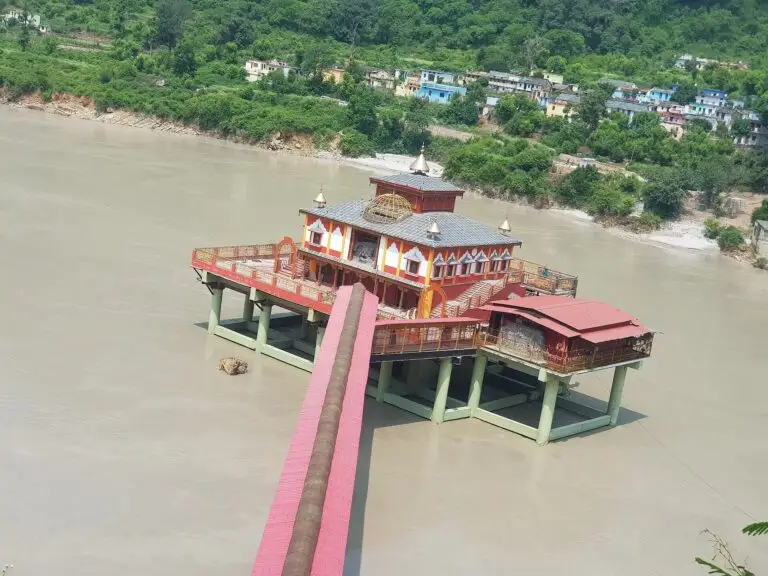 Dhari Devi Temple Guide: Srinagar Garhwal, Badrinath Road
 Altitude Sickness on Yatras: Prevention and Warning Signs
More on Char Dham Yatra: Dhari Devi Temple Guide · Altitude Sickness on Yatras · Char Dham Yatra Registration · Char Dham Yatra from Kolkata · Char Dham Opening and Closing Dates · Char Dham Yatra from Pune · Best Time for Char Dham Yatra · Char Dham Yatra from Bangalore · Char Dham Distance Chart · Char Dham yatra packages