Quick answer: Kedarnath is one of the 12 Jyotirlingas of Lord Shiva, at 3,584 metres in Rudraprayag district. Tradition says the Pandavas first built a temple here and Adi Shankaracharya built or restored the present stone temple in the 8th century AD. The temple survived the flood of 16–17 June 2013; a large boulder, now worshipped as Bhim Shila, stopped right behind it.
−12°C / 3°C
−11°C / 4°C
−9°C / 5°C
Forecast estimate for this spot, not a thermometer reading at the temple; actual weather can differ. Always follow official IMD alerts. Weather data: MET Norway (CC BY 4.0), updates automatically; tap Refresh for the latest.
Facts checked November 2026.
| Deity | Lord Shiva as Kedarnath, worshipped in a natural rock linga (svayambhu) |
|---|---|
| Status | One of the 12 Jyotirlingas; first of the Panch Kedar |
| Altitude | 3,584 metres, on the bank of the Mandakini river (temple committee figure; often given as 3,583 m) |
| Built by | By tradition the Pandavas; present temple linked to Adi Shankaracharya (8th century AD). No single agreed date. |
| Structure | Large, evenly cut grey stone slabs; about 80 feet high |
| 2013 flood | 16–17 June 2013; temple stood, town and complex badly damaged |
| Head priest | The Rawal, from the Veerashaiva (Lingayat) tradition of Karnataka |
| Winter seat | Omkareshwar temple, Ukhimath (about six months each year) |
The story of Kedarnath mixes old legend, temple tradition, science and a modern disaster. This guide explains each part simply and tells you clearly which points are belief and which are recorded facts. For travel planning, see our Kedarnath yatra guide.
This page is part of our Kedarnath Yatra Guide. Planning the yatra? See our Kedarnath yatra packages.
What is the Pandava legend of Kedarnath?
The Shri Badrinath-Kedarnath Temple Committee (BKTC) gives the most widely told story. After the Kurukshetra war, the Pandavas wanted Lord Shiva’s forgiveness for killing their own relatives. Shiva did not want to meet them, so he hid at Kedarnath. When the Pandavas followed him, he sank into the ground. His hump stayed above the earth at Kedarnath. In the popular telling, Shiva had taken the form of a bull.
This is why the linga at Kedarnath does not look like the smooth, round lingas of most temples. It is a natural, uneven rock. The temple committee calls it a “conical rock formation”; devotees often describe it as triangular or hump-shaped. It is worshipped as Shiva in his Sadashiva form.
How is Kedarnath linked to the Panch Kedar?
According to the same legend, other parts of Shiva’s body appeared at four more places in Garhwal. Together with Kedarnath, these five temples are called the Panch Kedar (“panch” means five).
| Temple | Part of Shiva worshipped (by tradition) |
|---|---|
| Kedarnath | Hump |
| Tungnath | Arms |
| Rudranath | Face |
| Madhyamaheshwar (Madmaheshwar) | Belly (navel) |
| Kalpeshwar | Head and hair (jata) |
Source: BKTC. To visit all five, read our Panch Kedar guide.
Why is Kedarnath a Jyotirlinga?
A Jyotirlinga is a shrine where, by belief, Shiva appeared as a column of light. Kedarnath is counted among the 12 Jyotirlingas of India and, at 3,584 metres, it is the highest of them. The temple committee calls it the most important of the Jyotirlingas because of its Himalayan location. See where the other eleven are in our 12 Jyotirlinga list. It is also one of the four dhams of the Uttarakhand Char Dham yatra, along with Badrinath, Gangotri and Yamunotri.
Who built Kedarnath temple, and how old is it?
Nobody knows for certain. Here is what the different sources say.
- Temple tradition (BKTC): the Pandavas built the first temple after the Mahabharata. The present temple was built in the 8th century AD by Adi Shankaracharya, next to the site of the older Pandava temple. Many people describe this as Shankaracharya’s “restoration” or revival of the shrine.
- Inscriptions: Down To Earth reports that inscriptions on the temple wall have been dated to 650–850 AD. They praise the temple’s beauty.
- Reference works: Encyclopaedia Britannica describes the temple as more than 1,000 years old.
So the present stone temple is well over 1,000 years old. If the 8th-century tradition is right, it would be roughly 1,200 years old, but that is an estimate from tradition, not a proven date. Some writers claim a far older origin for the site.
Was Kedarnath really under ice for 400 years?
This is a theory, not a proven fact. Ravinder Kumar Chaujar, a retired scientist of the Wadia Institute of Himalayan Geology, Dehradun, studied lichens on the moraines of the Chorabari glacier (paper in Current Science, 2009). He suggested that during the Little Ice Age, glaciers covered the temple area from about the mid-14th century until around 1748 AD, so the temple may have stayed under ice for at least 400 years. He pointed to marks (striations) on the temple walls as possible signs of moving ice.
What does the temple look like?
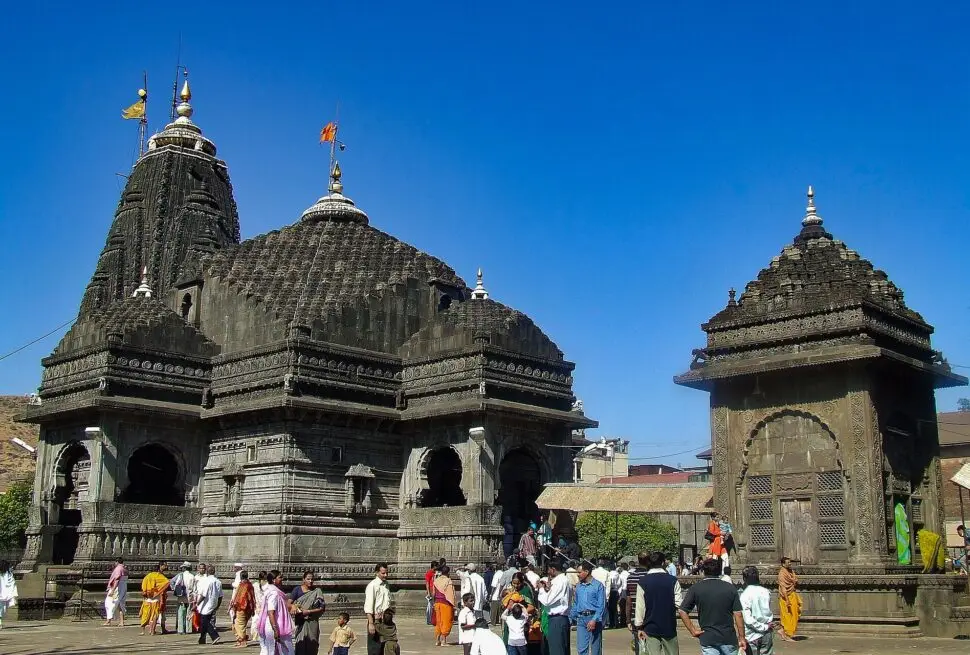
The BKTC describes the temple as built of large, heavy, evenly cut grey stone slabs, sourced locally. It is quadrangular in plan and about 80 feet high. Inside there are two parts:
- Garbha griha (sanctum): where the rock linga is worshipped.
- Sabha mandap (hall): its inner walls carry images of deities and scenes from the Puranas. It also holds idols of the five Pandavas, Shri Krishna and Kunti.
A large stone Nandi sits outside the main door, facing the sanctum, as Shiva’s guardian. The main gate also has carvings of Ganesha and Nandi. On the parikrama path there is an Amrit Kund, and an idol of Bhairavnath on the east side.
Where is Adi Shankaracharya’s samadhi?
The samadhi of Adi Shankaracharya is just behind the main temple. By local tradition, he attained mahasamadhi at Kedarnath. Other traditions say he passed away elsewhere, for example at Kanchipuram, so this too is a matter of belief.
The old samadhi was destroyed in the 2013 flood, as Deccan Herald reported. It was rebuilt, and on 5 November 2021, a day before the temple closed for winter, Prime Minister Narendra Modi unveiled a new statue of Adi Shankaracharya there. Work on the statue began in 2019. PTI reported it as a 12-foot statue weighing about 35 tonnes (an earlier Deccan Herald report gave 12.5 feet). It was carved in Mysuru by sculptor Arun Yogiraj. The unveiling was streamed live at all 12 Jyotirlingas and the four Shankaracharya maths.
What happened at Kedarnath on 16–17 June 2013?
In mid-June 2013, very heavy rain fell over the Kedarnath valley. On 16 June, flash floods struck Kedarnath. On the morning of 17 June, Chorabari lake, about 2 km above the town at 3,960 metres, burst its banks. The Wadia Institute recorded 315 mm of rain in 24 hours there and said the lake drained in 5 to 10 minutes. Water, mud and boulders rushed through Kedarnath and on down the Mandakini valley.
Hotels and homes around the temple were destroyed. The temple itself stood with little structural damage.
How many people died in the 2013 flood?
The exact number is not known. Official counts changed as the search went on, and people still missing were later presumed dead. These are the official figures, with dates:
| Date and source | Official figure |
|---|---|
| 15 July 2013: Uttarakhand Chief Minister Vijay Bahuguna (reported by The Tribune) | 5,748 people missing, including 934 from Uttarakhand |
| 6 August 2013: Lok Sabha reply, Ministry of Home Affairs (provisional) | 580 dead (249 bodies recovered), 4,473 injured, 5,474 missing |
| 10 December 2013: Lok Sabha reply, Ministry of Home Affairs (provisional) | 4,364 lives lost, including 4,119 missing persons feared dead |
| 22 July 2014: Lok Sabha reply by MoS Home Kiren Rijiju (Uttarakhand government data) | 3,184 missing persons from other states |
These figures cover the whole Uttarakhand disaster, not only Kedarnath town, though the Kedarnath valley was the worst hit.
What is Bhim Shila?
During the flood, a huge boulder rolled down and stopped just behind the temple. Many believe it split the flow of water and debris to both sides and so protected the temple. Devotees now worship it as Bhim Shila, named after Bhima. The temple’s heavy stone construction is also widely credited for its survival.
How has Kedarnath been rebuilt since 2013?
The yatra was stopped after the disaster, and rebuilding had to be done in a short summer season each year. The main steps reported by ETV Bharat and PTI:
- The Gaurikund–Kedarnath walking route was rebuilt by 2014.
- In 2015, a security wall, bio-toilets and helipads were built. The Nehru Institute of Mountaineering led the work for the first three to four years.
- The wider Kedarpuri redevelopment followed, including the rebuilt Shankaracharya samadhi and new shelters and facilitation centres for priests and pilgrims.
- On 5 November 2021, the Prime Minister opened finished rebuilding projects and laid foundation stones for more.
Who is the Rawal of Kedarnath?
The Rawal is the head priest of Kedarnath. By long tradition, he comes from the Veerashaiva (Lingayat) community of Karnataka and must stay celibate for life. The appointment falls under the temple committee’s rules (Shri Badrinath-Kedarnath Temples Act, 1939).
In February 2026, Rawal Bhimashankar Linga Shivacharya, who has served Kedarnath for about 25 years, announced that he would step down for health reasons. At a ceremony in Nanded he named his disciple as his successor, reported as the 325th Rawal. The temple committee said any new appointment must follow its rules and selection process. As of November 2026 we could not find a public report of that formal selection being completed, so please check the latest news for who holds the post.
Where is Kedarnath worshipped in winter?
Heavy snow closes the temple each winter, usually on Bhai Dooj. The Panchmukhi idol of Baba Kedar is then carried in a doli to the Omkareshwar temple at Ukhimath, where devotees can worship him for about six months. The opening date for the next season is announced at Ukhimath on Mahashivratri. Read our Ukhimath Omkareshwar temple guide for winter darshan.
How Yatra To Temples can help
If you wish to see Kedarnath and its history for yourself, look at our Kedarnath yatra from Dehradun or the Panch Kedar darshan yatra. For special puja or extra days, ask us.
Latest yatra updates
Frequently asked questions
Why is the Kedarnath linga triangular?
By tradition, it is the hump of Shiva, who took the form of a bull and sank into the earth to avoid the Pandavas. The linga is a natural rock, not carved, which is why it has an uneven, hump-like shape.
Who built Kedarnath temple?
Temple tradition says the Pandavas built the first temple and Adi Shankaracharya built the present one in the 8th century AD. Historians have not fixed an exact date, and wall inscriptions have been dated to 650–850 AD.
How old is Kedarnath temple?
Encyclopaedia Britannica says the temple is more than 1,000 years old. If the 8th-century tradition is right, it would be roughly 1,200 years old, but there is no proven date.
Was Kedarnath temple damaged in the 2013 flood?
The main temple stood with little structural damage. The town around it, the Shankaracharya samadhi and many buildings were destroyed.
What is Bhim Shila at Kedarnath?
It is a large boulder that came down in the June 2013 flood and stopped behind the temple. Devotees believe it shielded the temple and now worship it.
Which Jyotirlinga is Kedarnath?
Kedarnath is one of the 12 Jyotirlingas and the highest of them, at 3,584 metres. It is in the Himalaya in Rudraprayag district, Uttarakhand.
Where does Baba Kedar stay in winter?
At the Omkareshwar temple in Ukhimath, for about six months, until the Kedarnath temple reopens in late April or May.
Where is Adi Shankaracharya’s samadhi?
Just behind the Kedarnath temple. It was rebuilt after 2013, and a statue about 12 feet tall of Adi Shankaracharya was unveiled there on 5 November 2021.
Sources
- Shri Badrinath-Kedarnath Temple Committee – Shri Kedarnath
- Down To Earth – Kedarnath temple in Uttarakhand survives glacier, floods
- The Tribune – 5,748 missing, says Chief Minister (16 July 2013 edition)
- The Tribune (PTI) – Modi inaugurates rebuilt Shankaracharya samadhi
- Lok Sabha Digital Library – Unstarred Question 788, answered 10 December 2013
Related guides
 Kedarnath Yatra: Complete Guide for Families
 Kedarnath Darshan Timings: Aarti, Puja and Winter DarshanKedarnath Pony, Palki and Pithu Rates
More on Kedarnath Yatra: Kedarnath Darshan Timings · Kedarnath Pony, Palki and Pithu Rates · Kedarnath Hotels and Stay · Kedarnath Trek Route · Kedarnath Height · Kedarnath Helicopter Safety · Kedarnath Distance from Haridwar, Delhi & Rishikesh · Kedarnath Helicopter Fare from Sersi, Phata, Guptkashi · Kedarnath to Badrinath Distance · Kedarnath yatra packages