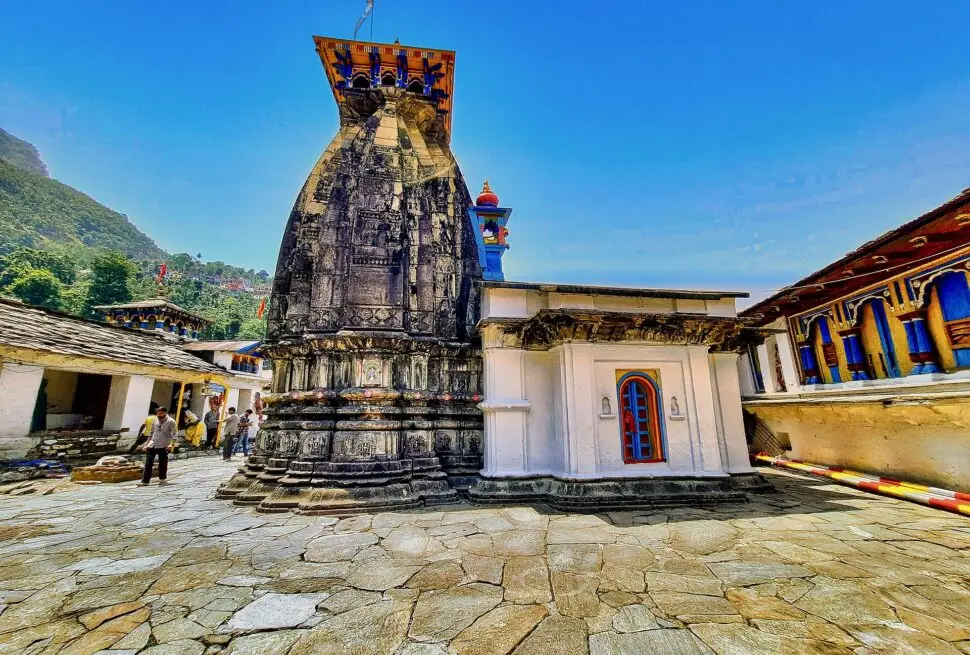
Quick answer: Jwala Ji (Jwalamukhi) Temple is a Shakti Peeth in Jawalamukhi town, Kangra district, Himachal Pradesh, about 30 km from Kangra town. There is no idol: the Devi is worshipped as natural flames that burn from cracks in the rock. The temple opens early in the morning and stays open until late evening, with a midday bhog break. Official timetables differ slightly, so confirm on the day.
Updated for the 2027 yatra season (facts checked November 2026).
| Location | Jawalamukhi town, Kangra district, Himachal Pradesh |
|---|---|
| Form of worship | No idol; the Devi is worshipped as natural flames from the rock |
| Significance | Shakti Peeth; Sati’s tongue is said to have fallen here |
| Distance | About 30 km from Kangra; about 56 km from Dharamshala |
| Nearest airport | Gaggal (Kangra airport), about 50 km |
| Nearest railway | Pathankot (broad gauge), roughly 125 km or more by road |
| From Delhi | About 480 km, roughly 10 to 12 hours by road |
| Busiest time | Chaitra and Sharad Navratri; open through the year |
Most temples ask you to imagine the presence of the Devi. At Jwala Ji, you see a living flame rising from bare rock, and it has kept burning for as long as anyone has recorded. For families on a Himachal Devi yatra, it is often the most moving stop. This guide explains what you will see, the timings, the legends and how to fit Jwala Ji into a wider Kangra yatra.
This page is part of our 51 Shakti Peeth List guide. Planning the yatra? See our Shakti Peeth yatra packages.
Why does the flame at Jwala Ji never go out?
Devotees believe the flame is the Devi herself, burning as Jwala Mai. In the story of Sati, her tongue is said to have fallen here, which is why the place is counted among the Shakti Peeths. Our Shakti Peeth yatra guide places Jwala Ji alongside the other major peeths and explains why it is also named among the 18 Maha Shakti Peeths in some lists.
Scientifically, the fissures release natural gas that keeps burning. Writers have puzzled over the flames for centuries: historical accounts record a visit by Firuz Shah Tughlaq in the 14th century, and Abul Fazl, Akbar’s court historian, wrote about the site too. None of this changes what devotees feel when they stand before the jyoti.
The official Kangra temples website names nine flames, each linked to a form of the Devi:
- Mahakali
- Annapurna
- Chandi
- Hinglaj
- Vindhyavasini
- Mahalakshmi
- Saraswati
- Ambika
- Anjana (Anji) Devi
What are the Jwala Ji Temple timings and aarti times?
One page of the official Kangra temples website lists these timings:
| Season | Open | Midday break | Morning aarti | Evening aarti |
|---|---|---|---|---|
| Summer | 6:00 AM to 10:00 PM | 11:30 AM to 12:30 PM | 6:00 AM | 8:00 PM |
| Winter | 7:00 AM to 9:30 PM | 11:00 or 11:30 AM to 12:30 PM | 7:00 AM | 7:00 PM |
The official page notes that the main aarti procedure can take close to two hours and darshan is paused while it is performed. Another page on the same website gives earlier hours (opening about 4:30 AM in summer and 5:00 AM in winter) and lists mangal, bhog, evening and shayan aartis, so confirm the day’s schedule at the temple office. During Navratri, timings can change and the queue is much longer.
The temple administration’s website also has an online puja and booking section. If you book anything online, use only the official Kangra temples website.
What are the stories of Akbar and Dhyanu Bhagat at Jwala Ji?
Two stories are told to almost every yatri, and both appear on the temple’s official website.
Dhyanu Bhagat: A devotee named Dhyanu, from Nadaun village, was brought before the Mughal emperor Akbar. To test his faith, Akbar had the head of Dhyanu’s horse cut off and dared the Devi to restore it. Dhyanu prayed at the temple, and the story says both he and his horse were made whole.
Akbar’s chhatra: Akbar is then said to have tried to put out the flames, first with water channelled to the sanctum and then by covering them with iron, but they kept burning. Humbled, he offered a gold chhatra (canopy) to the Devi. The legend says the gold turned into an unknown metal, a sign that the offering was not accepted with pride. The official website says this chhatra is still kept at the temple, and yatris look for it after darshan.
The official account also says the temple was first built by Raja Bhumi Chand after the flames were discovered. Local tradition holds that the Bhojak families given the right of worship still serve as priests. In the Sikh period, Maharaja Ranjit Singh is remembered as a major patron, and the silver-plated doors at the entrance are traditionally credited to his family.
What else should you see at the Jwalamukhi temple complex?
Give yourself an extra hour after darshan for the smaller shrines around the main temple.
- Gorakh Dibbi: A small kund linked to Guru Gorakhnath, who is believed to have done tapasya here. The water looks as if it is boiling, yet it stays cool to the touch.
- Radha Krishna temple: Near Gorakh Dibbi, dating to the time of the Katoch rulers.
- Ashtadashbhuji Devi: An old temple to the eighteen-armed Devi, with a pond.
- Ambikeshwar and Siddh Nagarjun: Smaller shrines connected to Bhairav and to the Nath tradition.
Ask at the temple office about langar and stay facilities run by the temple administration.
How do you reach Jwala Ji Temple?
- By air: Gaggal airport near Dharamshala (Kangra airport) is about 50 km away. Chandigarh, about 200 km away, has many more flights.
- By train: The nearest broad-gauge station is Pathankot, roughly 125 km or more by road. The narrow-gauge Kangra valley line stops at Jawalaji Road (Ranital), about 20 km from the temple, but services are limited.
- By road: Jawalamukhi is about 30 km from Kangra and about 56 km from Dharamshala. From Delhi it is about 480 km, roughly 10 to 12 hours by road. Himachal and Punjab buses run regularly, and taxis are easy to hire.
The temple stands on a slope, so expect a short climb up steps from the parking and bazaar area.
How do you plan Jwala Ji with other Himachal Shakti Peeths?
Most families do not visit Jwala Ji alone. The Kangra region has several major Devi temples, and the classic Himachal Devi yatra covers them over a few days:
- Baglamukhi, Bankhandi: About 15 km from Jawalamukhi, according to the temple website.
- Bajreshwari (Brajeshwari) Devi, Kangra: A Shakti Peeth in Kangra town, about 30 km away.
- Chamunda Devi: About 45 km away, and managed by the same Kangra temple administration.
- Chintpurni: In Una district, about 35 km away, a Shakti Peeth that many families visit on the same route.
- Naina Devi: In Bilaspur district, usually at the start or end of the circuit from the Punjab side.
Chaitra and Sharad Navratri are the busiest and most auspicious times. Check the dates in our yatra calendar for 2027, then book stays early. March to June and the post-monsoon months are comfortable for elders; winter is cold, but the temple stays open through the year.
Related guide: Brajeshwari Devi temple, Kangra
How Yatra To Temples can help
Our Himachal Shakti Peeth and Devi Darshan Yatra starts and ends in Chandigarh and covers Naina Devi, Chintpurni, Jwala Ji, Baglamukhi, Brajeshwari and Chamunda Devi by private vehicle, with nights at Chintpurni and Kangra. If you would like to start from another city or spend longer at Jwalamukhi, ask us and our team will tell you what can be arranged. For a plan, send your travel month and the number of yatris via our contact page, or call or WhatsApp us.
For Shakti Peeths in central India, see our Maihar and Amarkantak Shakti Peeth darshan yatra.
Latest yatra updates
Frequently asked questions
Where is Jwala Ji Temple located?
Jwala Ji, also called Jwalamukhi Temple, is in Jawalamukhi town in Kangra district, Himachal Pradesh. It is about 30 km from Kangra, about 56 km from Dharamshala and about 480 km from Delhi. The nearest airport is Gaggal, near Dharamshala, about 50 km away.
Which body part of Sati fell at Jwala Ji?
Tradition says Sati’s tongue fell at Jwala Ji, which is why the Devi is worshipped here in the form of flames rather than an idol. The temple is counted among the 51 Shakti Peeths and appears in several lists of the 18 Maha Shakti Peeths.
What is the timing of Jwala Ji Temple?
Official timetables differ slightly. One page of the Kangra temples website lists 6:00 AM to 10:00 PM in summer and 7:00 AM to 9:30 PM in winter, with a break around 11:30 AM to 12:30 PM; another page lists earlier opening. Darshan pauses during aarti, so confirm the day’s timings locally, especially during Navratri.
Why does the flame at Jwala Ji burn without fuel?
Devotees believe the flames are the Devi herself. The fissures in the rock release natural gas, which keeps them burning. Historical accounts mention the flames from at least the 14th century, and legends say even Akbar could not put them out.
What is Akbar’s chhatra at Jwala Ji?
Legend says Akbar, after failing to put out the flames, offered a gold chhatra (canopy) to the Devi, and it turned into a metal that no one could identify. The official temple website says this chhatra is still kept at the temple, and many yatris ask to see it after darshan.
Which temples can be visited along with Jwala Ji?
Brajeshwari Devi in Kangra, Baglamukhi, Chamunda Devi, Chintpurni and Naina Devi are the usual companions on a Himachal Devi yatra. Gorakh Dibbi and the smaller shrines inside the Jwalamukhi complex are worth an extra hour on the same visit.
Related guides: planning more Devi darshan? Read our guides to Naina Devi Temple, Himachal, Kamakhya Temple and the Vaishno Devi yatra. Also read the Chintpurni temple guide and the Chamunda Devi temple guide.
Sources
- Kangra Temples, Government of Himachal Pradesh – Shri Jawalamukhi Temple
- District Kangra (NIC) – Shri Jawalamukhi Mata Temple
- Mata Shri Chintpurni Temple Trust – How to reach
Related guides
 Shakti Peeth List: Major Peeths in India and How to Visit
 Chintpurni Temple Guide: Darshan, Timings, How to Reach
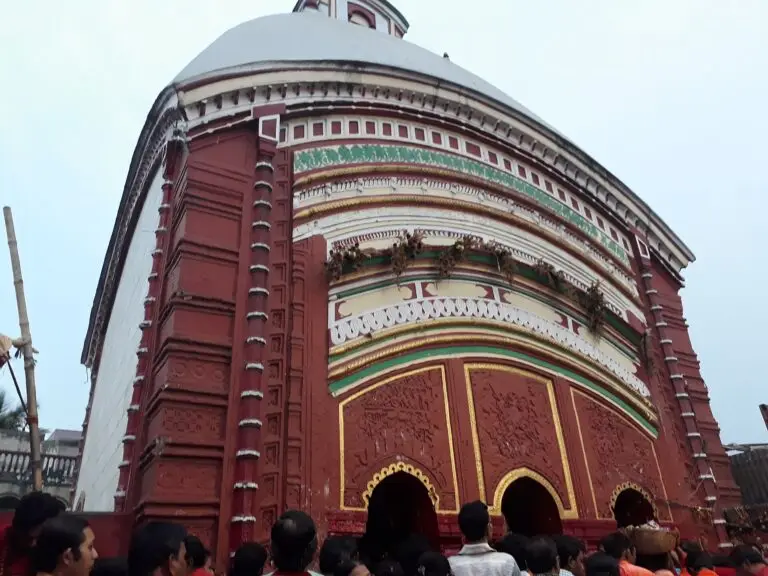 Tarapith Temple Guide: Timings, Darshan, How to Reach
More on Shakti Peeth: Chintpurni Temple Guide · Tarapith Temple Guide · Naina Devi Temple, Himachal · Kalighat Temple Kolkata · Chamunda Devi Temple Kangra · Vaishno Devi Yatra Guide · Brajeshwari Devi Temple Kangra · Kamakhya Temple Guide · Ambaji Temple Gujarat · Shakti Peeth yatra packages