

Quick answer: The Mahabodhi Temple is in Bodh Gaya, Gaya district, Bihar, at the spot where Gautama Buddha attained enlightenment under the Bodhi tree. The temple committee’s official schedule says it is open every day from 5:00 AM to 9:00 PM. Entry is free. Bodh Gaya is about 17 km from Gaya railway station and 7 km from Gaya airport.
Facts checked November 2026.
| Location | Bodh Gaya, Gaya Ji district, Bihar 824231 |
|---|---|
| Timings | 5:00 AM to 9:00 PM, all days (BTMC) |
| Entry | Free (Bihar Tourism) |
| First shrine | Emperor Ashoka, 3rd century BCE |
| Present temple | About 5th–6th century CE, built of brick |
| Height | 50 m (UNESCO) or 55 m (ASI); sources differ |
| UNESCO World Heritage | Inscribed in 2002 |
| Managed by | Bodhgaya Temple Management Committee (BTMC) |
For Buddhists, Bodh Gaya is one of the holiest places on earth: it is where Prince Siddhartha sat in meditation and became the Buddha. Many Hindu yatris also come here, often on the same day as pind daan at Vishnupad in Gaya, because in many Hindu traditions the Buddha is honoured as an avatar of Lord Vishnu.
Where is the Mahabodhi Temple?
The Mahabodhi Temple Complex stands in the small town of Bodh Gaya, in Gaya Ji district of Bihar. UNESCO describes it as about 115 km south of Patna and 16 km from Gaya. The temple committee’s own “How to Reach” page gives the road distance from Gaya as 17 km and from Patna as 135 km. Sources differ slightly; treat these as approximate.
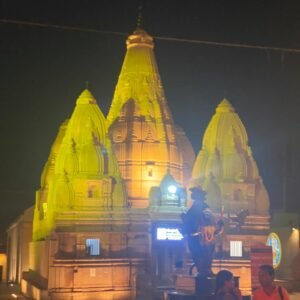
The whole protected complex covers 4.86 hectares, according to UNESCO. Inside it are the main temple, the Bodhi tree, the Vajrasana, several shrines, many votive stupas and the Lotus Pond.
What are the Mahabodhi Temple timings?
The Bodhgaya Temple Management Committee (BTMC) publishes the official daily schedule. It says the temple is open on all days of the week.
| Time | What happens |
|---|---|
| 5:00 AM | Main shrine opens |
| 5:30 AM to 6:00 AM | Sutta chanting and meditation |
| 10:00 AM | Offering of kheer (rice cooked with milk and sugar) |
| 6:00 PM to 6:30 PM | Sutta chanting (Mahayana tradition) |
| 6:30 PM to 7:00 PM | Sutta chanting (Pali) |
| 9:00 PM | Main shrine closes |
Incredible India also gives 5 AM to 9 PM, but the Bihar Tourism website lists the visiting hours as 6 AM to 6 PM. Sources differ, so confirm locally on the day, especially if you plan to arrive early or late. The early-morning and evening chanting sessions are calm times to sit near the Bodhi tree.
Is there an entry fee, and are mobile phones and cameras allowed?
Bihar Tourism lists entry to the Mahabodhi Temple as free. On mobile phones and cameras, the official pages do not fully agree. The Bihar Tourism page states: “Mobile, Camera, Electronic Gadgets Prohibited.” The BTMC timing page does not list any rules on phones, cameras or bags. Our own yatra notes say that phones are deposited at a counter before entry and that cameras need a paid permit; we have not found an official page that shows this permit or its fee. Gate rules are set by the temple management and can change, so check at the entrance or call the BTMC office before you go. The simplest plan is to leave your phone and camera with your vehicle or at your hotel.
Be ready for a possible security check at the entrance, including your bag.
What is the dress code at the Mahabodhi Temple?
There is no uniform, but Bihar Tourism asks visitors to dress modestly, remove footwear before entering and keep silence. In practice this means:
- Clothes that cover shoulders and knees, for both men and women.
- Footwear left outside; in winter carry socks, as the stone floors get cold in the early morning.
- A shawl or light jacket for December to February mornings and evenings.
Who built the Mahabodhi Temple?
According to UNESCO, the first temple here was built by Emperor Ashoka in the 3rd century BCE. The Archaeological Survey of India (ASI) dates Ashoka’s small temple near the Bodhi tree to around 260 BCE, and notes an inscription of the 1st–2nd century CE saying that Ashoka’s temple was replaced by a new one.
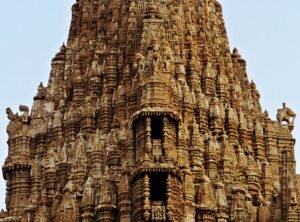
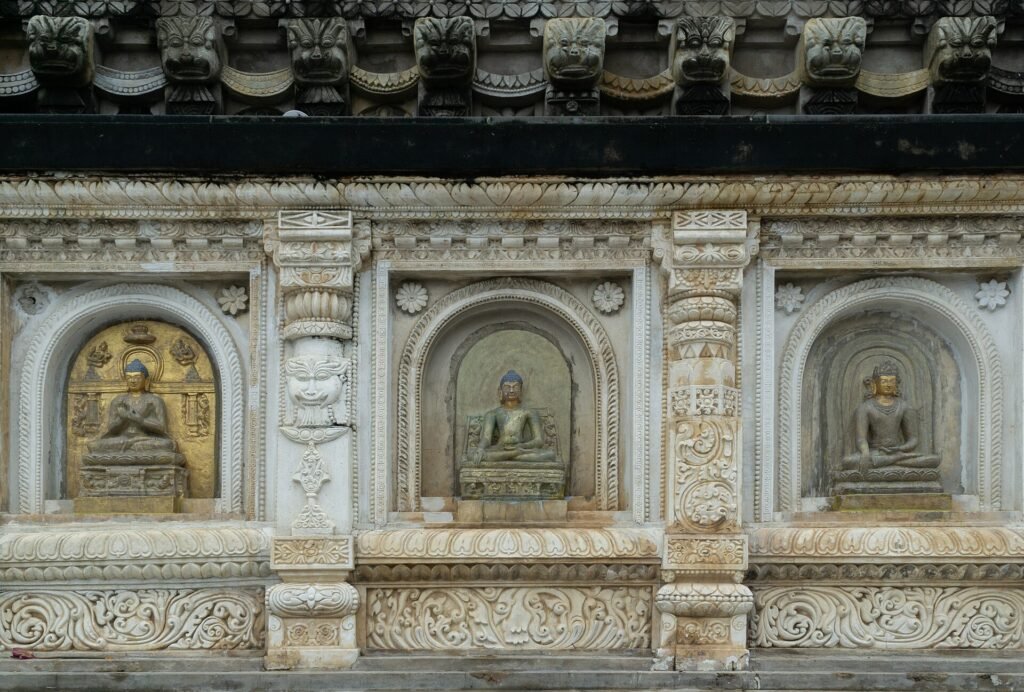
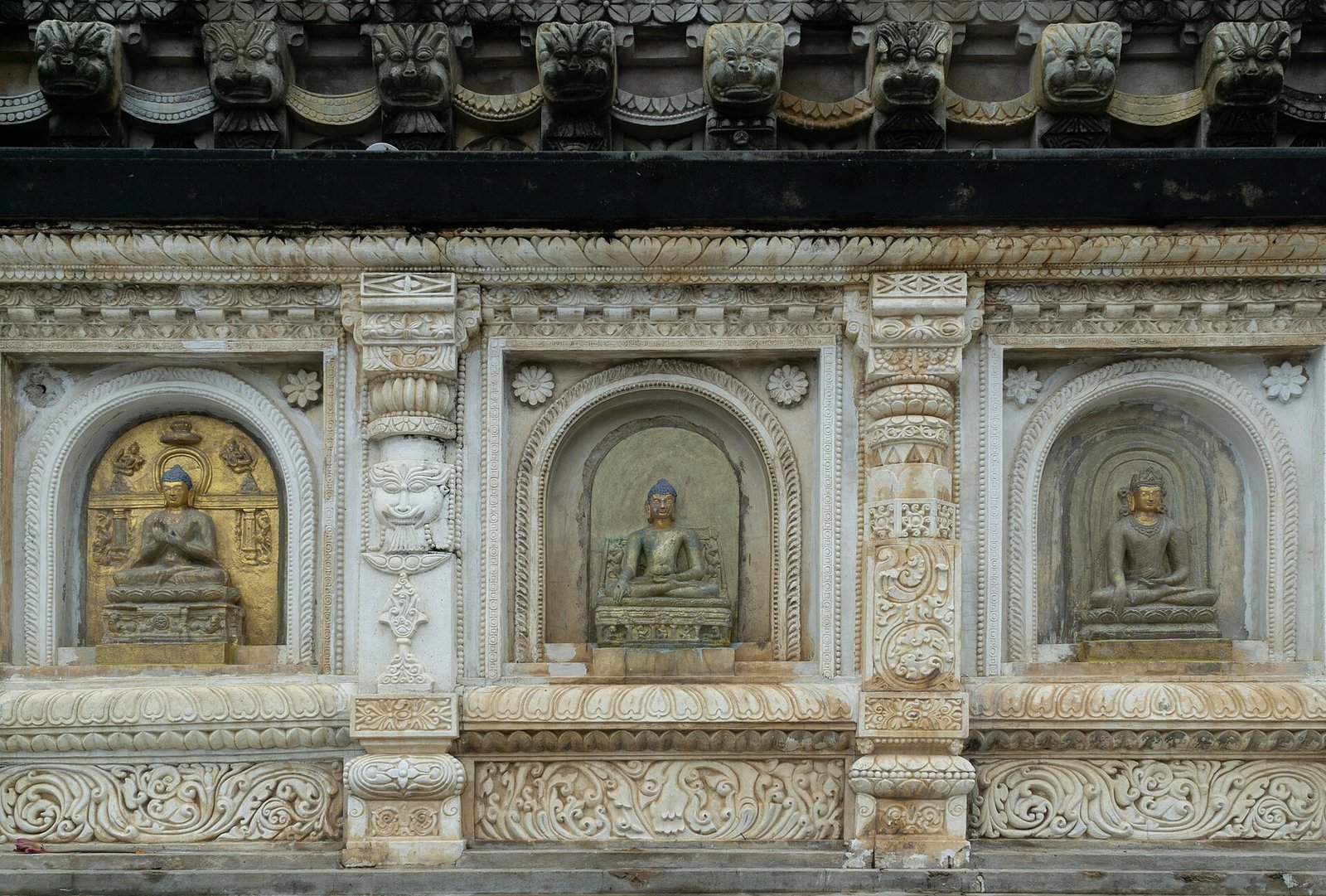
The temple you see today was built in the late Gupta period, around the 5th–6th century CE. UNESCO calls it one of the earliest Buddhist temples in India built entirely of brick that is still standing. After a long period of neglect it was extensively restored in the 19th century. Incredible India notes that Sir Alexander Cunningham found its remains and started restoration work.
The BTMC’s own history page adds more of the story. Buddhists looked after the temple until the early 13th century, when invaders damaged it and Buddhist control ended. In 1590 a Shaiva monk, Mahant Ghamandi Giri, settled at the site, and his successors held it for centuries. From 1891 Anagarika Dharmapala campaigned for the temple to return to Buddhist care. After the 1949 Act, management was formally handed over to the new committee on 23 May 1953.
How tall is the Mahabodhi Temple?
The ASI, Incredible India and Britannica give the height as 55 metres (about 180 feet). UNESCO gives 50 metres, and the Bihar Tourism page says 170 feet. Sources differ; 50–55 metres is the range quoted by official bodies. The ASI notes that the Chinese pilgrim Hiuen Tsang (637 CE) called it nearly 160 feet tall.
What are the Bodhi tree and the Vajrasana?
The Bodhi tree is a peepal tree standing to the west of the main temple. Buddhist tradition holds that Siddhartha meditated under this tree and attained enlightenment, and UNESCO marks it as the place where the Buddha spent the first week after enlightenment.
Between the tree and the temple is the Vajrasana, or Diamond Throne. UNESCO describes it as a platform of polished sandstone that marks the spot where the Buddha sat and meditated, and says it was originally installed by Ashoka.
What are the seven sacred spots in the temple complex?
Tradition says the Buddha spent seven weeks at Bodh Gaya after his enlightenment, each at a different spot. UNESCO lists them as follows.
| Week | Spot | What it marks |
|---|---|---|
| 1st | Bodhi tree | Meditation under the tree, west of the main temple |
| 2nd | Animesh Lochan Chaitya | Raised spot north of the central path |
| 3rd | Ratnachakrama (Jewelled Walk) | Walking path near the north wall of the main temple, where he walked eighteen paces back and forth |
| 4th | Ratnaghar Chaitya | Shrine to the north-east, near the enclosure wall |
| 5th | Ajapala Nigrodh tree | Pillar on the central path, just past the east entrance steps |
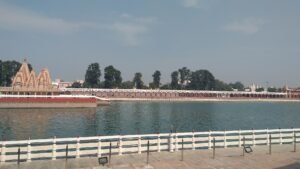
| 6th | Lotus Pond (Muchalinda Sarovar) | Pond to the south, outside the enclosure |
| 7th | Rajyatana tree | Tree south-east of the main temple |
The BTMC’s list of important places adds a Meditation Park inside the complex. Walk between the spots slowly and quietly, keeping the main temple on your right as you go around it, the traditional way of circumambulation.
Who manages the Mahabodhi Temple?
The temple is owned by the Government of Bihar and run under the Bodh Gaya Temple Act, 1949 (Bihar Act XVII of 1949), which received assent on 19 June 1949. According to the BTMC, the committee has nine members: four Buddhist and four Hindu members, with the District Magistrate of Gaya as ex-officio Chairman. UNESCO notes that an Advisory Board also supports the committee.
Some Buddhist groups have long asked that the temple be managed only by Buddhists and that the 1949 Act be repealed. In February 2025 a group of monks held a hunger strike at the temple over this demand, and police moved them out of the premises on 27 February 2025; rallies were also held in other states. On 30 June 2025 the Supreme Court declined to hear a petition on the issue under Article 32 and said the petitioner could approach the High Court. The court did not decide the question itself. For a yatri, none of this changes the daily darshan, but it is good to know why the subject appears in the news.
When is the best time to visit Bodh Gaya?
Bihar Tourism suggests September to April. Winter is also when large Buddhist prayer assemblies are held at the temple; for example, BTMC reported that the 37th Nyingma Monlam Chenmo, a ten-day prayer gathering, began on 19 January 2026. Incredible India’s weather table shows January temperatures of about 3.9–28.4°C and May temperatures of about 20.9–45.1°C, so summer afternoons can be very hot.
| Occasion | Date |
|---|---|
| Buddha Purnima (Buddha Jayanti) | Thursday, 20 May 2027 (Drik Panchang, New Delhi) |
| Nyingma Monlam Chenmo | The 37th edition began on 19 January 2026 (BTMC); the next date is announced by the organisers |
Drik Panchang shows the Purnima tithi from 4:02 PM on 19 May 2027 to 4:28 PM on 20 May 2027. Arrive early on festival days.
How do you reach the Mahabodhi Temple?
The BTMC “How to Reach” page gives these distances. Gaya Junction is the main railhead; Gaya airport is very close to Bodh Gaya.
| From | Approx. distance |
|---|---|
| Gaya airport | 7 km |
| Gaya railway station | 17 km |
| Rajgir | 78 km |
| Nalanda | 101 km |
| Patna | 135 km |
| Varanasi | 252 km |
| Kolkata | 495 km |
The BTMC says regular buses run from Gaya, Patna, Nalanda, Rajgir and Varanasi, and that taxis, autos and cycle-rickshaws are available locally. Many families coming from Kashi combine Varanasi, Gaya and Bodh Gaya in one yatra; our Varanasi itinerary guide helps you plan the Kashi part.
How much time do you need at the Mahabodhi Temple?
There is no official figure. As a simple suggestion, keep at least two to three hours for the temple complex so you can do darshan in the sanctum, sit by the Bodhi tree and walk the seven spots without hurry. If you also want to see the Great Buddha statue, the monasteries and Sujata village, plan a full day in Bodh Gaya.
What places can you visit near the Mahabodhi Temple?
- Great Buddha statue (80-foot Buddha): Bihar Tourism says it is about 2 km from the Mahabodhi Temple and was consecrated on 18 November 1989 by the 14th Dalai Lama.
- Monasteries: Buddhist communities from several countries have built temples and monasteries in Bodh Gaya. Bihar Tourism lists the Tibetan temple (within walking distance of Mahabodhi, 6 AM to 7 PM) and the Royal Bhutan monastery (5 AM to 8 PM); Thai and Japanese temples are also close by.
- Sujata Stupa, Bakraur: Dedicated to Sujata, the village woman whose offering of food ended the Buddha’s long fast (Bihar Tourism). Bihar Tourism gives its timings as 9 AM to 6 PM.
- Dungeshwari: A hill shrine reached by taxi or auto from Bodh Gaya; Bihar Tourism lists 6 AM to 7 PM.
- Vishnupad Temple, Gaya: On the bank of the Phalgu river, with Lord Vishnu’s footprint in rock. Bihar Tourism notes it was built in 1787 by Queen Ahilyabai and lists it as open 5 AM to 9 PM. It is the main place for pind daan; read our Gaya pind daan guide before you go.
- Sarnath: Where the Buddha gave his first sermon, near Varanasi. It is 252 km by road from Bodh Gaya to Varanasi (BTMC), so most yatris visit Sarnath on a separate day. See our Sarnath guide.
How Yatra To Temples can help
If you want Bodh Gaya as part of a full Buddhist pilgrimage, our Buddha Circuit Darshan Yatra covers Lumbini, Kushinagar, Vaishali, Nalanda, Rajgir, Bodh Gaya and Sarnath. In Bodh Gaya it includes the Mahabodhi Temple, Sujata Stupa, Dungeshwari caves, the Great Buddha statue and the national monasteries, with hotel stays, a private AC vehicle and entry tickets to the ASI monuments named in the itinerary.
If your family is going for pind daan, the Kashi Vishwanath, Gaya Pind Daan and Bodh Gaya Yatra starts and ends in Varanasi. It covers Kashi darshan, pind daan at Vishnupad with a pandit we arrange, and a visit to the Mahabodhi Temple, Bodhi tree and Vajrasana, the Great Buddha statue and nearby monasteries, with a private AC vehicle and a yatra coordinator on call.
For dates, rooms, a different starting city or anything not written on these pages, please ask us through our contact page.
Frequently asked questions
Where is the Mahabodhi Temple located?
The Mahabodhi Temple is in Bodh Gaya, in Gaya Ji district of Bihar, India. The PIN code given by Bihar Tourism is 824231. It is close to the town of Gaya, which has the nearest railway station and airport.
Is the Mahabodhi Temple a Hindu or Buddhist temple?
It is a Buddhist temple, marking the place of the Buddha’s enlightenment, and is the holiest site for Buddhists. Hindus also visit with devotion, and under the Bodh Gaya Temple Act, 1949, its management committee includes both Buddhist and Hindu members.
When did the Mahabodhi Temple become a UNESCO World Heritage Site?
The Mahabodhi Temple Complex at Bodh Gaya was inscribed on the UNESCO World Heritage List in 2002. UNESCO recognises it under five of its selection criteria.
How old is the Mahabodhi Temple?
The first shrine at the site goes back to Emperor Ashoka in the 3rd century BCE, more than 2,200 years ago. The present brick temple dates to around the 5th–6th century CE and was restored in the 19th century.
Which river is near the Mahabodhi Temple?
The official pages we checked do not name a river beside the temple. Gaya’s Vishnupad Temple, where pind daan is done, stands on the bank of the Phalgu river.
Is there a guest house or hotel near the temple?
Yes, Bodh Gaya has hotels and homestays close to the temple, and Bihar Tourism lists several nearby stays. Rooms can fill up in the winter season and around big prayer gatherings, so book early.
Sources
- Bodhgaya Temple Management Committee – Temple Timing; How to Reach; About BTMC; About Mahabodhi Temple (checked November 2026)
- UNESCO World Heritage Centre – Mahabodhi Temple Complex at Bodh Gaya (checked November 2026)
- Archaeological Survey of India – Mahabodhi Temple Complex, Bodhgaya (2002), Bihar (checked November 2026)
- Department of Tourism, Government of Bihar – Gaya Ji destinations: Mahabodhi Temple, 80 Feet Buddha, Sujata Stupa, Vishnupad Temple (checked November 2026)
- Drik Panchang – Buddha Purnima date and time (checked November 2026)